
Alpha Hunter: Top 5 Up-and-Coming Projects and Token Insights
Original Title: Top 5 Hot Projects & Their Upcoming Token Launches
Original Author: IGNAS
Original Translation: Deep Tide TechFlow

The pace of new token issuance has slowed down, but I believe it will soon pick up as the market is slowly recovering.
Many projects can't delay any longer.
These projects will be taking the plunge, paving the way for others. In this article, I would like to focus on some of the protocols that frequently appear in my X Stream. However, it seems not everyone is familiar with their roles.
A year ago, I wrote a similar blog post about 7 major projects and planned to publish these articles more frequently, so feel free to subscribe at any time.
So if you are one of those followers on X eagerly awaiting the token launches and airdrops of hyped projects (but don't really understand their role), then this article is for you.
Initia - The Multichain Eden
Initia is the debut sale conducted by Cobie's Echonomist Group on its Echo fundraising platform.
Cobie's team has only done three project fundraisings, which might make the situation bullish. The mainnet and airdrop should be launching soon (although it seems to be delayed to April).
If there is one word you should associate with Initia, it's "Interwoven."

Initia is an L1 that integrates L2 to create a modular network for application chains.
It sounds like Ethereum, but Initia addresses the issues ETH maxis don't like about Ethereum.
Unlike Ethereum L2s running in isolation, Initia merges Layer 1 with Layer 2, creating an interwoven ecosystem. They refer to these L2s as Minitias. It's similar to Avalanche subnets (recently rebranded as L1) as well.
Unlike Ethereum but similar to Avalanche, OPinit Stack supports EVM, MoveVM, and WasmVM. Therefore, developers can use any language they see fit.
This may make ETH whales drool. Initia's Enshrined Liquidity allows staking either the INIT token alone or approved INIT-X LP tokens (paired with INIT) to earn rewards through Delegated Proof of Stake (DPoS) mechanism.
Fixed liquidity is a prime example of Ponzi tokenomics, requiring 50% or more of INIT to be paired as the pairing token for all ecosystem tokens. These LP tokens must be whitelisted by governance.
Similar to Berachain, Initia also has a native dex: the InitiaDEX on L1 built with the Move programming language. It serves as the liquidity hub of the Omnitia ecosystem, and to my understanding, most liquidity will flow through InitiaDEX (and through mandatory INIA pools) even between L2s.
Initia offers more features, such as native bridging (aptly named Minitswap) and a rent-seeking program (aggregating rewards for creating applications and new use cases for INIT), but these four features stand out to me.
Initia truly encapsulates Ethereum natives' demands on Ethereum into a product, making it an interwoven ecosystem.
Tokens and Fundraising
The full Tokenomics have not been fully rolled out. Initia has only shared four details about it:
· 50% of the supply allocated to VIP and Enshrined Liquidity
· Insider unlockable staking rewards
· Community rounds discount of approximately 30%.
· 15% allocated to investors.
We can expect airdrops, as Initia co-founder Zon puts it, "Vesting unlocks are a gift. It can prevent you from giving up too early and forces you to believe."
In September 2024, Zon also shared with Block the details of Initia's previous Series A funding round, raising $14 million from companies such as Theory Ventures, Delphi Ventures, and Hack VC, with an FDV of $350 million.
The testnet has an incentive mechanism, so feel free to visit the official testnet website, obtain testnet tokens, and participate in its ecosystem. All information can be found on the testnet page here.
As usual, I don't have high expectations for testnet activities.
Overall, the ecosystem is well-built. The key question remains: Will builders and users choose to engage with it?
Fogo - The Fastest L1 Blockchain
Fogo is another project that conducted a token sale within Cobie's own Echo Group, raising $8 million at a valuation of $100 million.
Fogo utilizes the highly optimized Solana validator client Firedancer created by Jump Crypto as the network's sole execution client.
It hasn't even launched on Solana yet. Solana will soon benefit from the Firedancer client, but not all validators can switch to it immediately. This means the network speed is limited by the slowest node.
As Fogo co-founder Doug Colkitt puts it: "It's like having a Ferrari but driving it in New York City traffic jams."
Under optimal conditions, their theoretical speed reaches 1 million transactions per second, with a block time of 20 milliseconds, but Fogo's live developer network reaches approximately 54,000 TPS. In comparison, Solana currently has a theoretical limit of 65k TPS but is currently at 4.3k.
The MegaETH testnet drives 20k TPS with a 10-millisecond block time.
In contrast, TradFi systems can process over 100,000 operations per second with sub-millisecond latency.
The Fogo team believes that a decentralized network must be capable of supporting institutional-grade use cases such as high-frequency trading and instant payments.
It runs on the Solana Virtual Machine (SVM), which means developers can easily migrate Solana applications, tools, and infrastructure to Fogo without any modifications. It is anticipated that there will be a series of forks with new shiny tokens (Jupiter, Kamino, Pumpfun, etc.).
Clearly, not everyone in the Solana ecosystem is thrilled about this.
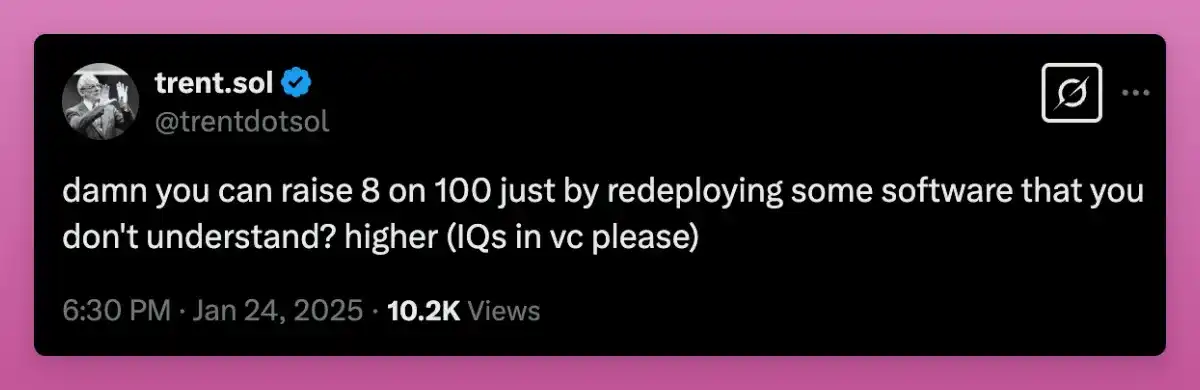
Notably, Fogo's contributors include members of Douro Labs, the team behind the Pyth Oracle Network, which itself has close ties to Jump Crypto.
Other significant features:
Multi-Local Consensus ("Follow the Sun"): Fogo groups validators into geographically semi-independent working "regions." Control rotates regularly to the next region, preventing any single location from dominating. This means faster consensus can be reached during normal operation, as messages don't always have to traverse the entire globe. More information can be found here.
At launch, it will initially have a curated set of validators (20-50).
Fee Abstraction: Transaction fees can be paid in any token.
Tokens and Funding
Fogo raised approximately $5.5 million in a seed round led by Distributed Global, with participation from CMS Holdings. This is the largest amount in Echo Group's $8 million funding raise.
The Devnet is expected to launch by the end of 2024, with the testnet coming soon and the mainnet scheduled for a mid-2025 release. Currently, there is limited information regarding tokens or airdrops.
Succinct – Software for a Proofed World
"Cryptocurrency has failed to fulfill its mission.
We were promised a transparent, verifiable, trustless global coordination system. Yet, what we got was bridge hacks, multi-sig L2 without fraud proofs, and a 21-validator committee controlling billions of dollars."
This is the main problem Succinct is solving.
“ZK Proof is one of the most crucial technologies for blockchain scalability, interoperability, and privacy, but it is too complex for most developers today.”
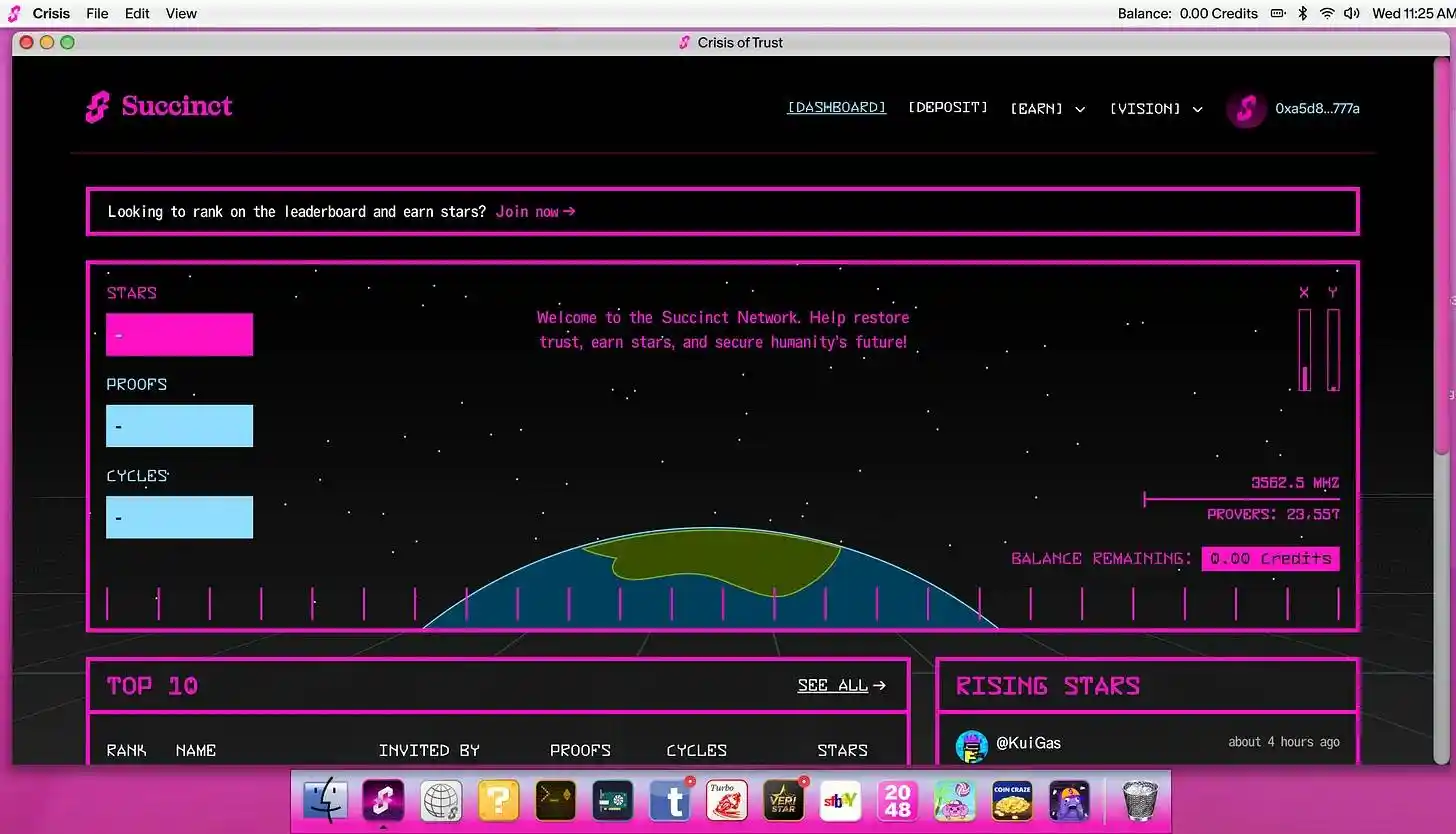
It's hard to get excited about ZK Proof right now, but Succinct has caught my attention with its excellent marketing efforts and a testnet/website dashboard as a MacOS interface.
You can play games and earn points.
Anyway. The problem we are facing now is:
· Every project must build its own proof system (e.g., zkSync and Scroll use zero-knowledge for scalability, but the infrastructure is fragmented.)
· Many rely on centralized providers to generate proofs.
· This is not only costly but also slows down innovation.
Thus, concise ZKP (a technology that cryptographically proves authenticity without revealing data) is challenging to implement due to fragmented infrastructure and high costs.
Succinct offers a shared proof generation market rather than each project reinventing the wheel. Developers can focus on building applications (aggregators, bridges, oracles) while outsourcing proof creation to the network.
Key Partners: Polygon, Celestia, Avail, Gnosis.
But use cases are even more diverse, such as a private voting system or anonymous transactions. Or you can prove that you have money in your wallet without revealing how much.
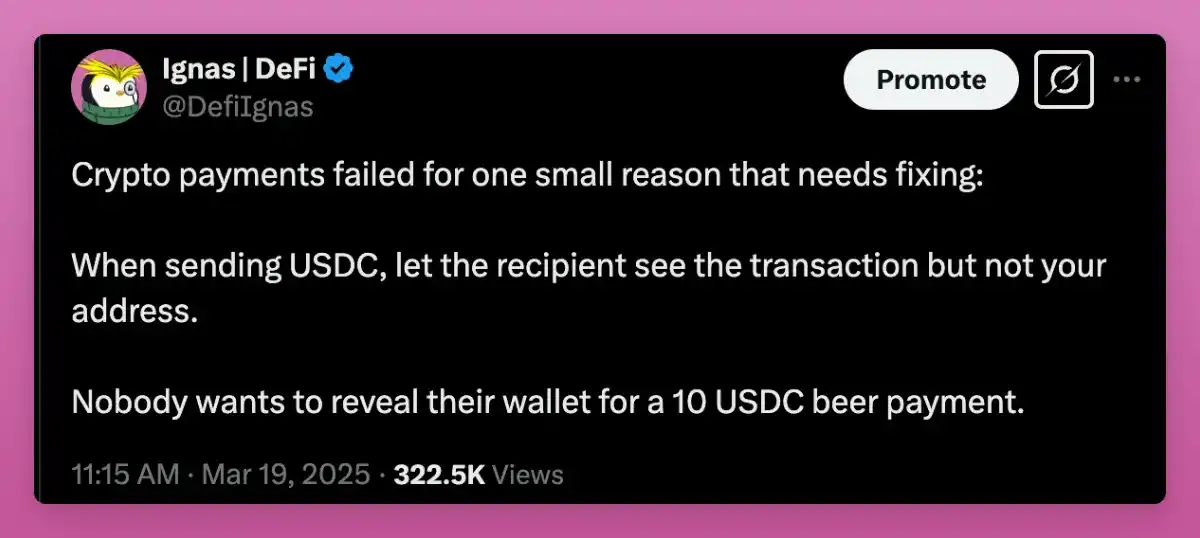
It’s a technical project, but it could become the glue of the most vulnerable crypto projects, decentralization, and protection.
Their testnet “Tier One: Trust Crisis” launched two months ago. You can earn stars by generating zero-knowledge proofs. You need a $10 USDC deposit to cover the proof generation cost. But to get an invite code, you need to farm it on platforms like X, Discord, etc.
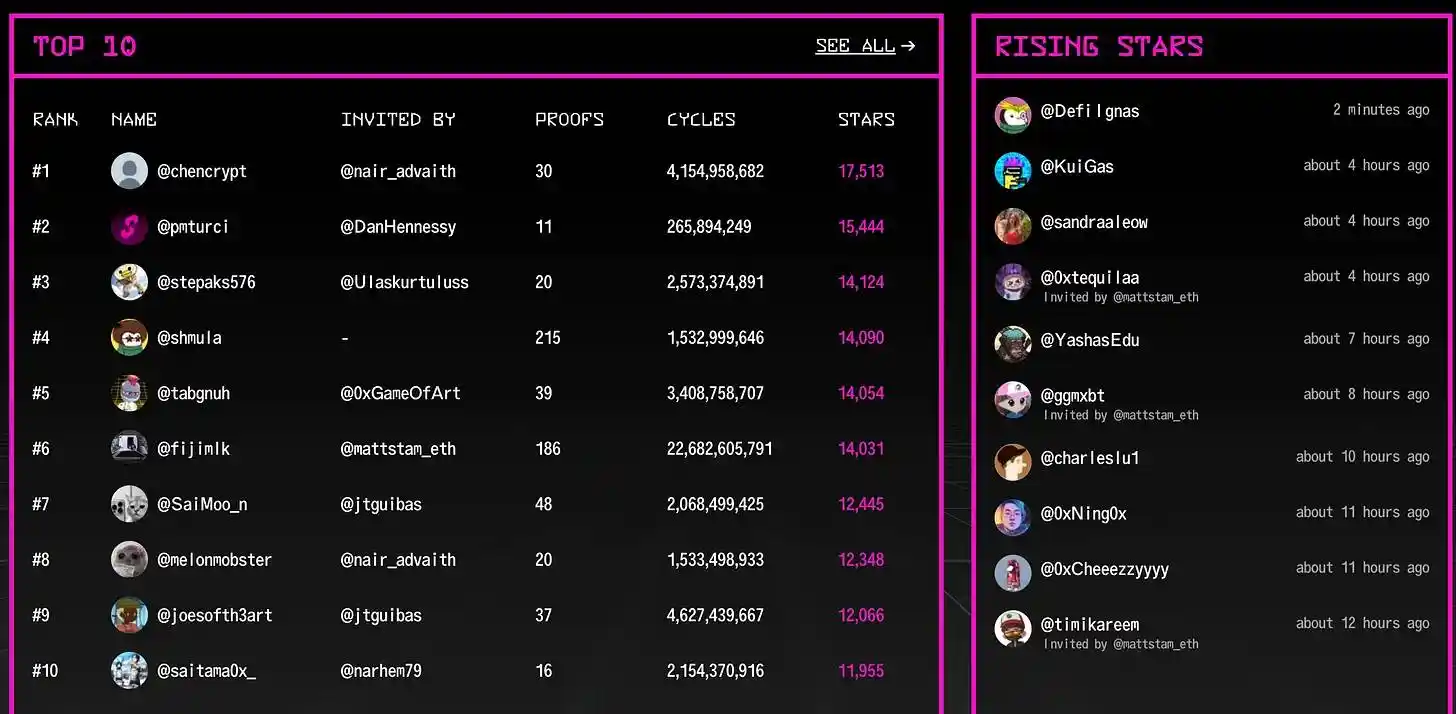
I believe this will be the standard for airdrops, but detailed information about the token is not yet public.
Succinct raised $55 million, led by Paradigm and joined by Robot Ventures, Bankless Ventures, Geometry, and several other companies.
Upon mainnet launch, the TGE is expected to happen quickly.
Resolv - Truly Effective Delta-Neutral Stablecoin
Many now believe that the next wave of altcoin growth will be driven by increased institutional adoption, particularly of stablecoins.
The issue is that the primary beneficiaries of stablecoin adoption seem to be institutions and stablecoin issuers, with retail investors possibly seeing only marginal benefits.
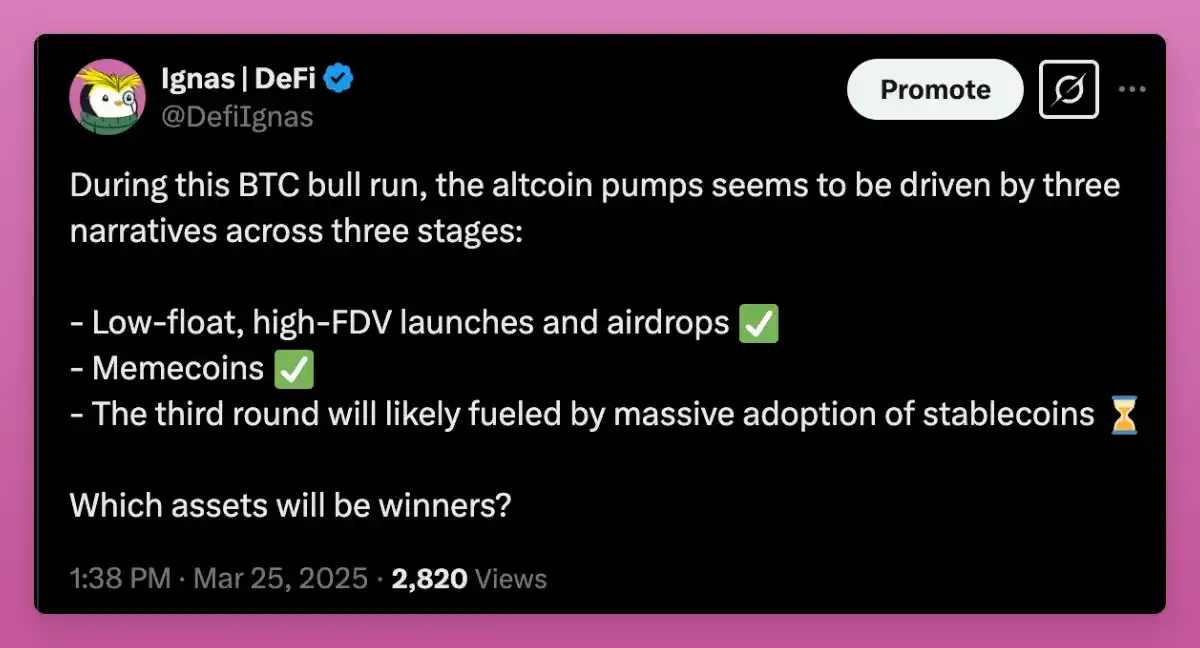
I wrote some thoughts on protocols that could benefit from stablecoin adoption, but I want to add one here—Resolv.
If you understand how Ethena works, you already have a good foundation for understanding Resolv.
The core idea of both is the same—using crypto collateral along with short-term perpetual hedging to create a stablecoin. However, Resolv's architecture and approach are different:
First is the dual token model vs. the single token model: Ethena has a single token model (USDe) where all risks and rewards flow to stablecoin holders and are managed by the protocol's reserve in the background.
Resolv uses a dual token model (USR + RLP), explicitly isolating risk into separate tokens.
· USR: Like USDe, USR hedges the ETH price through shorting futures, using a delta-neutral strategy to maintain its peg. You can stake USR to earn yields, converting it to stUSR, akin to a savings account.
· RLP: Acts as insurance for USR, absorbing losses to keep USR stable (e.g., when funding rates are negative). RLP holders take on risk for higher returns. RLP's value fluctuates with the protocol's performance, acting as a buffer: it grows with profits and shrinks with losses.
This setup allows risk-tolerant users to earn more yield while protecting stablecoin users from market risk. As of writing this article, the APR for USR is 4.3%, and for RLP, it is 6.7%.
Although not very high, the airdrop farming has helped Resolv achieve a TVL of $6.369 billion. Not bad.
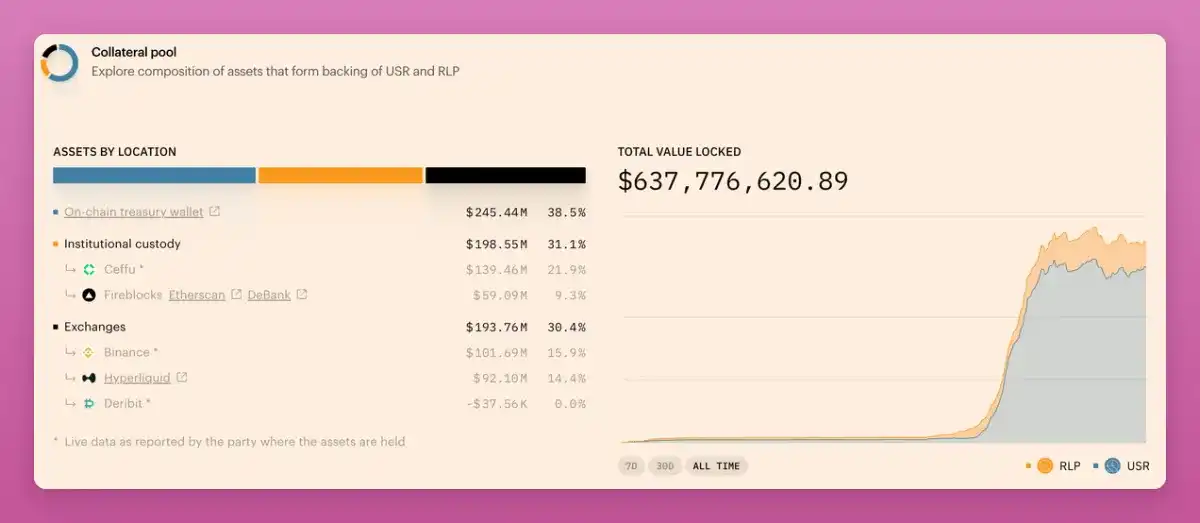
Secondly, Resolv's concept is to maintain 100% cryptocurrency backing. All collateral is in ETH (with BTC support recently announced), with no involvement of RWAs.
Initially, Ethena also supported only cryptocurrencies, but later introduced the secondary stablecoin USDtb, 90% backed by BlackRock's tokenized currency market fund (BUIDL).
For Resolv, USDtb serves as a kind of insurance token similar to USR, designed to stabilize USDe during bear markets by providing traditional asset yields when cryptocurrency yields decrease.
Therefore, you could say that Resolv is more "crypto-native" and spiritually decentralized, although Ethena's strategy can gain additional stability by introducing centralized assets.
Tokens and Fundraising
Resolv has not yet officially disclosed fundraising details, but supporters include Delphi Labs, Daedalus, and No Limit Holdings. They are preparing to launch a community fundraising through Legion soon.
Since September 2024, Resolv has been operating a rewards program. You can still join by depositing stablecoins and earning rewards.
After depositing, you can maximize rewards through the Pendle pool or other strategies.
The $RESOLV token is expected to launch in early 2025.
Snapchain—Possibly the Largest Consumer L1
My biggest concern is whether Fogo, Initia, and other upcoming chains will be adopted, and what killer apps they will launch. As Kyle put it:
"Generic blockchains will fade away. Each blockchain needs a specific use case, defined by the content built on top of it."
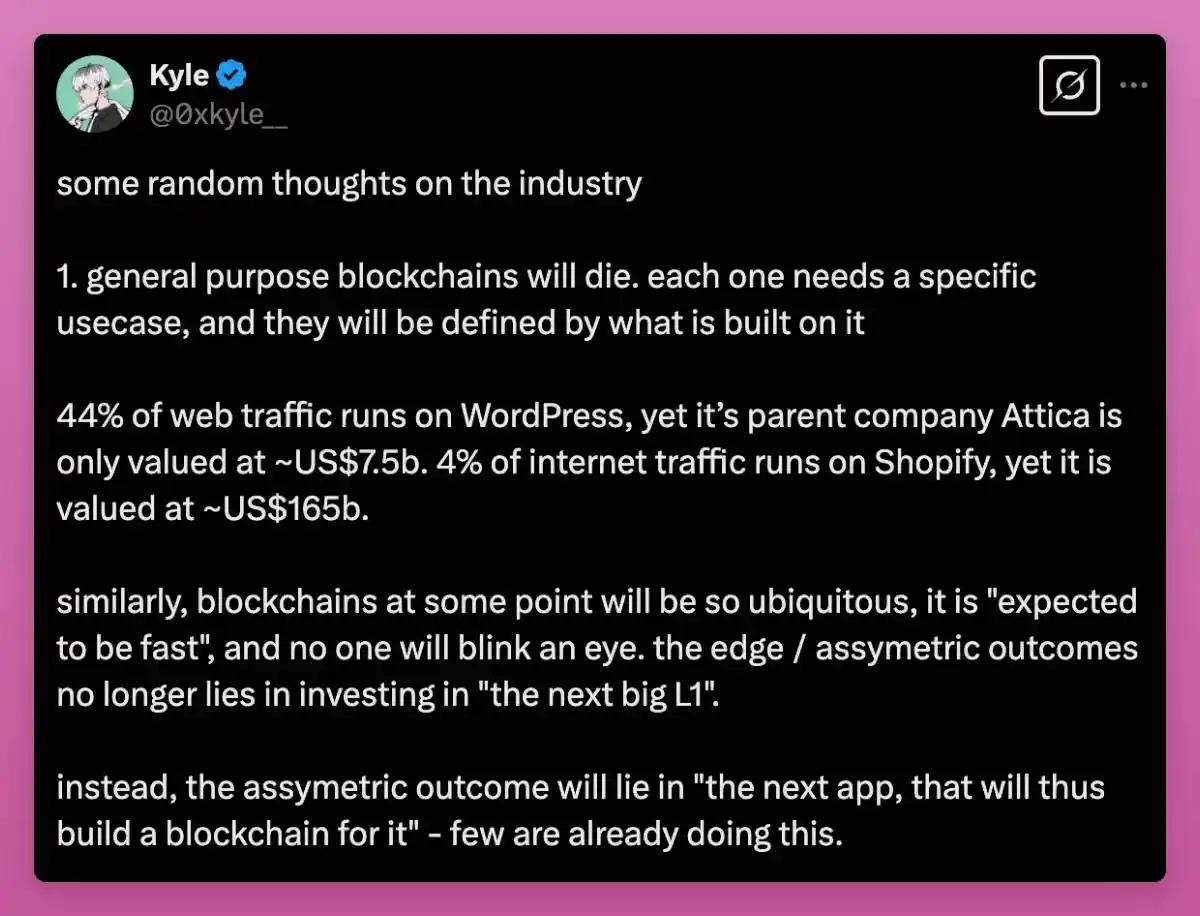
This is where the L1 Snapchain, built for the Farcaster social network, comes into play.
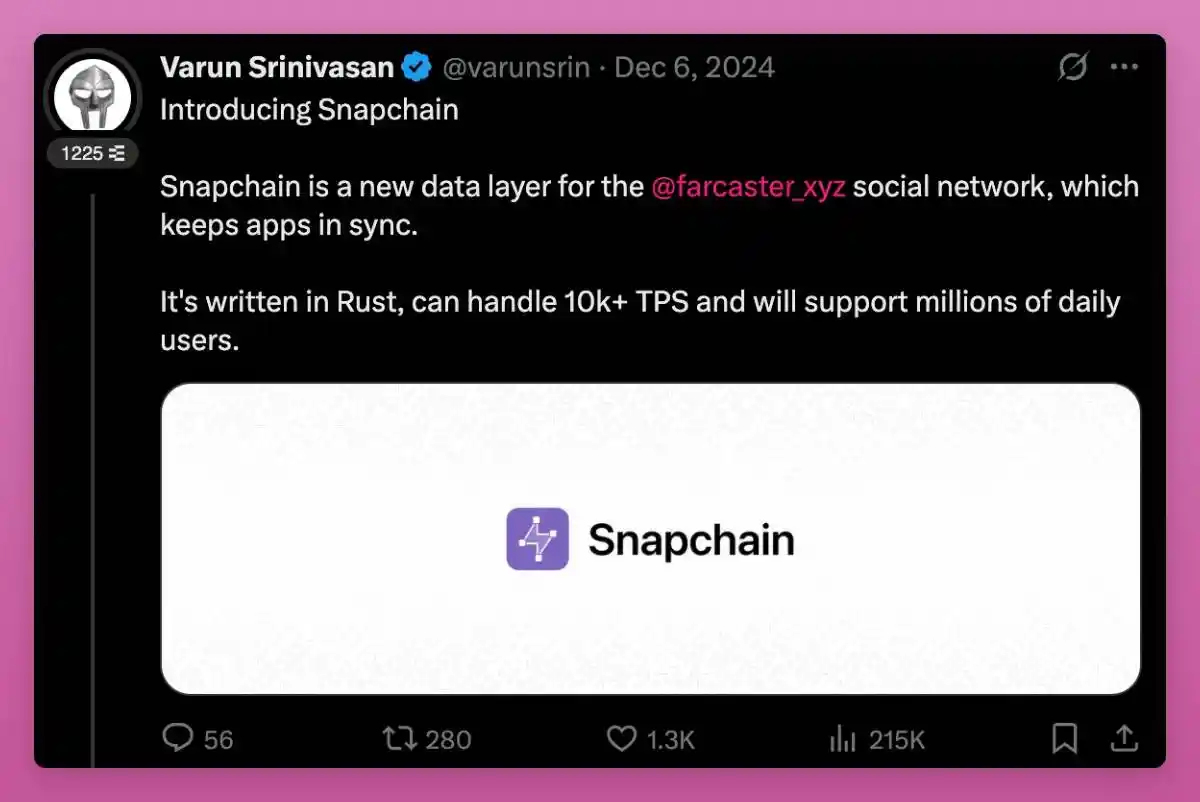
The reason Snapchain is necessary is that decentralized social networks struggle to stay synchronized and provide real-time updates as they scale. Lens will use zkSync technology, but Farcaster is developing its own tech.
For example, "Twitter has 200 million users per day, processes 10,000 messages per second, and the data for that state may grow at a rate of 1TB - 10TB per day."
Farcaster's current system operates at a small scale, but as the user and node count grows, it starts to fail. Snapchain will address this issue in a decentralized manner.
At launch, it should support 9k+ TPS, thus accommodating 2 million daily users (current DAU is around 50k).
I won't dwell too much on the technical details, but there are two exciting parts:
First, data deletion (pruning), haha. On the blockchain, most data is meant to be held permanently, but what if you post a meme and immediately regret it? It has to disappear! Permanently.
So, on Snapchain, once old data (posts, likes, follows) is no longer needed, it can be deleted.
This is crucial because users pay an annual fee of 2 or 3 dollars to get a storage limit of 500 tx/hour and around 10,000 tx.
Therefore, by deleting old transactions, you open up space for new ones (or you'd need to pay more fees).
The second cool part is sharding. Remember, Ethereum considered sharding before moving to layer 2 scaling.
Imagine putting all social media transactions (likes, posts, etc.) on-chain. That's millions of transactions daily. If every node has to store and process all of it, it becomes overwhelming. Every full node has to process every transaction, even those that don't affect them. This is fine for money and smart contracts, but for real-time social interactions, it doesn't scale well.
Snapchain addresses this by making each user completely independent (when you sign up on Farcaster, you get an ID, and if your ID is the lowest, it's a status symbol). Your posts don't affect my account.
Therefore, Snapchain will shard users into multiple partitions (by the way, this is inspired by the Near model). Each shard processes only its users. This means more users = more shards = higher throughput.
To keep everything in sync, there is one final layer: bundling the shards and publishing global blocks on the main chain.
Ethereum struggles to do this easily. Its transactions rely on shared state—smart contracts, tokens, balances. This makes account-level sharding difficult.
Snapchain is effective because social behaviors are simple. They only impact the sender.
There is more content you can read about here, but I'm bullish on Farcaster and Snapchain because it builds the use case first and then adds blockchain to it.
It's performing well for Hyperliquid, even with 50k DAU and 900k total users, Farcaster remains one of the top consumer apps.
Tokens & Funding
TLDR: The Genesis block is live, and the mainnet is expected to launch on April 15, 2025. So, it's coming soon.
I believe once Snapchain is live and Farcaster is ready to scale, Coinbase x Farcaster will start announcing integrations with the Coinbase Wallet.
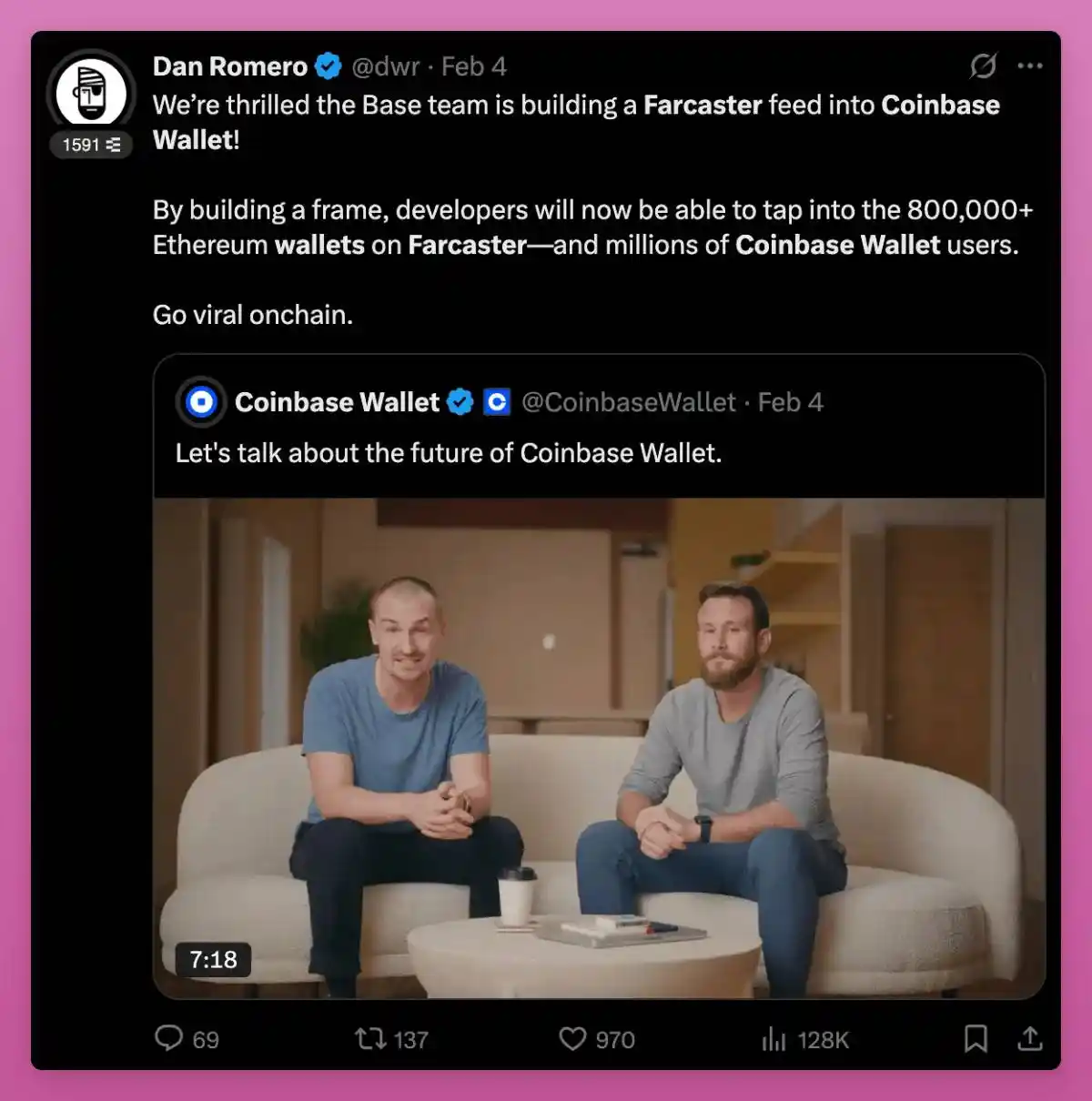
This is a huge deal. Social media info on Coinbase Wallet? I'm serious.
However, I'm not sure when the token will go live; the team has been silent about it, but some rumors and funding announcements may indicate it's on the horizon. Snapchain itself is a technical component, not a standalone fundraising entity. Development of Snapchain is funded by the company building the Farcaster protocol, Merkle Manufactory.
Most notably, in May 2024, they announced a $1.5 billion funding round led by Paradigm, with other major investors such as a16z crypto, Haun Ventures, USV, Variant, and Standard Crypto also participating.
Extra Bonus for You: Eclipse and Atlas
I originally planned to write about 7 major TGEs and protocols, but this article got too long. I always get carried away (often deleting 30% of the content before publishing!)
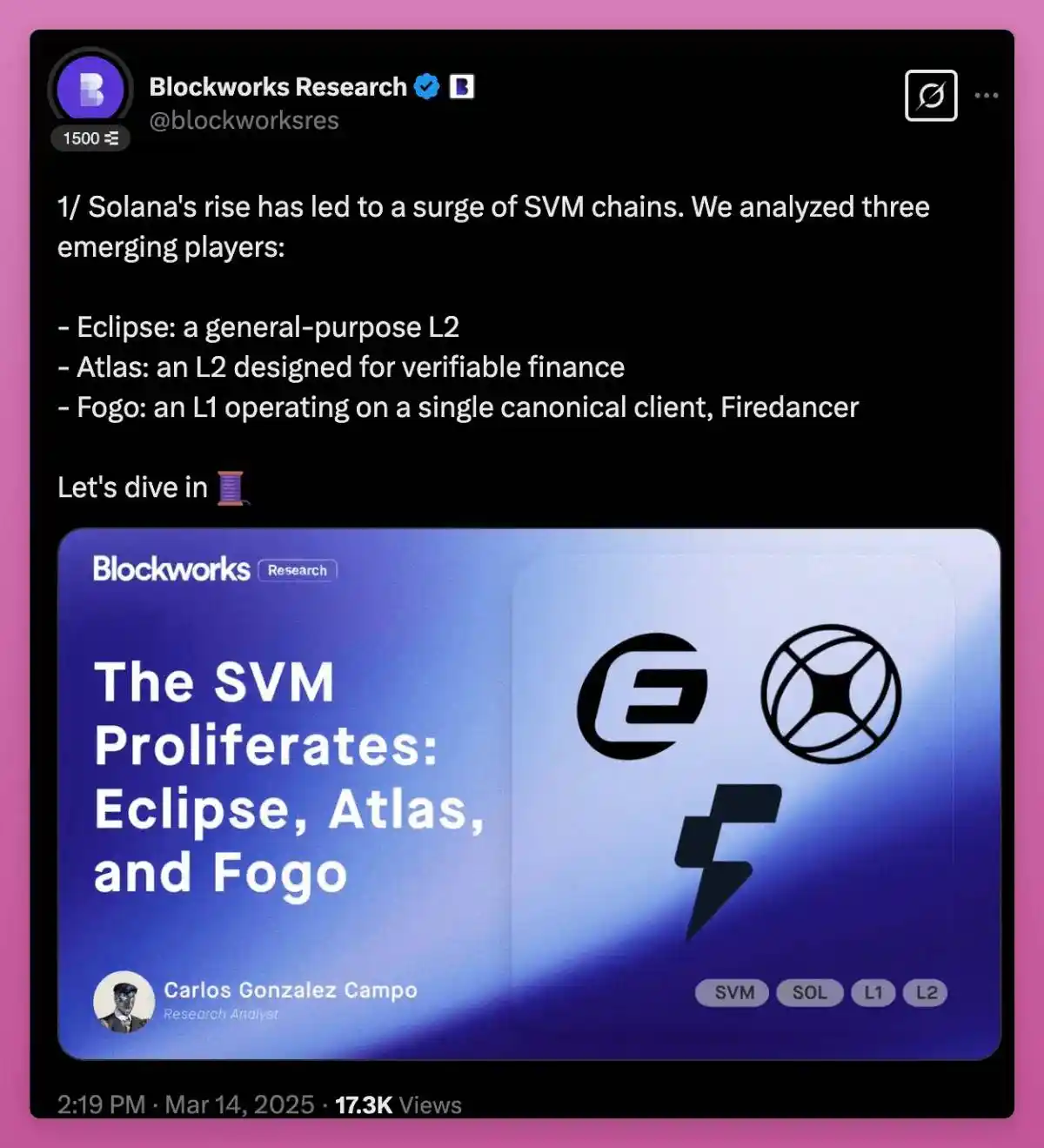
Eclipse and Atlas are two additional SVM (Solana VM) chains on Fogo.
Eclipse is an Ethereum L2, but it uses SVM instead of EVM and employs Celestia for DA. It has already launched, but the total locked value is only $57 million. As Kyle (above tweet) pointed out, this shows how challenging it is to differentiate from other general chains.
A standalone SVM is not enough to stand out from other L2s.
The token appears to have been confirmed as code ES:
· E-Ethereum
· S-Solana
Atlas is another Ethereum-based L2 SVM, but built specifically for on-chain order books, margin systems, and high-frequency trading. Hence it needs speed! The testnet is already live.
As I know you're itching to get back to X for some surfing, here's more information on Eclipse and Atlas provided by Blockworks.
You may also like

Token Cannot Compound, Where Is the Real Investment Opportunity?

February 6th Market Key Intelligence, How Much Did You Miss?

China's Central Bank and Eight Other Departments' Latest Regulatory Focus: Key Attention to RWA Tokenized Asset Risk
Foreword: Today, the People's Bank of China's website published the "Notice of the People's Bank of China, National Development and Reform Commission, Ministry of Industry and Information Technology, Ministry of Public Security, State Administration for Market Regulation, China Banking and Insurance Regulatory Commission, China Securities Regulatory Commission, State Administration of Foreign Exchange on Further Preventing and Dealing with Risks Related to Virtual Currency and Others (Yinfa [2026] No. 42)", the latest regulatory requirements from the eight departments including the central bank, which are basically consistent with the regulatory requirements of recent years. The main focus of the regulation is on speculative activities such as virtual currency trading, exchanges, ICOs, overseas platform services, and this time, regulatory oversight of RWA has been added, explicitly prohibiting RWA tokenization, stablecoins (especially those pegged to the RMB). The following is the full text:
To the people's governments of all provinces, autonomous regions, and municipalities directly under the Central Government, the Xinjiang Production and Construction Corps:
Recently, there have been speculative activities related to virtual currency and Real-World Assets (RWA) tokenization, disrupting the economic and financial order and jeopardizing the property security of the people. In order to further prevent and address the risks related to virtual currency and Real-World Assets tokenization, effectively safeguard national security and social stability, in accordance with the "Law of the People's Republic of China on the People's Bank of China," "Law of the People's Republic of China on Commercial Banks," "Securities Law of the People's Republic of China," "Law of the People's Republic of China on Securities Investment Funds," "Law of the People's Republic of China on Futures and Derivatives," "Cybersecurity Law of the People's Republic of China," "Regulations of the People's Republic of China on the Administration of Renminbi," "Regulations on Prevention and Disposal of Illegal Fundraising," "Regulations of the People's Republic of China on Foreign Exchange Administration," "Telecommunications Regulations of the People's Republic of China," and other provisions, after reaching consensus with the Cyberspace Administration of China, the Supreme People's Court, and the Supreme People's Procuratorate, and with the approval of the State Council, the relevant matters are notified as follows:
(I) Virtual currency does not possess the legal status equivalent to fiat currency. Virtual currencies such as Bitcoin, Ether, Tether, etc., have the main characteristics of being issued by non-monetary authorities, using encryption technology and distributed ledger or similar technology, existing in digital form, etc. They do not have legal tender status, should not and cannot be circulated and used as currency in the market.
The business activities related to virtual currency are classified as illegal financial activities. The exchange of fiat currency and virtual currency within the territory, exchange of virtual currencies, acting as a central counterparty in buying and selling virtual currencies, providing information intermediary and pricing services for virtual currency transactions, token issuance financing, and trading of virtual currency-related financial products, etc., fall under illegal financial activities, such as suspected illegal issuance of token vouchers, unauthorized public issuance of securities, illegal operation of securities and futures business, illegal fundraising, etc., are strictly prohibited across the board and resolutely banned in accordance with the law. Overseas entities and individuals are not allowed to provide virtual currency-related services to domestic entities in any form.
A stablecoin pegged to a fiat currency indirectly fulfills some functions of the fiat currency in circulation. Without the consent of relevant authorities in accordance with the law and regulations, any domestic or foreign entity or individual is not allowed to issue a RMB-pegged stablecoin overseas.
(II)Tokenization of Real-World Assets refers to the use of encryption technology and distributed ledger or similar technologies to transform ownership rights, income rights, etc., of assets into tokens (tokens) or other interests or bond certificates with token (token) characteristics, and carry out issuance and trading activities.
Engaging in the tokenization of real-world assets domestically, as well as providing related intermediary, information technology services, etc., which are suspected of illegal issuance of token vouchers, unauthorized public offering of securities, illegal operation of securities and futures business, illegal fundraising, and other illegal financial activities, shall be prohibited; except for relevant business activities carried out with the approval of the competent authorities in accordance with the law and regulations and relying on specific financial infrastructures. Overseas entities and individuals are not allowed to illegally provide services related to the tokenization of real-world assets to domestic entities in any form.
(III) Inter-agency Coordination. The People's Bank of China, together with the National Development and Reform Commission, the Ministry of Industry and Information Technology, the Ministry of Public Security, the State Administration for Market Regulation, the China Banking and Insurance Regulatory Commission, the China Securities Regulatory Commission, the State Administration of Foreign Exchange, and other departments, will improve the work mechanism, strengthen coordination with the Cyberspace Administration of China, the Supreme People's Court, and the Supreme People's Procuratorate, coordinate efforts, and overall guide regions to carry out risk prevention and disposal of virtual currency-related illegal financial activities.
The China Securities Regulatory Commission, together with the National Development and Reform Commission, the Ministry of Industry and Information Technology, the Ministry of Public Security, the People's Bank of China, the State Administration for Market Regulation, the China Banking and Insurance Regulatory Commission, the State Administration of Foreign Exchange, and other departments, will improve the work mechanism, strengthen coordination with the Cyberspace Administration of China, the Supreme People's Court, and the Supreme People's Procuratorate, coordinate efforts, and overall guide regions to carry out risk prevention and disposal of illegal financial activities related to the tokenization of real-world assets.
(IV) Strengthening Local Implementation. The people's governments at the provincial level are overall responsible for the prevention and disposal of risks related to virtual currencies and the tokenization of real-world assets in their respective administrative regions. The specific leading department is the local financial regulatory department, with participation from branches and dispatched institutions of the State Council's financial regulatory department, telecommunications regulators, public security, market supervision, and other departments, in coordination with cyberspace departments, courts, and procuratorates, to improve the normalization of the work mechanism, effectively connect with the relevant work mechanisms of central departments, form a cooperative and coordinated working pattern between central and local governments, effectively prevent and properly handle risks related to virtual currencies and the tokenization of real-world assets, and maintain economic and financial order and social stability.
(5) Enhanced Risk Monitoring. The People's Bank of China, China Securities Regulatory Commission, National Development and Reform Commission, Ministry of Industry and Information Technology, Ministry of Public Security, State Administration of Foreign Exchange, Cyberspace Administration of China, and other departments continue to improve monitoring techniques and system support, enhance cross-departmental data analysis and sharing, establish sound information sharing and cross-validation mechanisms, promptly grasp the risk situation of activities related to virtual currency and real-world asset tokenization. Local governments at all levels give full play to the role of local monitoring and early warning mechanisms. Local financial regulatory authorities, together with branches and agencies of the State Council's financial regulatory authorities, as well as departments of cyberspace and public security, ensure effective connection between online monitoring, offline investigation, and fund tracking, efficiently and accurately identify activities related to virtual currency and real-world asset tokenization, promptly share risk information, improve early warning information dissemination, verification, and rapid response mechanisms.
(6) Strengthened Oversight of Financial Institutions, Intermediaries, and Technology Service Providers. Financial institutions (including non-bank payment institutions) are prohibited from providing account opening, fund transfer, and clearing services for virtual currency-related business activities, issuing and selling financial products related to virtual currency, including virtual currency and related financial products in the scope of collateral, conducting insurance business related to virtual currency, or including virtual currency in the scope of insurance liability. Financial institutions (including non-bank payment institutions) are prohibited from providing custody, clearing, and settlement services for unauthorized real-world asset tokenization-related business and related financial products. Relevant intermediary institutions and information technology service providers are prohibited from providing intermediary, technical, or other services for unauthorized real-world asset tokenization-related businesses and related financial products.
(7) Enhanced Management of Internet Information Content and Access. Internet enterprises are prohibited from providing online business venues, commercial displays, marketing, advertising, or paid traffic diversion services for virtual currency and real-world asset tokenization-related business activities. Upon discovering clues of illegal activities, they should promptly report to relevant departments and provide technical support and assistance for related investigations and inquiries. Based on the clues transferred by the financial regulatory authorities, the cyberspace administration, telecommunications authorities, and public security departments should promptly close and deal with websites, mobile applications (including mini-programs), and public accounts engaged in virtual currency and real-world asset tokenization-related business activities in accordance with the law.
(8) Strengthened Entity Registration and Advertisement Management. Market supervision departments strengthen entity registration and management, and enterprise and individual business registrations must not contain terms such as "virtual currency," "virtual asset," "cryptocurrency," "crypto asset," "stablecoin," "real-world asset tokenization," or "RWA" in their names or business scopes. Market supervision departments, together with financial regulatory authorities, legally enhance the supervision of advertisements related to virtual currency and real-world asset tokenization, promptly investigating and handling relevant illegal advertisements.
(IX) Continued Rectification of Virtual Currency Mining Activities. The National Development and Reform Commission, together with relevant departments, strictly controls virtual currency mining activities, continuously promotes the rectification of virtual currency mining activities. The people's governments of various provinces take overall responsibility for the rectification of "mining" within their respective administrative regions. In accordance with the requirements of the National Development and Reform Commission and other departments in the "Notice on the Rectification of Virtual Currency Mining Activities" (NDRC Energy-saving Building [2021] No. 1283) and the provisions of the "Guidance Catalog for Industrial Structure Adjustment (2024 Edition)," a comprehensive review, investigation, and closure of existing virtual currency mining projects are conducted, new mining projects are strictly prohibited, and mining machine production enterprises are strictly prohibited from providing mining machine sales and other services within the country.
(X) Severe Crackdown on Related Illegal Financial Activities. Upon discovering clues to illegal financial activities related to virtual currency and the tokenization of real-world assets, local financial regulatory authorities, branches of the State Council's financial regulatory authorities, and other relevant departments promptly investigate, determine, and properly handle the issues in accordance with the law, and seriously hold the relevant entities and individuals legally responsible. Those suspected of crimes are transferred to the judicial authorities for processing according to the law.
(XI) Severe Crackdown on Related Illegal and Criminal Activities. The Ministry of Public Security, the People's Bank of China, the State Administration for Market Regulation, the China Banking and Insurance Regulatory Commission, the China Securities Regulatory Commission, as well as judicial and procuratorial organs, in accordance with their respective responsibilities, rigorously crack down on illegal and criminal activities related to virtual currency, the tokenization of real-world assets, such as fraud, money laundering, illegal business operations, pyramid schemes, illegal fundraising, and other illegal and criminal activities carried out under the guise of virtual currency, the tokenization of real-world assets, etc.
(XII) Strengthen Industry Self-discipline. Relevant industry associations should enhance membership management and policy advocacy, based on their own responsibilities, advocate and urge member units to resist illegal financial activities related to virtual currency and the tokenization of real-world assets. Member units that violate regulatory policies and industry self-discipline rules are to be disciplined in accordance with relevant self-regulatory management regulations. By leveraging various industry infrastructure, conduct risk monitoring related to virtual currency, the tokenization of real-world assets, and promptly transfer issue clues to relevant departments.
(XIII) Without the approval of relevant departments in accordance with the law and regulations, domestic entities and foreign entities controlled by them may not issue virtual currency overseas.
(XIV) Domestic entities engaging directly or indirectly in overseas external debt-based tokenization of real-world assets, or conducting asset securitization activities abroad based on domestic ownership rights, income rights, etc. (hereinafter referred to as domestic equity), should be strictly regulated in accordance with the principles of "same business, same risk, same rules." The National Development and Reform Commission, the China Securities Regulatory Commission, the State Administration of Foreign Exchange, and other relevant departments regulate it according to their respective responsibilities. For other forms of overseas real-world asset tokenization activities based on domestic equity by domestic entities, the China Securities Regulatory Commission, together with relevant departments, supervise according to their division of responsibilities. Without the consent and filing of relevant departments, no unit or individual may engage in the above-mentioned business.
(15) Overseas subsidiaries and branches of domestic financial institutions providing Real World Asset Tokenization-related services overseas shall do so legally and prudently. They shall have professional personnel and systems in place to effectively mitigate business risks, strictly implement customer onboarding, suitability management, anti-money laundering requirements, and incorporate them into the domestic financial institutions' compliance and risk management system. Intermediaries and information technology service providers offering Real World Asset Tokenization services abroad based on domestic equity or conducting Real World Asset Tokenization business in the form of overseas debt for domestic entities directly or indirectly venturing abroad must strictly comply with relevant laws and regulations. They should establish and improve relevant compliance and internal control systems in accordance with relevant normative requirements, strengthen business and risk control, and report the business developments to the relevant regulatory authorities for approval or filing.
(16) Strengthen organizational leadership and overall coordination. All departments and regions should attach great importance to the prevention of risks related to virtual currencies and Real World Asset Tokenization, strengthen organizational leadership, clarify work responsibilities, form a long-term effective working mechanism with centralized coordination, local implementation, and shared responsibilities, maintain high pressure, dynamically monitor risks, effectively prevent and mitigate risks in an orderly and efficient manner, legally protect the property security of the people, and make every effort to maintain economic and financial order and social stability.
(17) Widely carry out publicity and education. All departments, regions, and industry associations should make full use of various media and other communication channels to disseminate information through legal and policy interpretation, analysis of typical cases, and education on investment risks, etc. They should promote the illegality and harm of virtual currencies and Real World Asset Tokenization-related businesses and their manifestations, fully alert to potential risks and hidden dangers, and enhance public awareness and identification capabilities for risk prevention.
(18) Engaging in illegal financial activities related to virtual currencies and Real World Asset Tokenization in violation of this notice, as well as providing services for virtual currencies and Real World Asset Tokenization-related businesses, shall be punished in accordance with relevant regulations. If it constitutes a crime, criminal liability shall be pursued according to the law. For domestic entities and individuals who knowingly or should have known that overseas entities illegally provided virtual currency or Real World Asset Tokenization-related services to domestic entities and still assisted them, relevant responsibilities shall be pursued according to the law. If it constitutes a crime, criminal liability shall be pursued according to the law.
(19) If any unit or individual invests in virtual currencies, Real World Asset Tokens, and related financial products against public order and good customs, the relevant civil legal actions shall be invalid, and any resulting losses shall be borne by them. If there are suspicions of disrupting financial order and jeopardizing financial security, the relevant departments shall deal with them according to the law.
This notice shall enter into force upon the date of its issuance. The People's Bank of China and ten other departments' "Notice on Further Preventing and Dealing with the Risks of Virtual Currency Trading Speculation" (Yinfa [2021] No. 237) is hereby repealed.

Former Partner's Perspective on Multicoin: Kyle's Exit, But the Game He Left Behind Just Getting Started
Why Bitcoin Is Falling Now: The Real Reasons Behind BTC's Crash & WEEX's Smart Profit Playbook
Bitcoin's ongoing crash explained: Discover the 5 hidden triggers behind BTC's plunge & how WEEX's Auto Earn and Trade to Earn strategies help traders profit from crypto market volatility.

Wall Street's Hottest Trades See Exodus

Vitalik Discusses Ethereum Scaling Path, Circle Announces Partnership with Polymarket, What's the Overseas Crypto Community Talking About Today?

Believing in the Capital Markets - The Essence and Core Value of Cryptocurrency

Polymarket's 'Weatherman': Predict Temperature, Win Million-Dollar Payout
$15K+ Profits: The 4 AI Trading Secrets WEEX Hackathon Prelim Winners Used to Dominate Volatile Crypto Markets
How WEEX Hackathon's top AI trading strategies made $15K+ in crypto markets: 4 proven rules for ETH/BTC trading, market structure analysis, and risk management in volatile conditions.

A nearly 20% one-day plunge, how long has it been since you last saw a $60,000 Bitcoin?

Raoul Pal: I've seen every single panic, and they are never the end.

Key Market Information Discrepancy on February 6th - A Must-Read! | Alpha Morning Report

2026 Crypto Industry's First Snowfall

The Harsh Reality Behind the $26 Billion Crypto Liquidation: Liquidity Is Killing the Market

Why Is Gold, US Stocks, Bitcoin All Falling?

Key Market Intelligence for February 5th, how much did you miss out on?

Wintermute: By 2026, crypto had gradually become the settlement layer of the Internet economy
Token Cannot Compound, Where Is the Real Investment Opportunity?
February 6th Market Key Intelligence, How Much Did You Miss?
China's Central Bank and Eight Other Departments' Latest Regulatory Focus: Key Attention to RWA Tokenized Asset Risk
Foreword: Today, the People's Bank of China's website published the "Notice of the People's Bank of China, National Development and Reform Commission, Ministry of Industry and Information Technology, Ministry of Public Security, State Administration for Market Regulation, China Banking and Insurance Regulatory Commission, China Securities Regulatory Commission, State Administration of Foreign Exchange on Further Preventing and Dealing with Risks Related to Virtual Currency and Others (Yinfa [2026] No. 42)", the latest regulatory requirements from the eight departments including the central bank, which are basically consistent with the regulatory requirements of recent years. The main focus of the regulation is on speculative activities such as virtual currency trading, exchanges, ICOs, overseas platform services, and this time, regulatory oversight of RWA has been added, explicitly prohibiting RWA tokenization, stablecoins (especially those pegged to the RMB). The following is the full text:
To the people's governments of all provinces, autonomous regions, and municipalities directly under the Central Government, the Xinjiang Production and Construction Corps:
Recently, there have been speculative activities related to virtual currency and Real-World Assets (RWA) tokenization, disrupting the economic and financial order and jeopardizing the property security of the people. In order to further prevent and address the risks related to virtual currency and Real-World Assets tokenization, effectively safeguard national security and social stability, in accordance with the "Law of the People's Republic of China on the People's Bank of China," "Law of the People's Republic of China on Commercial Banks," "Securities Law of the People's Republic of China," "Law of the People's Republic of China on Securities Investment Funds," "Law of the People's Republic of China on Futures and Derivatives," "Cybersecurity Law of the People's Republic of China," "Regulations of the People's Republic of China on the Administration of Renminbi," "Regulations on Prevention and Disposal of Illegal Fundraising," "Regulations of the People's Republic of China on Foreign Exchange Administration," "Telecommunications Regulations of the People's Republic of China," and other provisions, after reaching consensus with the Cyberspace Administration of China, the Supreme People's Court, and the Supreme People's Procuratorate, and with the approval of the State Council, the relevant matters are notified as follows:
(I) Virtual currency does not possess the legal status equivalent to fiat currency. Virtual currencies such as Bitcoin, Ether, Tether, etc., have the main characteristics of being issued by non-monetary authorities, using encryption technology and distributed ledger or similar technology, existing in digital form, etc. They do not have legal tender status, should not and cannot be circulated and used as currency in the market.
The business activities related to virtual currency are classified as illegal financial activities. The exchange of fiat currency and virtual currency within the territory, exchange of virtual currencies, acting as a central counterparty in buying and selling virtual currencies, providing information intermediary and pricing services for virtual currency transactions, token issuance financing, and trading of virtual currency-related financial products, etc., fall under illegal financial activities, such as suspected illegal issuance of token vouchers, unauthorized public issuance of securities, illegal operation of securities and futures business, illegal fundraising, etc., are strictly prohibited across the board and resolutely banned in accordance with the law. Overseas entities and individuals are not allowed to provide virtual currency-related services to domestic entities in any form.
A stablecoin pegged to a fiat currency indirectly fulfills some functions of the fiat currency in circulation. Without the consent of relevant authorities in accordance with the law and regulations, any domestic or foreign entity or individual is not allowed to issue a RMB-pegged stablecoin overseas.
(II)Tokenization of Real-World Assets refers to the use of encryption technology and distributed ledger or similar technologies to transform ownership rights, income rights, etc., of assets into tokens (tokens) or other interests or bond certificates with token (token) characteristics, and carry out issuance and trading activities.
Engaging in the tokenization of real-world assets domestically, as well as providing related intermediary, information technology services, etc., which are suspected of illegal issuance of token vouchers, unauthorized public offering of securities, illegal operation of securities and futures business, illegal fundraising, and other illegal financial activities, shall be prohibited; except for relevant business activities carried out with the approval of the competent authorities in accordance with the law and regulations and relying on specific financial infrastructures. Overseas entities and individuals are not allowed to illegally provide services related to the tokenization of real-world assets to domestic entities in any form.
(III) Inter-agency Coordination. The People's Bank of China, together with the National Development and Reform Commission, the Ministry of Industry and Information Technology, the Ministry of Public Security, the State Administration for Market Regulation, the China Banking and Insurance Regulatory Commission, the China Securities Regulatory Commission, the State Administration of Foreign Exchange, and other departments, will improve the work mechanism, strengthen coordination with the Cyberspace Administration of China, the Supreme People's Court, and the Supreme People's Procuratorate, coordinate efforts, and overall guide regions to carry out risk prevention and disposal of virtual currency-related illegal financial activities.
The China Securities Regulatory Commission, together with the National Development and Reform Commission, the Ministry of Industry and Information Technology, the Ministry of Public Security, the People's Bank of China, the State Administration for Market Regulation, the China Banking and Insurance Regulatory Commission, the State Administration of Foreign Exchange, and other departments, will improve the work mechanism, strengthen coordination with the Cyberspace Administration of China, the Supreme People's Court, and the Supreme People's Procuratorate, coordinate efforts, and overall guide regions to carry out risk prevention and disposal of illegal financial activities related to the tokenization of real-world assets.
(IV) Strengthening Local Implementation. The people's governments at the provincial level are overall responsible for the prevention and disposal of risks related to virtual currencies and the tokenization of real-world assets in their respective administrative regions. The specific leading department is the local financial regulatory department, with participation from branches and dispatched institutions of the State Council's financial regulatory department, telecommunications regulators, public security, market supervision, and other departments, in coordination with cyberspace departments, courts, and procuratorates, to improve the normalization of the work mechanism, effectively connect with the relevant work mechanisms of central departments, form a cooperative and coordinated working pattern between central and local governments, effectively prevent and properly handle risks related to virtual currencies and the tokenization of real-world assets, and maintain economic and financial order and social stability.
(5) Enhanced Risk Monitoring. The People's Bank of China, China Securities Regulatory Commission, National Development and Reform Commission, Ministry of Industry and Information Technology, Ministry of Public Security, State Administration of Foreign Exchange, Cyberspace Administration of China, and other departments continue to improve monitoring techniques and system support, enhance cross-departmental data analysis and sharing, establish sound information sharing and cross-validation mechanisms, promptly grasp the risk situation of activities related to virtual currency and real-world asset tokenization. Local governments at all levels give full play to the role of local monitoring and early warning mechanisms. Local financial regulatory authorities, together with branches and agencies of the State Council's financial regulatory authorities, as well as departments of cyberspace and public security, ensure effective connection between online monitoring, offline investigation, and fund tracking, efficiently and accurately identify activities related to virtual currency and real-world asset tokenization, promptly share risk information, improve early warning information dissemination, verification, and rapid response mechanisms.
(6) Strengthened Oversight of Financial Institutions, Intermediaries, and Technology Service Providers. Financial institutions (including non-bank payment institutions) are prohibited from providing account opening, fund transfer, and clearing services for virtual currency-related business activities, issuing and selling financial products related to virtual currency, including virtual currency and related financial products in the scope of collateral, conducting insurance business related to virtual currency, or including virtual currency in the scope of insurance liability. Financial institutions (including non-bank payment institutions) are prohibited from providing custody, clearing, and settlement services for unauthorized real-world asset tokenization-related business and related financial products. Relevant intermediary institutions and information technology service providers are prohibited from providing intermediary, technical, or other services for unauthorized real-world asset tokenization-related businesses and related financial products.
(7) Enhanced Management of Internet Information Content and Access. Internet enterprises are prohibited from providing online business venues, commercial displays, marketing, advertising, or paid traffic diversion services for virtual currency and real-world asset tokenization-related business activities. Upon discovering clues of illegal activities, they should promptly report to relevant departments and provide technical support and assistance for related investigations and inquiries. Based on the clues transferred by the financial regulatory authorities, the cyberspace administration, telecommunications authorities, and public security departments should promptly close and deal with websites, mobile applications (including mini-programs), and public accounts engaged in virtual currency and real-world asset tokenization-related business activities in accordance with the law.
(8) Strengthened Entity Registration and Advertisement Management. Market supervision departments strengthen entity registration and management, and enterprise and individual business registrations must not contain terms such as "virtual currency," "virtual asset," "cryptocurrency," "crypto asset," "stablecoin," "real-world asset tokenization," or "RWA" in their names or business scopes. Market supervision departments, together with financial regulatory authorities, legally enhance the supervision of advertisements related to virtual currency and real-world asset tokenization, promptly investigating and handling relevant illegal advertisements.
(IX) Continued Rectification of Virtual Currency Mining Activities. The National Development and Reform Commission, together with relevant departments, strictly controls virtual currency mining activities, continuously promotes the rectification of virtual currency mining activities. The people's governments of various provinces take overall responsibility for the rectification of "mining" within their respective administrative regions. In accordance with the requirements of the National Development and Reform Commission and other departments in the "Notice on the Rectification of Virtual Currency Mining Activities" (NDRC Energy-saving Building [2021] No. 1283) and the provisions of the "Guidance Catalog for Industrial Structure Adjustment (2024 Edition)," a comprehensive review, investigation, and closure of existing virtual currency mining projects are conducted, new mining projects are strictly prohibited, and mining machine production enterprises are strictly prohibited from providing mining machine sales and other services within the country.
(X) Severe Crackdown on Related Illegal Financial Activities. Upon discovering clues to illegal financial activities related to virtual currency and the tokenization of real-world assets, local financial regulatory authorities, branches of the State Council's financial regulatory authorities, and other relevant departments promptly investigate, determine, and properly handle the issues in accordance with the law, and seriously hold the relevant entities and individuals legally responsible. Those suspected of crimes are transferred to the judicial authorities for processing according to the law.
(XI) Severe Crackdown on Related Illegal and Criminal Activities. The Ministry of Public Security, the People's Bank of China, the State Administration for Market Regulation, the China Banking and Insurance Regulatory Commission, the China Securities Regulatory Commission, as well as judicial and procuratorial organs, in accordance with their respective responsibilities, rigorously crack down on illegal and criminal activities related to virtual currency, the tokenization of real-world assets, such as fraud, money laundering, illegal business operations, pyramid schemes, illegal fundraising, and other illegal and criminal activities carried out under the guise of virtual currency, the tokenization of real-world assets, etc.
(XII) Strengthen Industry Self-discipline. Relevant industry associations should enhance membership management and policy advocacy, based on their own responsibilities, advocate and urge member units to resist illegal financial activities related to virtual currency and the tokenization of real-world assets. Member units that violate regulatory policies and industry self-discipline rules are to be disciplined in accordance with relevant self-regulatory management regulations. By leveraging various industry infrastructure, conduct risk monitoring related to virtual currency, the tokenization of real-world assets, and promptly transfer issue clues to relevant departments.
(XIII) Without the approval of relevant departments in accordance with the law and regulations, domestic entities and foreign entities controlled by them may not issue virtual currency overseas.
(XIV) Domestic entities engaging directly or indirectly in overseas external debt-based tokenization of real-world assets, or conducting asset securitization activities abroad based on domestic ownership rights, income rights, etc. (hereinafter referred to as domestic equity), should be strictly regulated in accordance with the principles of "same business, same risk, same rules." The National Development and Reform Commission, the China Securities Regulatory Commission, the State Administration of Foreign Exchange, and other relevant departments regulate it according to their respective responsibilities. For other forms of overseas real-world asset tokenization activities based on domestic equity by domestic entities, the China Securities Regulatory Commission, together with relevant departments, supervise according to their division of responsibilities. Without the consent and filing of relevant departments, no unit or individual may engage in the above-mentioned business.
(15) Overseas subsidiaries and branches of domestic financial institutions providing Real World Asset Tokenization-related services overseas shall do so legally and prudently. They shall have professional personnel and systems in place to effectively mitigate business risks, strictly implement customer onboarding, suitability management, anti-money laundering requirements, and incorporate them into the domestic financial institutions' compliance and risk management system. Intermediaries and information technology service providers offering Real World Asset Tokenization services abroad based on domestic equity or conducting Real World Asset Tokenization business in the form of overseas debt for domestic entities directly or indirectly venturing abroad must strictly comply with relevant laws and regulations. They should establish and improve relevant compliance and internal control systems in accordance with relevant normative requirements, strengthen business and risk control, and report the business developments to the relevant regulatory authorities for approval or filing.
(16) Strengthen organizational leadership and overall coordination. All departments and regions should attach great importance to the prevention of risks related to virtual currencies and Real World Asset Tokenization, strengthen organizational leadership, clarify work responsibilities, form a long-term effective working mechanism with centralized coordination, local implementation, and shared responsibilities, maintain high pressure, dynamically monitor risks, effectively prevent and mitigate risks in an orderly and efficient manner, legally protect the property security of the people, and make every effort to maintain economic and financial order and social stability.
(17) Widely carry out publicity and education. All departments, regions, and industry associations should make full use of various media and other communication channels to disseminate information through legal and policy interpretation, analysis of typical cases, and education on investment risks, etc. They should promote the illegality and harm of virtual currencies and Real World Asset Tokenization-related businesses and their manifestations, fully alert to potential risks and hidden dangers, and enhance public awareness and identification capabilities for risk prevention.
(18) Engaging in illegal financial activities related to virtual currencies and Real World Asset Tokenization in violation of this notice, as well as providing services for virtual currencies and Real World Asset Tokenization-related businesses, shall be punished in accordance with relevant regulations. If it constitutes a crime, criminal liability shall be pursued according to the law. For domestic entities and individuals who knowingly or should have known that overseas entities illegally provided virtual currency or Real World Asset Tokenization-related services to domestic entities and still assisted them, relevant responsibilities shall be pursued according to the law. If it constitutes a crime, criminal liability shall be pursued according to the law.
(19) If any unit or individual invests in virtual currencies, Real World Asset Tokens, and related financial products against public order and good customs, the relevant civil legal actions shall be invalid, and any resulting losses shall be borne by them. If there are suspicions of disrupting financial order and jeopardizing financial security, the relevant departments shall deal with them according to the law.
This notice shall enter into force upon the date of its issuance. The People's Bank of China and ten other departments' "Notice on Further Preventing and Dealing with the Risks of Virtual Currency Trading Speculation" (Yinfa [2021] No. 237) is hereby repealed.
Former Partner's Perspective on Multicoin: Kyle's Exit, But the Game He Left Behind Just Getting Started
Why Bitcoin Is Falling Now: The Real Reasons Behind BTC's Crash & WEEX's Smart Profit Playbook
Bitcoin's ongoing crash explained: Discover the 5 hidden triggers behind BTC's plunge & how WEEX's Auto Earn and Trade to Earn strategies help traders profit from crypto market volatility.