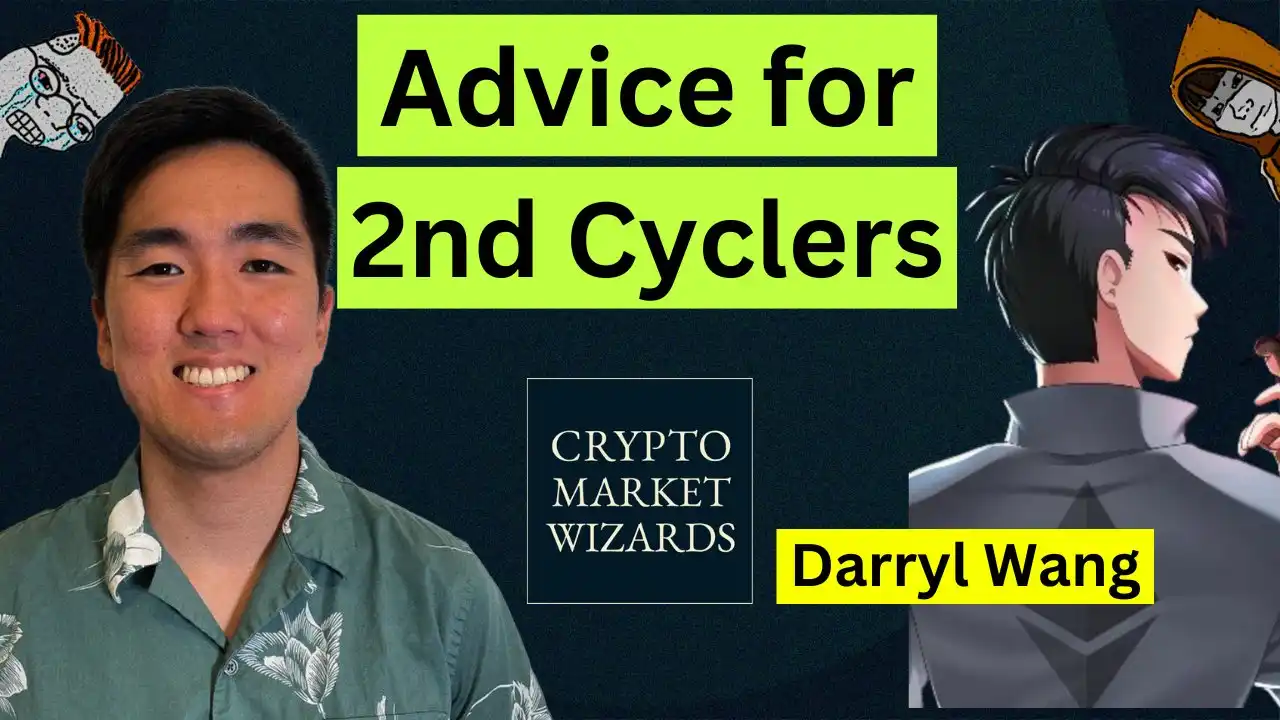
Exclusive Interview with 'Dove' Eugene: In the Crypto World, Survival Always Comes First | In-Depth Conversation

By: blockbeats|2025/03/20 12:30:03
0
Share
copy
Original Interview: Taiki Maeda;
Guest: Darryl Wang (@0xENAS), renowned trader Eugene, Tangent Co-founder;
Original Translation: Deepseek

Editor's Note: This article summarizes the professional journey and trading insights of renowned cryptocurrency trader Eugene over the past 3-4 years. He has grown from the setback of nearly being liquidated in 2021, founded the Tangent investment company, and focused on the liquidity market and long-term strategies. Darryl emphasizes the importance of risk management, position concentration, and teamwork, advises newcomers to focus on on-chain assets, and maintain patience. He also hopes to support space exploration and other ventures through cryptocurrency success, encouraging traders to pursue success and give back to society.

The following is the original content (slightly reorganized for better readability):

Exclusive Interview with 'Dove' Eugene: In the Crypto World, Survival Always Comes First | In-Depth Conversation

Many people know Darryl (renowned trader Eugene) by his account on X as 0xENAS, where he frequently shares trade records, monthly reflections, and market insights. He is one of the world's top cryptocurrency traders, but his journey has been full of ups and downs. After nearly being liquidated in May 2021, he successfully transformed into an investor and established one of the most reputable funds in the field.

Since 2022, I have had several conversations with Darryl on my YouTube channel, hoping to transcribe those insights and takeaways that have been most helpful for my trading. He is one of the sharpest minds in the field, and I hope these contents will also be helpful to you.

Trader Eugene's Journey

For those unfamiliar, could you share about your current work?

I co-founded Tangent, a multi-strategy principal investment firm, where I focus on the liquidity market, while my partner Jason oversees venture capital. We also jointly manage a spot investment portfolio guided by a long-term fundamental strategy. Previously, I was the head of Defiance Capital. I entered the cryptocurrency space in 2020 as a retail trader, but since then, I have grown significantly.

You are now a very successful trader, but I remember you faced some setbacks in 2021 as well. Could you share about your mistakes and what you learned from them?

At the beginning of 2021, I was fully in a high-risk mode, actively using leverage. I made some profit in February, but March reversed the gains — leading to a crash in May that I couldn't dodge. Due to overexposure and attempting to catch the falling knife with leverage, I experienced an 80% drawdown at the worst, forcing me to deleverage core positions at the bottom. It was brutal, but it taught me the most crucial lesson: survival comes first.

I cut my losses and started over. One major mistake was overallocating to a single DeFi protocol that never recovered after the downturn. That loss reinforced the need for diversification, no matter how strong my conviction was.

The key is to stay in the game. No single trade should bankrupt you. Adaptability, risk management, and learning from mistakes are key to long-term success. Even today, as we size our bets, minimizing the risk of bankruptcy is our most critical consideration.

How has your trading style evolved?

The first step is understanding how you should position yourself — looking for those asymmetric opportunities with significant upside potential. The harder part is identifying these opportunities in real-time. There's no crystal ball; it comes from experience, trial and error, and nurturing intuition.

For me, cryptocurrency still feels very intuition-driven. When I see a new opportunity, I usually have an intuition within minutes, and over time, I find that my initial intuition is often correct. Looking back, I try to analyze what triggered that intuition — what specific factors made me confident in an investment. These patterns often repeat. While the market is ever-changing, the biggest winners usually have similar traits. Over time, we've built a proprietary framework at Tangent to help crystallize and quantify these characteristics so we can better identify them in the future. These frameworks have been immensely helpful in improving accuracy and allowing others within the company to benefit from my market experience.

How do you deal with psychological issues in trading?

Yes, this is a significant challenge. In a 24/7 market like cryptocurrency, you're constantly battling emotions of greed, fear, and the sense that someone will dump on you. Keeping a clear head is paramount. If I feel emotions taking over, I take a step back. Sometimes, I completely step away from cryptocurrency for two to three days to reset.

One key lesson I've learned is that you can't catch every opportunity. You have to accept missing out on some opportunities. I stick to my lane. Recognizing your strengths and ignoring distractions is key to long-term success. As GCR once said, "He who runs after two hares will catch neither."

How do you view bet size?

I believe in concentration. Sometimes we'll put 80% of the portfolio into our top three ideas. It's about aligning your portfolio with your highest-conviction bets. The key is to ensure your position size matches your conviction. Of course, this also means you need strict risk management to avoid significant drawdowns.

How do you navigate the internal struggle of wanting to avoid risk but also seeking outsized returns?

That's a tricky question. In the first cycle, I took on significant risk — like putting 80% of net worth into a single asset. While in hindsight that may sound absurd, that bold move led to significant returns. Now, as a second-cycle investor, I'm more cautious, but I still ask myself: what allowed me to make those bold moves before and how can I replicate them now in a more measured manner? The challenge is to take on risk while not losing sight of past convictions and maintaining a realistic view of market volatility.

Past Investment Experiences

I remember you allocated 80% of your net worth to AVAX in 2021. Looking back, if given the opportunity, do you think you would make the same decision again?

That's a tough question. In hindsight, it may seem absurd, but that risk exposure allowed me to compound returns significantly. Today, I ask myself if I could still do the same. As I've matured, I have a higher understanding of risk and have a completely different set of systems and frameworks to prevent major mistakes. Back then, I was more naive, and I believe that mindset played a significant role in the success of the previous cycle. It's crucial to be aware of risk, but also to dare to dream when the market presents an opportunity.

So, are you saying your current approach is more cautious, but you still need to be able to take on similar risks to achieve those outsized returns?

Exactly. Even though it may be daunting, understanding the need to make large, concentrated bets is crucial. It's challenging, but the best cycle returns stem from this. You have to be willing to take those risks, even if they make you uncomfortable.

It sounds like you've built a lot of discipline over the years. Could you share an example of a bad trade you made and what you learned from it?

I am also human and make mistakes frequently. One recent transaction that left a scar on me was when I overleveraged on $SOL at $210 and did not respect my stop-loss at $200. The most important lesson from the trade was controlling downside risk, and to enjoy this limited downside risk, a stop-loss must be executed. Once you become careless in this aspect, errors can accumulate in a more dangerous manner, risking much more than initially planned for in the trade.

What would you tell your past self at that moment?

I would ask myself, "If you sold your entire investment portfolio today, would you buy back the same assets in the same proportion?" Most people realize they wouldn't, yet they continue to hold onto a bad position due to emotional attachment. Additionally, the opportunity cost is significant—every dollar invested in one asset is a dollar not invested elsewhere.

Another thing is to avoid the "make it all back in one trade" mindset. This is a common trap. Instead of revenge trading, focus on compounding small wins.

How do you know when to exit a position?

This is the hardest part. Many people hold onto losing positions because of emotional attachment or simply hoping for a turnaround. But the key is to be honest with yourself. If you reassess your thesis and things haven't improved, it's time to let go. This is something many retail investors struggle with.

How to Avoid Mistakes?

How do you ensure your biases don't affect your judgment?

Having a team definitely helps. In my company, we make everything transparent, so when I make some questionable decisions, people can point it out. Accountability keeps me on my toes. We rigorously and often harshly analyze every significant decision, and encourage everyone, including new hires, to actively highlight issues with more "senior" members of the company in an extremely transparent manner. In the market, there is no room for ego; building a team committed to thorough honesty without emotion is crucial. If you are trading alone, find someone to share your positions with and get feedback. This helps mitigate emotional decisions.

So, accountability plays a significant role in keeping you focused?

Absolutely. Having a team or even a trusted individual to discuss trades with ensures you don't find yourself in trouble when things go wrong. If you make a mistake, it's essential to accept it, move on, rather than dig yourself into a deeper hole. This kind of accountability prevents you from making more mistakes.

Can you share an example of how this helped you avoid a mistake?

Sure. I once shorted a significant amount of Dogecoin in an event that I thought would trigger a sell-off. One of my team members questioned my decision, and instead of doubling down, I paused to reflect and realized that the position was not sound. This transparent and honest feedback allowed me to cut my losses early and reassess. If I had been operating alone, I might have held onto the position, watching my losses pile up.

What advice do you have for participants looking to find their trusted community or circle of friends?

Many alphas have already shifted from Crypto Twitter/X to Telegram chats and Discord communities. Twitter/X is a great platform for initially building an online presence and sharing ideas, but today I prefer Telegram channels as my primary communication medium.

What are the common traits of successful traders?

Let's switch gears. Who do you admire in the market?

I saw a tweet by Stanley Druckenmiller that resonated with me. He mentioned that we should compete with opportunity sets rather than benchmarks. If you perfectly capture an opportunity, you've merely met expectations rather than exceeded them. You are truly competing with yourself, continuously improving over time. The goal is to minimize errors as much as possible, and if you achieve that, you naturally become a better trader or investor over time.

What are the common traits of successful traders?

Successful traders excel at handling pressure. When the market is volatile, they can make decisions without panicking. This is not something easily learned—it's a natural skill. If you have this ability, hone it. If not, recognize that and don't force yourself into high-pressure environments. Understanding your strengths and weaknesses and choosing a position that suits you is crucial.

What is the most common mistake traders make?

I often see people celebrating too early before things materialize. This occurs when individuals get caught up in the "I've made it" mindset due to portfolio growth and begin making significant lifestyle changes. They believe the money on paper is real money and start purchasing things they don't need, such as expensive cars or luxury watches. However, the reality is, it's not real money until it's in your bank account and you've paid taxes. I always view cryptocurrency this way—it's a game until it's cashed out. When people fail to understand this, they often mismanage their wealth and lifestyle.

Advice and Expectations

What are some common misconceptions people have about cryptocurrency?

One of the biggest misconceptions is that you should allocate funds based on fundamentals. People believe that if a project has strong fundamentals, then the price will rise accordingly. But in reality, the market does not care about fundamentals 90% of the time. True profits come from predicting which narratives will become popular ahead of others. Fundamentals are crucial when there is a catalyst, but most of the time, it's about catching the next trend and increasing your position when you see it. At least that's been my experience. It's a bit like knowing something is about to happen, and then it suddenly does—you grab onto it as much as you can because the market's movement speed and magnitude can far exceed your expectations.

For someone entering the cryptocurrency space today, how would you advise them to be successful?

Honestly, if I were entering the cryptocurrency space today, I would question whether it's worth it. But if you still want to get in, I would say a few things: First, focus on on-chain assets. They are the assets with the most significant upside potential and can provide the fastest compounding growth for a smaller portfolio. But the on-chain market won't last forever—on-chain assets have specific seasons, and when those seasons end, you need to be able to trade on centralized exchanges as well. The ability in both of these trading aspects is crucial, but I would focus on mastering one and being proficient in the other rather than trying to master both simultaneously.

You've been in the cryptocurrency space for some time now. What are your personal goals for the next 10 years? Do you see cryptocurrency as just a means to an end?

First and foremost, I absolutely love this game. Competing with the best traders and investors in the world was one of the key reasons I entered this space. Over the next 10 years, my goal is to build the best proprietary fund in the cryptocurrency space. Long term, my goals shift toward the stars.

I've always dreamed of contributing to humanity's advancement as an interstellar species. A big part of that is supporting space exploration in any way possible. One of my bucket list items is to go to space before I die.

Wow, that's incredible. So, you see cryptocurrency not just as wealth accumulation—it's part of a broader vision?

Exactly. A lot has been said about the mission of cryptocurrency, and I don't need to repeat that here. For me, beyond that, cryptocurrency is also a platform for achieving extraordinary wealth, giving us the opportunity to compete on a global scale. I hope to use this success to support larger causes like biomedical research, space exploration, and environmental conservation. Through my company and through my co-founder's and my personal investments, we've actually invested in robotics, biocomputing, at-home cancer detection, and pre-crypto or crypto-curious cutting-edge tech. Sometimes the founders are even ex-crypto or crypto-curious themselves. It's all interconnected.

What advice do you have for those looking to succeed in the cryptocurrency space?

My motto is very simple: "Live, Laugh, Long." "Live" means taking care of yourself, enjoying life when you're young. "Laugh" means appreciating where you are and making the most of every moment. "Long" means being patient, understanding when to allocate resources, and knowing where you want to contribute. If you live with this mindset, you're not only contributing to society, but you're also planning for the long term. That's how you succeed, not just in the cryptocurrency space, but in life.

That's a great mindset to have. Any final advice for the audience?

One thing I want to say is give back to society. If you achieve success, remember that someone paved the way for you. Express gratitude and share your knowledge with others; it's one of the most meaningful things you can do in this field.

From a trading perspective, don't get too attached to your position. The market always has surprises in store for you. When you make a mistake, quickly cut your losses and humbly admit you're wrong. Most importantly, see your investments as points on a scoreboard—it's not real money until it's in your bank account. If you remember that, you'll avoid some of the biggest pitfalls in this field.

"Original Tweet Link"

You may also like

Token Cannot Compound, Where Is the Real Investment Opportunity?

The next chapter in the crypto industry will undoubtedly be written by Crypto-empowered Stocks.

February 6th Market Key Intelligence, How Much Did You Miss?

1. On-chain Flows: $508.2M USD inflow to Ethereum today; $390.8M USD outflow from Arbitrum 2. Biggest Gainers/Losers: $HBTC, $AIO 3. Top News: Current Bitcoin weekly RSI oversold signal comparable to June 2022

China's Central Bank and Eight Other Departments' Latest Regulatory Focus: Key Attention to RWA Tokenized Asset Risk


Foreword: Today, the People's Bank of China's website published the "Notice of the People's Bank of China, National Development and Reform Commission, Ministry of Industry and Information Technology, Ministry of Public Security, State Administration for Market Regulation, China Banking and Insurance Regulatory Commission, China Securities Regulatory Commission, State Administration of Foreign Exchange on Further Preventing and Dealing with Risks Related to Virtual Currency and Others (Yinfa [2026] No. 42)", the latest regulatory requirements from the eight departments including the central bank, which are basically consistent with the regulatory requirements of recent years. The main focus of the regulation is on speculative activities such as virtual currency trading, exchanges, ICOs, overseas platform services, and this time, regulatory oversight of RWA has been added, explicitly prohibiting RWA tokenization, stablecoins (especially those pegged to the RMB). The following is the full text:


To the people's governments of all provinces, autonomous regions, and municipalities directly under the Central Government, the Xinjiang Production and Construction Corps:


  Recently, there have been speculative activities related to virtual currency and Real-World Assets (RWA) tokenization, disrupting the economic and financial order and jeopardizing the property security of the people. In order to further prevent and address the risks related to virtual currency and Real-World Assets tokenization, effectively safeguard national security and social stability, in accordance with the "Law of the People's Republic of China on the People's Bank of China," "Law of the People's Republic of China on Commercial Banks," "Securities Law of the People's Republic of China," "Law of the People's Republic of China on Securities Investment Funds," "Law of the People's Republic of China on Futures and Derivatives," "Cybersecurity Law of the People's Republic of China," "Regulations of the People's Republic of China on the Administration of Renminbi," "Regulations on Prevention and Disposal of Illegal Fundraising," "Regulations of the People's Republic of China on Foreign Exchange Administration," "Telecommunications Regulations of the People's Republic of China," and other provisions, after reaching consensus with the Cyberspace Administration of China, the Supreme People's Court, and the Supreme People's Procuratorate, and with the approval of the State Council, the relevant matters are notified as follows:


  I. Clarify the essential attributes of virtual currency, Real-World Assets tokenization, and related business activities


  (I) Virtual currency does not possess the legal status equivalent to fiat currency. Virtual currencies such as Bitcoin, Ether, Tether, etc., have the main characteristics of being issued by non-monetary authorities, using encryption technology and distributed ledger or similar technology, existing in digital form, etc. They do not have legal tender status, should not and cannot be circulated and used as currency in the market.


  The business activities related to virtual currency are classified as illegal financial activities. The exchange of fiat currency and virtual currency within the territory, exchange of virtual currencies, acting as a central counterparty in buying and selling virtual currencies, providing information intermediary and pricing services for virtual currency transactions, token issuance financing, and trading of virtual currency-related financial products, etc., fall under illegal financial activities, such as suspected illegal issuance of token vouchers, unauthorized public issuance of securities, illegal operation of securities and futures business, illegal fundraising, etc., are strictly prohibited across the board and resolutely banned in accordance with the law. Overseas entities and individuals are not allowed to provide virtual currency-related services to domestic entities in any form.


  A stablecoin pegged to a fiat currency indirectly fulfills some functions of the fiat currency in circulation. Without the consent of relevant authorities in accordance with the law and regulations, any domestic or foreign entity or individual is not allowed to issue a RMB-pegged stablecoin overseas.


(II)Tokenization of Real-World Assets refers to the use of encryption technology and distributed ledger or similar technologies to transform ownership rights, income rights, etc., of assets into tokens (tokens) or other interests or bond certificates with token (token) characteristics, and carry out issuance and trading activities.


  Engaging in the tokenization of real-world assets domestically, as well as providing related intermediary, information technology services, etc., which are suspected of illegal issuance of token vouchers, unauthorized public offering of securities, illegal operation of securities and futures business, illegal fundraising, and other illegal financial activities, shall be prohibited; except for relevant business activities carried out with the approval of the competent authorities in accordance with the law and regulations and relying on specific financial infrastructures. Overseas entities and individuals are not allowed to illegally provide services related to the tokenization of real-world assets to domestic entities in any form.


  II. Sound Work Mechanism


  (III) Inter-agency Coordination. The People's Bank of China, together with the National Development and Reform Commission, the Ministry of Industry and Information Technology, the Ministry of Public Security, the State Administration for Market Regulation, the China Banking and Insurance Regulatory Commission, the China Securities Regulatory Commission, the State Administration of Foreign Exchange, and other departments, will improve the work mechanism, strengthen coordination with the Cyberspace Administration of China, the Supreme People's Court, and the Supreme People's Procuratorate, coordinate efforts, and overall guide regions to carry out risk prevention and disposal of virtual currency-related illegal financial activities.


  The China Securities Regulatory Commission, together with the National Development and Reform Commission, the Ministry of Industry and Information Technology, the Ministry of Public Security, the People's Bank of China, the State Administration for Market Regulation, the China Banking and Insurance Regulatory Commission, the State Administration of Foreign Exchange, and other departments, will improve the work mechanism, strengthen coordination with the Cyberspace Administration of China, the Supreme People's Court, and the Supreme People's Procuratorate, coordinate efforts, and overall guide regions to carry out risk prevention and disposal of illegal financial activities related to the tokenization of real-world assets.


  (IV) Strengthening Local Implementation. The people's governments at the provincial level are overall responsible for the prevention and disposal of risks related to virtual currencies and the tokenization of real-world assets in their respective administrative regions. The specific leading department is the local financial regulatory department, with participation from branches and dispatched institutions of the State Council's financial regulatory department, telecommunications regulators, public security, market supervision, and other departments, in coordination with cyberspace departments, courts, and procuratorates, to improve the normalization of the work mechanism, effectively connect with the relevant work mechanisms of central departments, form a cooperative and coordinated working pattern between central and local governments, effectively prevent and properly handle risks related to virtual currencies and the tokenization of real-world assets, and maintain economic and financial order and social stability.


  III. Strengthened Risk Monitoring, Prevention, and Disposal


  (5) Enhanced Risk Monitoring. The People's Bank of China, China Securities Regulatory Commission, National Development and Reform Commission, Ministry of Industry and Information Technology, Ministry of Public Security, State Administration of Foreign Exchange, Cyberspace Administration of China, and other departments continue to improve monitoring techniques and system support, enhance cross-departmental data analysis and sharing, establish sound information sharing and cross-validation mechanisms, promptly grasp the risk situation of activities related to virtual currency and real-world asset tokenization. Local governments at all levels give full play to the role of local monitoring and early warning mechanisms. Local financial regulatory authorities, together with branches and agencies of the State Council's financial regulatory authorities, as well as departments of cyberspace and public security, ensure effective connection between online monitoring, offline investigation, and fund tracking, efficiently and accurately identify activities related to virtual currency and real-world asset tokenization, promptly share risk information, improve early warning information dissemination, verification, and rapid response mechanisms.


  (6) Strengthened Oversight of Financial Institutions, Intermediaries, and Technology Service Providers. Financial institutions (including non-bank payment institutions) are prohibited from providing account opening, fund transfer, and clearing services for virtual currency-related business activities, issuing and selling financial products related to virtual currency, including virtual currency and related financial products in the scope of collateral, conducting insurance business related to virtual currency, or including virtual currency in the scope of insurance liability. Financial institutions (including non-bank payment institutions) are prohibited from providing custody, clearing, and settlement services for unauthorized real-world asset tokenization-related business and related financial products. Relevant intermediary institutions and information technology service providers are prohibited from providing intermediary, technical, or other services for unauthorized real-world asset tokenization-related businesses and related financial products.


  (7) Enhanced Management of Internet Information Content and Access. Internet enterprises are prohibited from providing online business venues, commercial displays, marketing, advertising, or paid traffic diversion services for virtual currency and real-world asset tokenization-related business activities. Upon discovering clues of illegal activities, they should promptly report to relevant departments and provide technical support and assistance for related investigations and inquiries. Based on the clues transferred by the financial regulatory authorities, the cyberspace administration, telecommunications authorities, and public security departments should promptly close and deal with websites, mobile applications (including mini-programs), and public accounts engaged in virtual currency and real-world asset tokenization-related business activities in accordance with the law.


  (8) Strengthened Entity Registration and Advertisement Management. Market supervision departments strengthen entity registration and management, and enterprise and individual business registrations must not contain terms such as "virtual currency," "virtual asset," "cryptocurrency," "crypto asset," "stablecoin," "real-world asset tokenization," or "RWA" in their names or business scopes. Market supervision departments, together with financial regulatory authorities, legally enhance the supervision of advertisements related to virtual currency and real-world asset tokenization, promptly investigating and handling relevant illegal advertisements.


  (IX) Continued Rectification of Virtual Currency Mining Activities. The National Development and Reform Commission, together with relevant departments, strictly controls virtual currency mining activities, continuously promotes the rectification of virtual currency mining activities. The people's governments of various provinces take overall responsibility for the rectification of "mining" within their respective administrative regions. In accordance with the requirements of the National Development and Reform Commission and other departments in the "Notice on the Rectification of Virtual Currency Mining Activities" (NDRC Energy-saving Building [2021] No. 1283) and the provisions of the "Guidance Catalog for Industrial Structure Adjustment (2024 Edition)," a comprehensive review, investigation, and closure of existing virtual currency mining projects are conducted, new mining projects are strictly prohibited, and mining machine production enterprises are strictly prohibited from providing mining machine sales and other services within the country.


  (X) Severe Crackdown on Related Illegal Financial Activities. Upon discovering clues to illegal financial activities related to virtual currency and the tokenization of real-world assets, local financial regulatory authorities, branches of the State Council's financial regulatory authorities, and other relevant departments promptly investigate, determine, and properly handle the issues in accordance with the law, and seriously hold the relevant entities and individuals legally responsible. Those suspected of crimes are transferred to the judicial authorities for processing according to the law.


 (XI) Severe Crackdown on Related Illegal and Criminal Activities. The Ministry of Public Security, the People's Bank of China, the State Administration for Market Regulation, the China Banking and Insurance Regulatory Commission, the China Securities Regulatory Commission, as well as judicial and procuratorial organs, in accordance with their respective responsibilities, rigorously crack down on illegal and criminal activities related to virtual currency, the tokenization of real-world assets, such as fraud, money laundering, illegal business operations, pyramid schemes, illegal fundraising, and other illegal and criminal activities carried out under the guise of virtual currency, the tokenization of real-world assets, etc.


  (XII) Strengthen Industry Self-discipline. Relevant industry associations should enhance membership management and policy advocacy, based on their own responsibilities, advocate and urge member units to resist illegal financial activities related to virtual currency and the tokenization of real-world assets. Member units that violate regulatory policies and industry self-discipline rules are to be disciplined in accordance with relevant self-regulatory management regulations. By leveraging various industry infrastructure, conduct risk monitoring related to virtual currency, the tokenization of real-world assets, and promptly transfer issue clues to relevant departments.


  IV. Strict Supervision of Domestic Entities Engaging in Overseas Business Activities


(XIII) Without the approval of relevant departments in accordance with the law and regulations, domestic entities and foreign entities controlled by them may not issue virtual currency overseas.


  (XIV) Domestic entities engaging directly or indirectly in overseas external debt-based tokenization of real-world assets, or conducting asset securitization activities abroad based on domestic ownership rights, income rights, etc. (hereinafter referred to as domestic equity), should be strictly regulated in accordance with the principles of "same business, same risk, same rules." The National Development and Reform Commission, the China Securities Regulatory Commission, the State Administration of Foreign Exchange, and other relevant departments regulate it according to their respective responsibilities. For other forms of overseas real-world asset tokenization activities based on domestic equity by domestic entities, the China Securities Regulatory Commission, together with relevant departments, supervise according to their division of responsibilities. Without the consent and filing of relevant departments, no unit or individual may engage in the above-mentioned business.


  (15) Overseas subsidiaries and branches of domestic financial institutions providing Real World Asset Tokenization-related services overseas shall do so legally and prudently. They shall have professional personnel and systems in place to effectively mitigate business risks, strictly implement customer onboarding, suitability management, anti-money laundering requirements, and incorporate them into the domestic financial institutions' compliance and risk management system. Intermediaries and information technology service providers offering Real World Asset Tokenization services abroad based on domestic equity or conducting Real World Asset Tokenization business in the form of overseas debt for domestic entities directly or indirectly venturing abroad must strictly comply with relevant laws and regulations. They should establish and improve relevant compliance and internal control systems in accordance with relevant normative requirements, strengthen business and risk control, and report the business developments to the relevant regulatory authorities for approval or filing.


  V. Strengthen Organizational Implementation


  (16) Strengthen organizational leadership and overall coordination. All departments and regions should attach great importance to the prevention of risks related to virtual currencies and Real World Asset Tokenization, strengthen organizational leadership, clarify work responsibilities, form a long-term effective working mechanism with centralized coordination, local implementation, and shared responsibilities, maintain high pressure, dynamically monitor risks, effectively prevent and mitigate risks in an orderly and efficient manner, legally protect the property security of the people, and make every effort to maintain economic and financial order and social stability.


  (17) Widely carry out publicity and education. All departments, regions, and industry associations should make full use of various media and other communication channels to disseminate information through legal and policy interpretation, analysis of typical cases, and education on investment risks, etc. They should promote the illegality and harm of virtual currencies and Real World Asset Tokenization-related businesses and their manifestations, fully alert to potential risks and hidden dangers, and enhance public awareness and identification capabilities for risk prevention.


  VI. Legal Responsibility


  (18) Engaging in illegal financial activities related to virtual currencies and Real World Asset Tokenization in violation of this notice, as well as providing services for virtual currencies and Real World Asset Tokenization-related businesses, shall be punished in accordance with relevant regulations. If it constitutes a crime, criminal liability shall be pursued according to the law. For domestic entities and individuals who knowingly or should have known that overseas entities illegally provided virtual currency or Real World Asset Tokenization-related services to domestic entities and still assisted them, relevant responsibilities shall be pursued according to the law. If it constitutes a crime, criminal liability shall be pursued according to the law.


  (19) If any unit or individual invests in virtual currencies, Real World Asset Tokens, and related financial products against public order and good customs, the relevant civil legal actions shall be invalid, and any resulting losses shall be borne by them. If there are suspicions of disrupting financial order and jeopardizing financial security, the relevant departments shall deal with them according to the law.


  This notice shall enter into force upon the date of its issuance. The People's Bank of China and ten other departments' "Notice on Further Preventing and Dealing with the Risks of Virtual Currency Trading Speculation" (Yinfa [2021] No. 237) is hereby repealed.


Former Partner's Perspective on Multicoin: Kyle's Exit, But the Game He Left Behind Just Getting Started

Kyle knew his game, so he decided to focus on playing the game he was good at and interested in.

Why Bitcoin Is Falling Now: The Real Reasons Behind BTC's Crash & WEEX's Smart Profit Playbook

Bitcoin's ongoing crash explained: Discover the 5 hidden triggers behind BTC's plunge & how WEEX's Auto Earn and Trade to Earn strategies help traders profit from crypto market volatility.

Wall Street's Hottest Trades See Exodus

This time there is no single triggering factor, but rather market anxiety about asset valuation, with many already skeptical of these valuations being too high, leading to investors choosing to retreat almost simultaneously.

Popular coins

Latest Crypto News

Read more