
In-Depth Comparison of GMX, Jupiter, and Drift: Who Is Solana's Perpetual King?




Original Article Title: Solana Perpetual Powerhouses: An Overview of GMX-Solana, Jupiter, and Drift
Original Article Author: @castle_labs
Original Article Translation: zhouzhou, BlockBeats
Abstract: The DEX to CEX derivatives trading volume ratio has reached an all-time high, and Solana is poised to benefit from it.
Editor's Note: This article analyzes the major on-chain derivatives protocols on Solana, including GMX-Solana, Jupiter Perps, and Drift, comparing their liquidity, trading volume, capital efficiency, and risk management. Jupiter and Drift have shown consistent growth but lower capital efficiency, while GMX-Solana has higher capital efficiency but lower liquidity. As Solana introduces enhanced features and incentives to the protocols, market competition will intensify. The DEX to CEX derivatives trading volume ratio has reached an all-time high, and Solana is poised to benefit from it.
The following is the original content (slightly rephrased for readability):
BitMEX introduced perpetual contracts in 2016, becoming a key part of the crypto derivatives market. Perpetual derivatives are futures contracts without an expiration date, meaning users are not liquidated until they add more margin. It allows users to go long or short on their chosen asset and provides optimal leverage opportunities to define their risk tolerance.
The on-chain derivatives market has evolved over the years, successfully achieving product-market fit, initially appearing on Ethereum and then expanding to other ecosystems. In these ecosystems, Solana perpetual contracts have seen significant success, with @Jupiterexchange and @Driftprotocol emerging as the primary trading platforms.
Recently, one of the most prominent perpetual trading platforms on Arbitrum and Avalanche, GMX, has also launched on Solana, operating under the name @gmx_sol. This marks another milestone in the maturing Solana DeFi ecosystem. This study will analyze the rapid development of the perpetual contract ecosystem on Solana, focusing on the two major mainstream perpetual protocols on Solana, Jupiter and Drift, as well as the significant EVM perpetual protocol GMX, which has recently entered the Solana network.
1. Platform Overview
This section will compare the operation, key data, and product offerings of the above protocols.
1.1 GMX-Solana
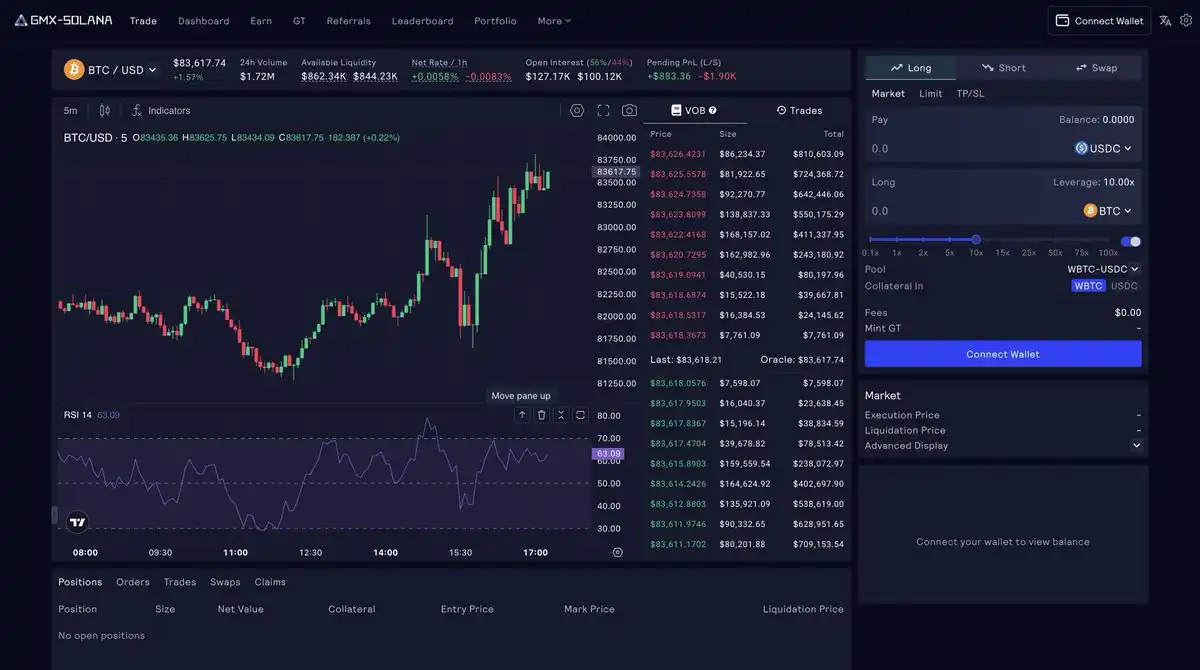
GMX-Solana is a decentralized leveraged perpetual trading platform that has recently launched on Solana, continuing its leading trading product position in the EVM ecosystem.
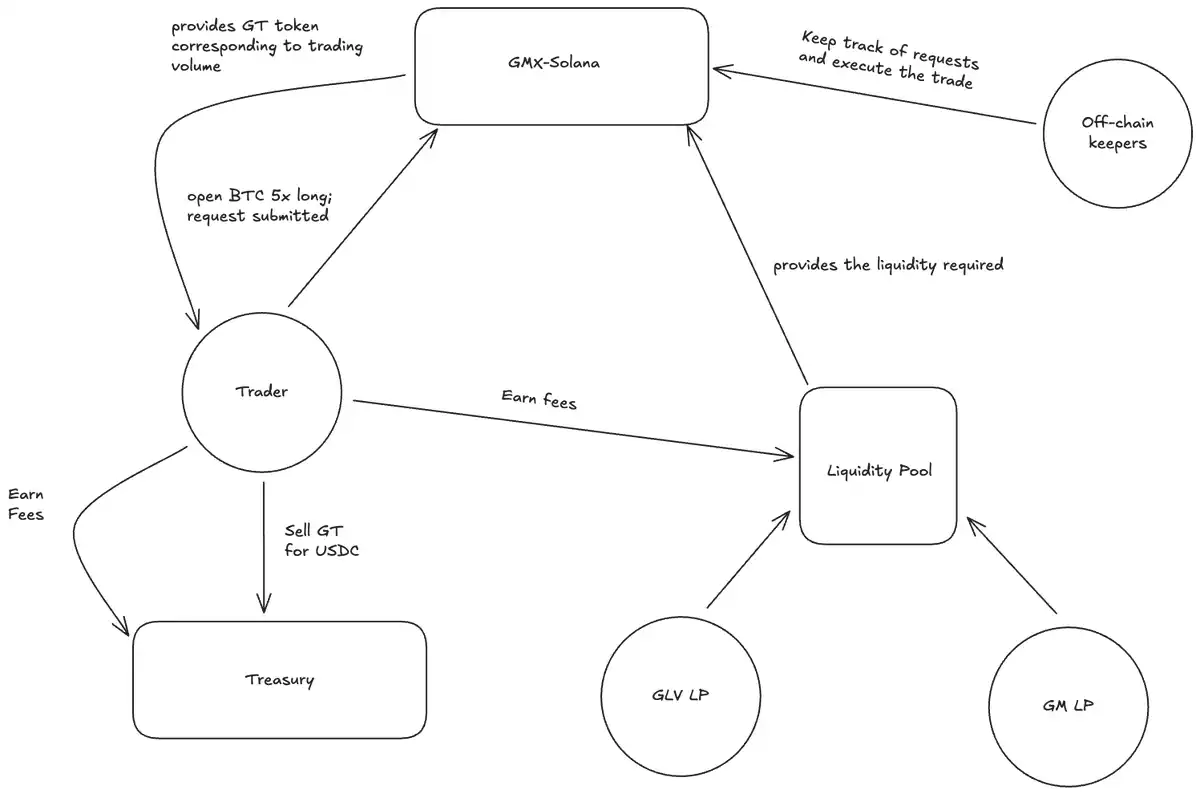
GMX-Solana is a slightly modified version of GMX V2, specifically optimized for the Solana blockchain. Users can engage in leveraged trading, provide liquidity, and swap tokens. It introduced a unique feature at launch—the Trade-to-Mint mode, where traders receive GT tokens based on the transaction fees paid. These GT tokens can be redeemed for stablecoins through the treasury to offset users' trading costs.
The GT token's economic model is similar to Bitcoin: the more GT tokens in circulation, the higher the price and the increased minting difficulty. Additionally, once the minted GT tokens exceed 82.53 million, GMX-Solana may conduct a GT token generation event (TGE) upon governance approval.
Liquidity providers can choose to provide liquidity to the Global Liquidity Vault (GLV) or the GM pool.
The GLV consists of SOL/USDC and dynamically adjusts liquidity to support various synthetic markets based on SOL/USDC, while GM is a standalone pool suitable for LPs seeking exposure to specific assets.
As of now, GMX-Solana's total trading volume has exceeded $2.4 billion, with a TVL of approximately $6.5 million.
1.2 Jupiter
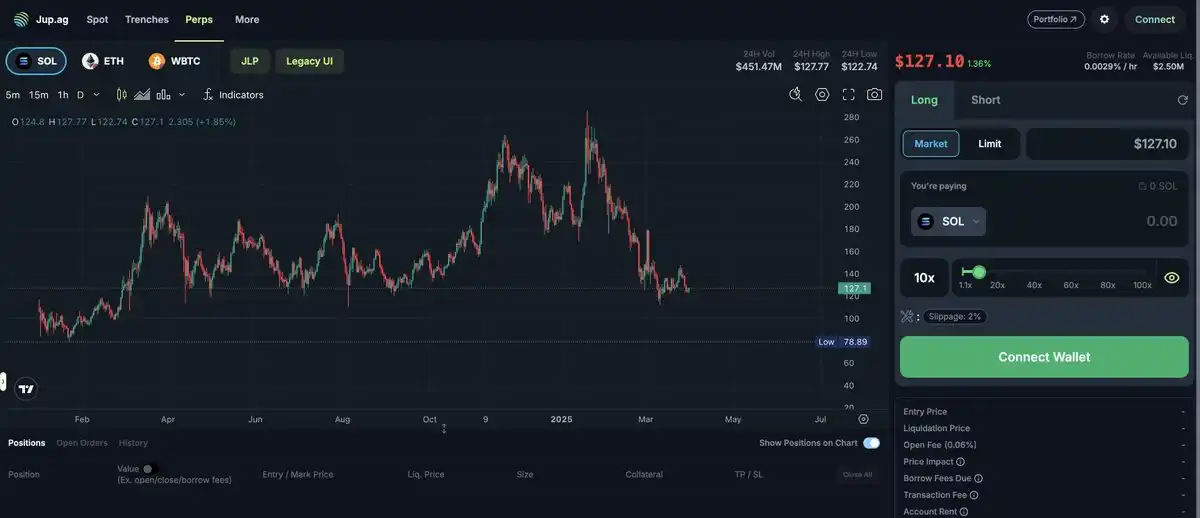
Jupiter is a spot aggregator on Solana and one of the largest on-chain leveraged trading platforms, relying on its product Jupiter Perpetuals to provide perpetual contract trading services.
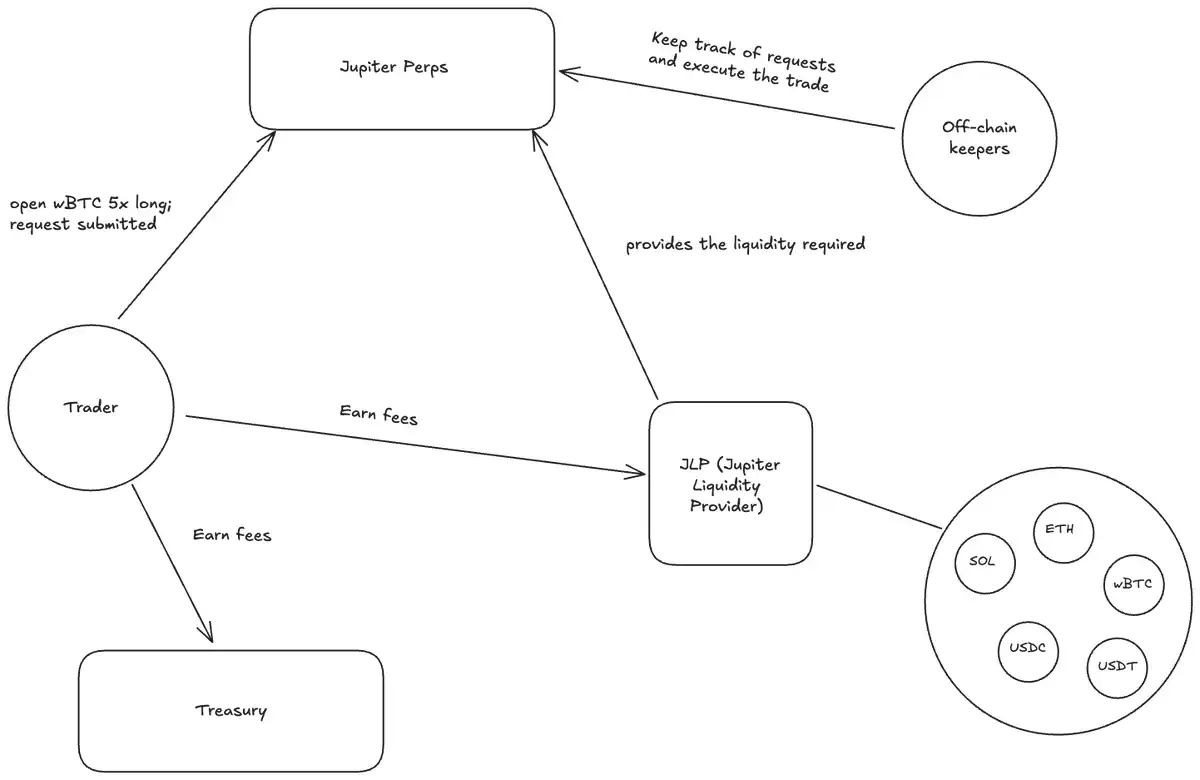
Similar to GMX-Solana, Jupiter adopts a pool-based design, where the liquidity pool acts as the counterparty to traders. In this design, the liquidity pool profits when traders lose money, and vice versa.
Jupiter allows traders to open positions with up to 100x leverage on major assets such as SOL, ETH, and wBTC. In the Jupiter perpetual contract, long positions are collateralized by tokens identical to the index asset, while short positions are collateralized by stablecoins to ensure efficient settlement.
Liquidity providers supply liquidity through JLP, which operates similarly to GMX-Solana's GLV. JLP consists of five major assets: SOL, ETH, wBTC, USDC, and USDT.
Currently, the JLP has a market value of approximately $1.4 billion, equivalent to the total liquidity available for the Jupiter perpetual contract. The platform's total trading volume has exceeded $268 billion.
1.3 Drift
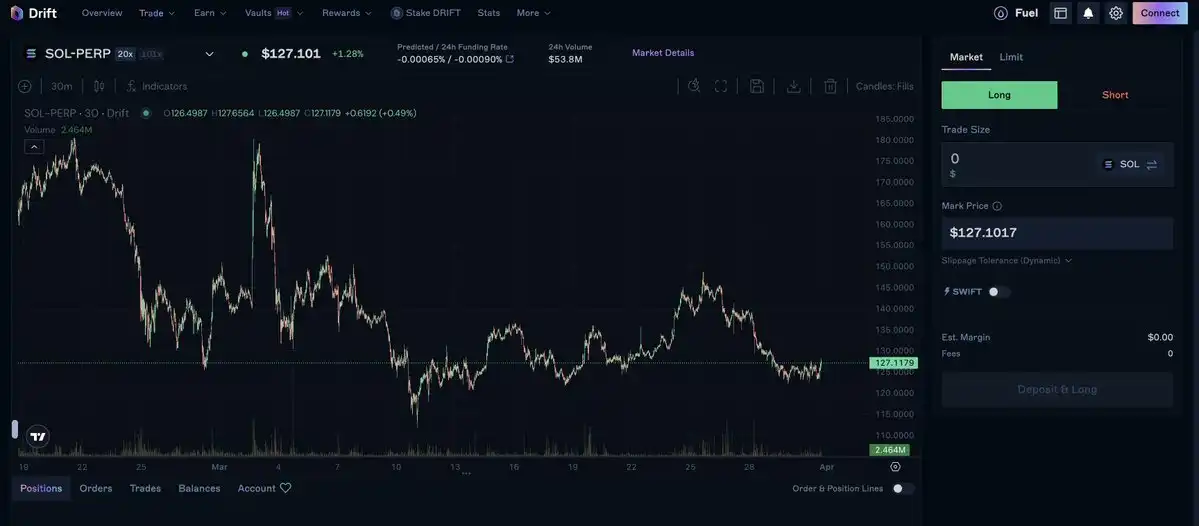
Drift is also one of the largest on-chain perpetual contract exchanges on Solana. Since the launch of the V2 version, the platform's TVL has approached $9 billion, with a total trading volume of $592 billion.
Drift offers trading with up to 20x leverage and supports liquidity provision, spot trading, and a lending market.
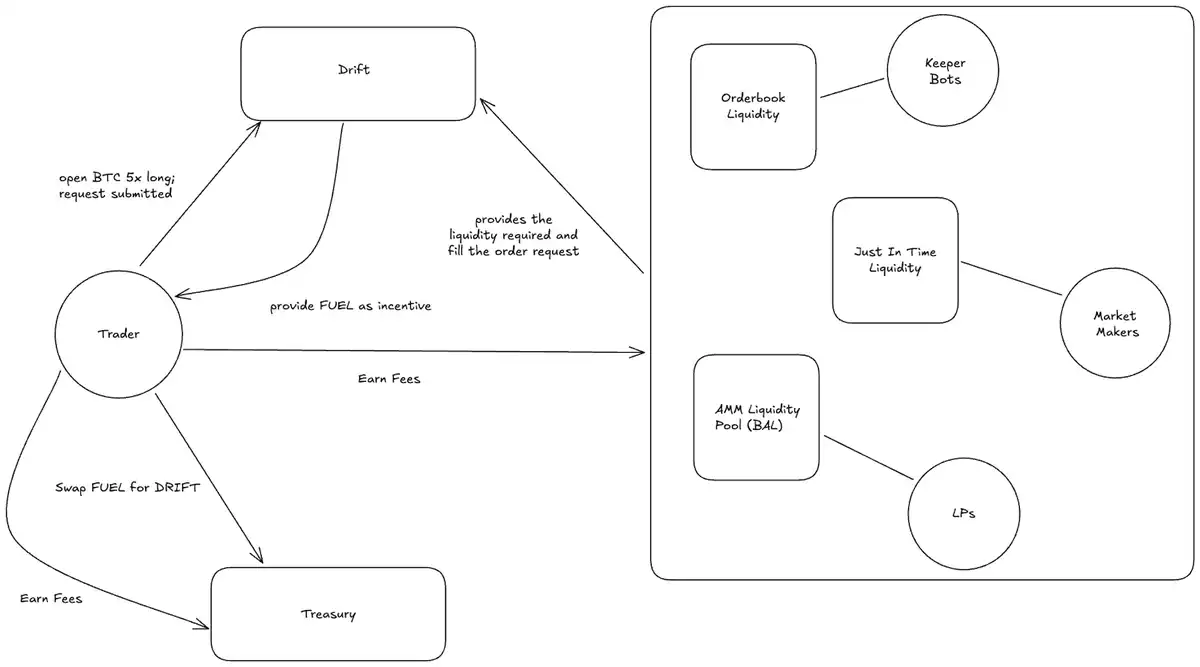
Drift adopts a Hybrid Design, leveraging multiple channels to source liquidity to ensure efficient trade execution, deep liquidity, and a robust profit and loss settlement mechanism.
Its liquidity sources include:
· Just-In-Time Auction (JIT): Managed by market makers (MMs) to match orders in a short-term auction format;
· On-chain Orderbook: Managed by off-chain bots interacting with AMMs to provide liquidity for orders;
· Automated Market Makers: A liquidity pool containing various assets used to match trades.
Liquidity providers can contribute to multiple channels, including Strategy Vaults, Insurance Funds, Lending Pools, and Backup AMM Liquidity (BAL). Liquidity from the lending pool can be used not only for borrowing but also as collateral to open trading positions, attracting more traders due to this flexibility.
In addition, Drift incentivizes traders through the FUEL token, where users earn FUEL by creating trading volume on the platform, which can then be exchanged for the platform governance token $DRIFT.
2. Comparative Analysis
This section will cover all the above platforms and compare their KPIs.
To provide a good perpetual contract trading experience, a DEX needs to meet the following criteria:
· Low fees (opening/closing fees & swap fees)
· Excellent UI/UX (fast RPC and backend servers)
· Low-latency price oracle/anti-manipulation mechanism (to avoid malicious liquidation)
· High liquidity (to reduce slippage)
· Convenient collateral methods & multi-market support (to enhance trading flexibility)
2.1 GMX-Solana
· Fees: Opening/closing and swapping fees are approximately 4-7 bps (0.04%-0.07%), with the specific rate depending on the impact on the market balance of the trading pair. If the trade improves market balance, the fee is lower; if it exacerbates market imbalance, the fee is higher. Currently, traders can also offset some fees through the GT token incentives.
· Oracle: Uses @Chainlink to provide price data.
· RPC Service: Adopts @Heliuslabs, an industry standard.
· Market Support: Supports 25+ markets, including BTC, ETH, SOL, DOGE, etc., where users can trade long and short, and can use various tokens as collateral (depending on pool liquidity).
2.2 Jupiter Perps
· Fees: Opening/closing fees are fixed at 6 bps (0.06%).
· UI/UX: Jupiter Perps is part of the Jupiter spot aggregator, with a user-friendly interface and easy operation.
· Market Support: Currently only supports SOL-PERP, ETH-PERP, WBTC-PERP, with limited tradable assets.
· Oracle: Similar to GMX-Solana, relies on external price oracles for data.
2.3 Drift
· UI/UX: Compared to other platforms, Drift offers more features, resulting in a relatively more complex interface.
· Fee: The fee rate ranges from 3bps to 10bps (0.03% to 0.1%), with the specific rate depending on the user's tier (based on 30-day trading volume & the amount of $DRIFT staked in the Insurance Fund).
· Market Support: Offers 50+ perpetual contract trading pairs, far exceeding GMX-Solana and Jupiter Perps.
· Risk Management: Drift categorizes perpetual contracts by risk level and determines which trading pairs can utilize the Insurance Fund to protect LPs from losses.
· Oracle: Utilizes price data from @PythNetwork and @Switchboardxyz.
3. Liquidity & Trading Volume
Liquidity is crucial for any perpetual contract exchange. As the on-chain derivatives market grows, the liquidity and trading volume of these platforms continue to rise.
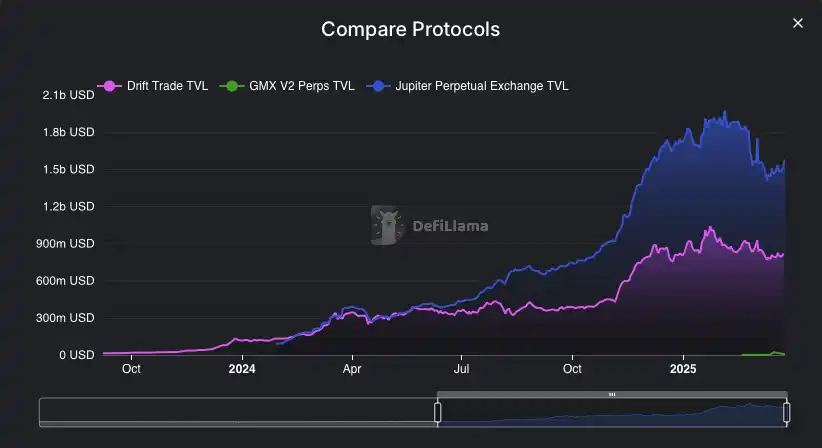
Perpetual Contract Protocol TVL on Solana
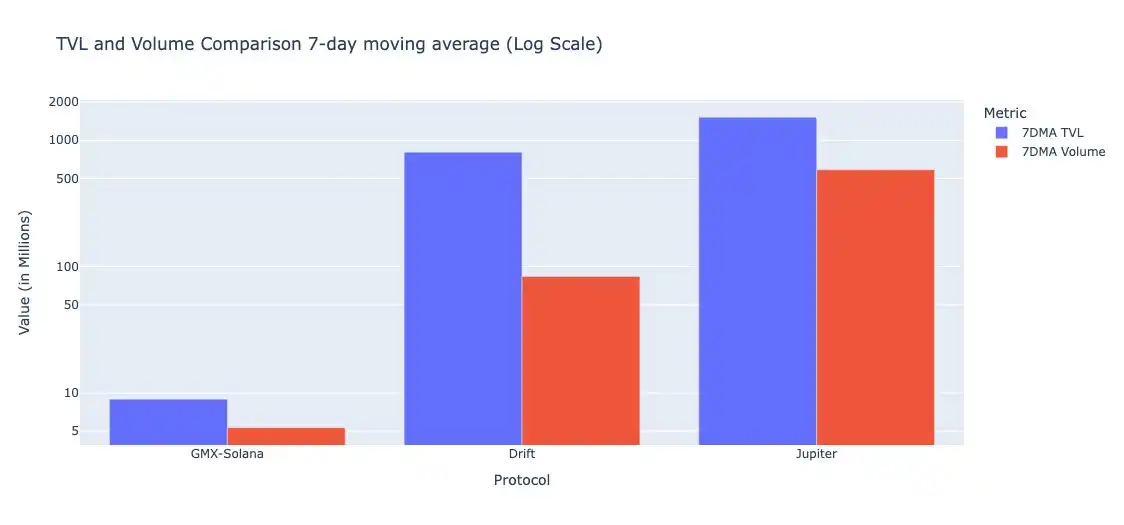
7-Day TVL and Trading Volume Moving Average
Due to the significant differences in TVL and trading volume among these protocols, a better comparison metric is Capital Efficiency, typically measured by Trading Volume (24H) / TVL. This value reflects how efficiently the protocol's TVL is utilized on exchanges, indicating how much capital generates fees and liquidity provider revenue through trading. If capital is not fully utilized, the efficiency is lower.
A higher value indicates higher liquidity efficiency for the protocol. While this value fluctuates based on market conditions and trader interest, a Capital Efficiency above 1 is generally considered ideal.
Currently, GMX-Solana has a Capital Efficiency of around 0.59, while Jupiter and Drift are 0.38 and 0.15, respectively. GMX has higher Capital Efficiency than Jupiter and Drift, in part due to its lower current liquidity.
Furthermore, when calculating Drift's Capital Efficiency, we excluded the platform's Strategic Vaults TVL since these vaults' funds may not be directly used for trading. However, this capital is still included in Drift's total TVL.
Please note: To avoid data skew due to daily performance and market fluctuations, the above calculation uses the 7-day trading volume moving average / 7-day TVL moving average as the formula for capital efficiency.
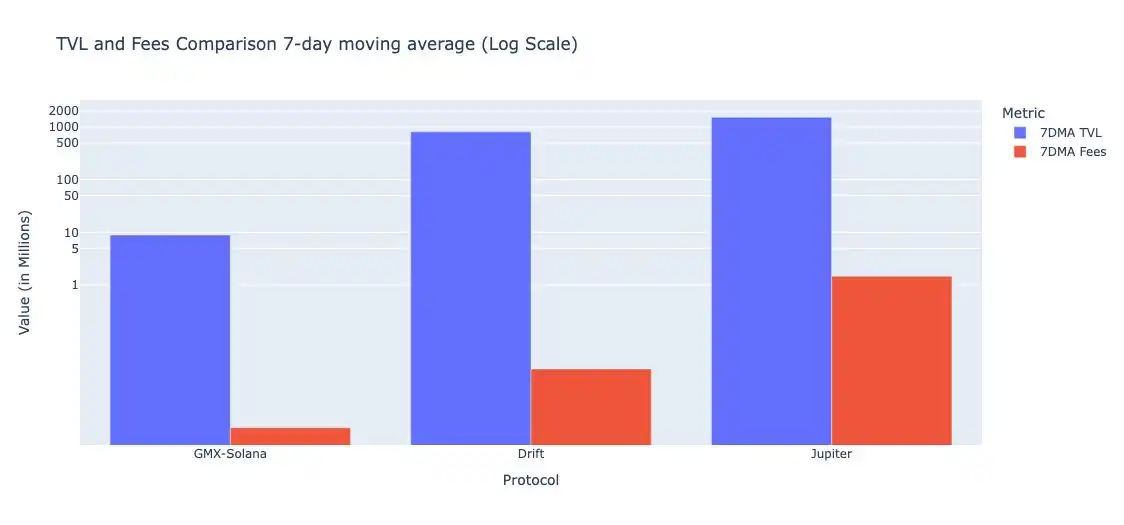
7-Day TVL and Fee Moving Average
Another metric that can be analyzed is Fee (24H) / TVL, calculated as the 7-day fee moving average / 7-day TVL moving average. This value indicates how much of the protocol's fees are generated through locked liquidity.
For GMX-Solana, this value is 0.0002, for Jupiter it is 0.00097, and for Drift it is 0.00003.
In this metric, Jupiter has the highest fee generation proportion compared to locked value.
3.1 GMX-Solana
GMX-Solana obtains liquidity from the GLV (Global Liquidity Vault) and GM Pool. The GLV pool is yield-optimized and rebalanced according to market conditions, with liquidity allocated based on demand. Not all markets source liquidity from GLV. On the other hand, the GM Pool is an isolated pool for users looking to focus on specific assets. These pools earn fees through perpetual trading and spot markets. Currently, GLV provides approximately a 6% APY.
Most of the platform's active liquidity comes from GLV, as the APY for specific GM Pools is much lower, usually in the range of 1-5%, with thinner liquidity.
Furthermore, due to insufficient liquidity, waning trader interest, and market volatility, GMX-Solana has not been able to capture most of the on-chain trading volume on Solana.
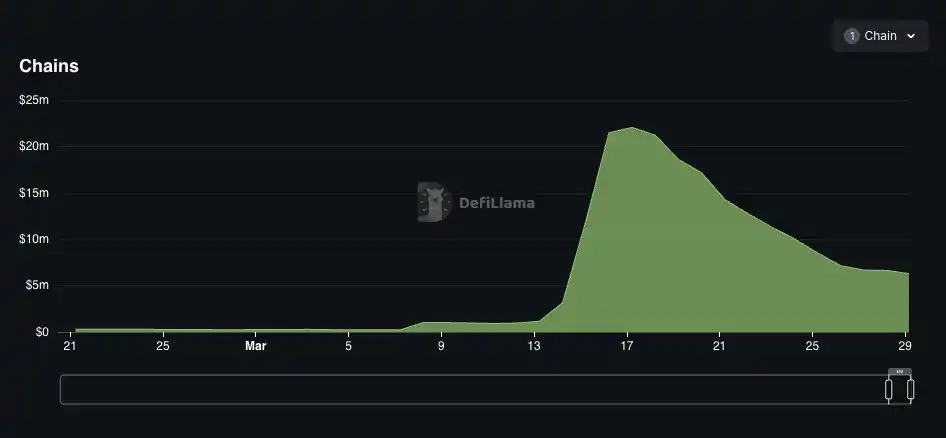
GMX-Solana's TVL
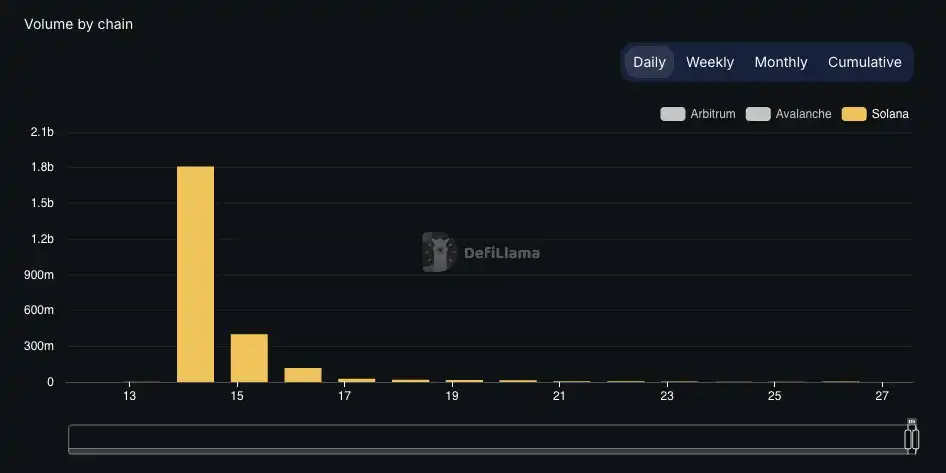
GMX-Solana's Daily Trading Volume
3.2 Jupiter Perp
The liquidity of Jupiter Perp comes from the JLP token, which is an index fund consisting of SOL, ETH, wBTC, USDC, and USDT. JLP accrues value from the fees generated by Jupiter Perps. JLP is an excellent choice for liquidity providers as it offers flexibility to easily provide or remove liquidity.
At the time of writing, JLP offers a 10% annualized yield.
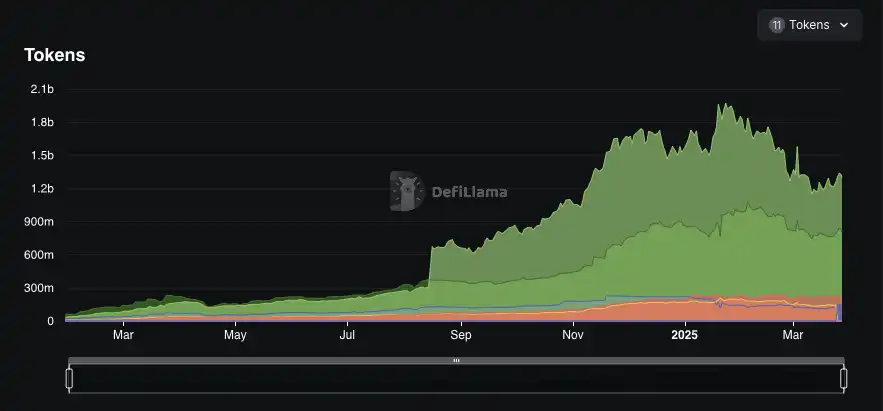
Jupiter Perp TVL
3.3 Drift
Drift's liquidity comes from multiple channels as described in the overview section. Since users can provide liquidity in different ways, the annualized yield varies for each method.
The platform offers a maximum APY of 338% through Strategic Vaults managed by external parties. Other pools, including lending pools and insurance funds, offer a 10-15% APY.
LPs can also provide liquidity through BAL, where they automatically take the other side of trades for traders and earn fees from the market's funding rate. Additionally, 80% of the collected taker fees are distributed to BAL providers, allowing them to achieve an annualized yield of 10-25%, depending on the market they provide liquidity to.
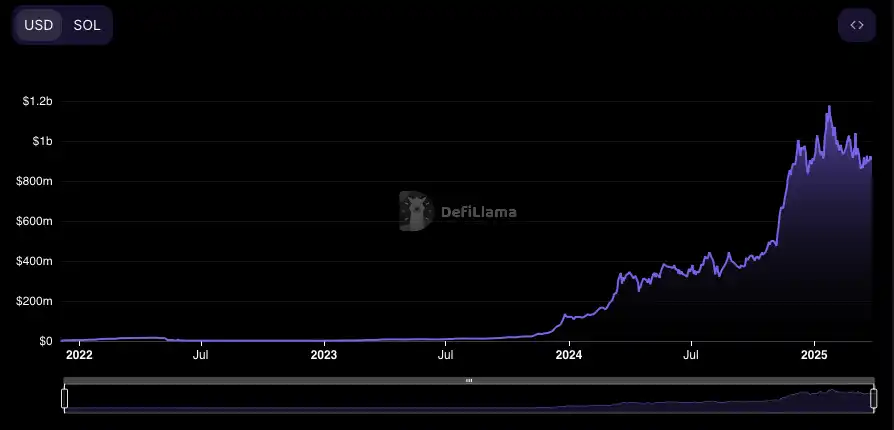
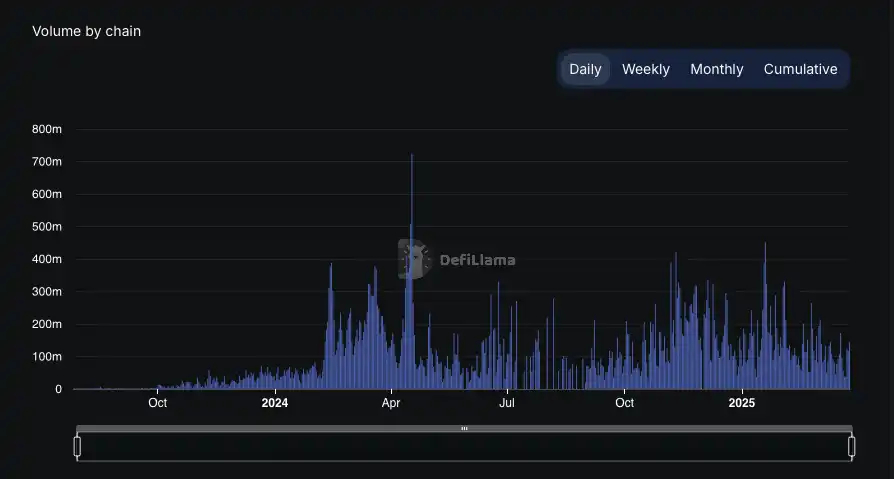
Drift Daily Trading Volume
4. Risk Management
Risk management is crucial in every perpetual contract exchange. Although risks associated with smart contracts may still exist, an ideal risk management protocol should be able to efficiently settle positions in highly volatile market conditions and minimize damage to liquidity providers.
4.1 GMX-Solana
GMX-Solana has two types of markets: Fully Collateralized Market and Synthetic Market.
Each GMX-Solana market contains 3 tokens:
· Index Token
· Long Token
· Short Token
The Long and Short tokens collectively back the market. The Long token backs long positions, while the Short token is typically a stablecoin backing short positions.
The Index Token is the token users use to go long or short. However, it is worth noting that GMX-Solana also supports markets where only one token is collateralized, which may pose risk to short positions.
When the Long token is the same as the Index token, the market is fully collateralized, meaning traders' gains and losses can settle quickly in highly volatile market conditions. In Synthetic markets, when the Long and Index tokens differ, this can lead to settlement issues during high volatility.
To ensure efficient settlement of gains and losses, GMX-Solana employs an Auto Deleveraging (ADL) mechanism, which partially or fully closes certain profitable positions to maintain market solvency.
To manage risk, protect liquidity providers, and maintain pool balance, several fees are involved, including:
· Price Impact Fee: Fee paid when LPs or traders cause imbalance in the pool
· Dynamic Lending Fee: Fee paid by traders to LPs for borrowing assets from the liquidity pool
· Funding Fee: Fee incentivizing the other side of the market to trade in the opposite direction
These fees are crucial for incentivizing liquidity providers and protecting the exchange in case of solvency issues.
4.2 Jupiter Perps
Jupiter Perps operates similarly to GMX-Solana, with the only difference being that it does not allow synthetic markets where the Long Backing Token differs from the Index Token. This further safeguards the exchange and positions to maintain stability even in highly volatile conditions.
4.3 Drift
Drift approaches things differently as it utilizes a hybrid liquidity model. Drift utilizes an insurance fund to manage risk and efficiently maintain the exchange's solvency. The insurance fund accrues funds from protocol revenue, liquidations, and trading fees. Since BAL is an Automated Market Maker (AMM), LPs may be prevented from burning their shares when pool imbalance occurs.
5. Current Status and Future Trends
Currently, most of the derivatives liquidity is concentrated on Solana, with Jupiter and Drift being the main contributors. As of now, Solana represents approximately 52% of the total on-chain derivatives liquidity, around $27 billion out of a total liquidity of $52 billion.

7-Day Trading Volume: Solana Perpetual Contracts Platform
Currently, Jupiter leads in the trading volume of Solana perpetual contracts, followed by Drift. GMX-Solana still has a long way to go in challenging the existing market competitors.
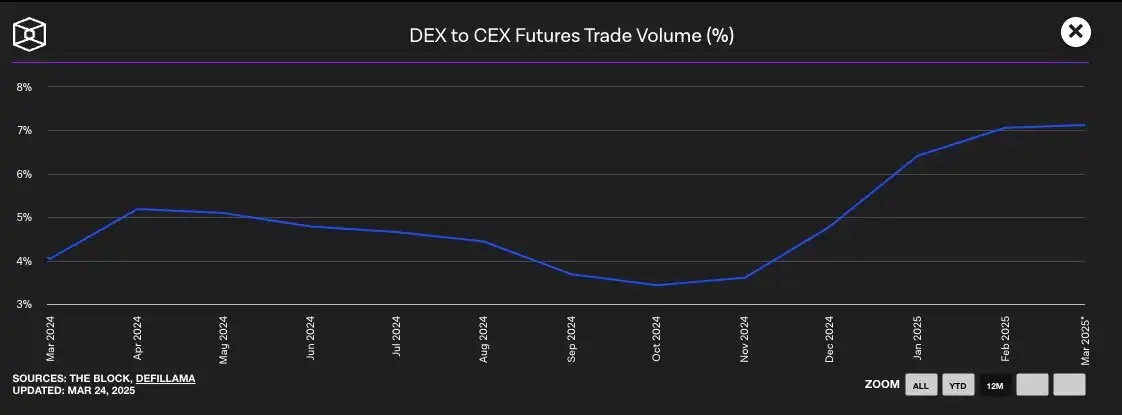
DEX to CEX Futures Trading Volume, Source: The Block
The on-chain derivatives market is thriving, with increasing competition between protocols that have introduced many excellent products. The DEX to CEX trading volume ratio is on the rise, currently around 7%, indicating significant room for future growth.
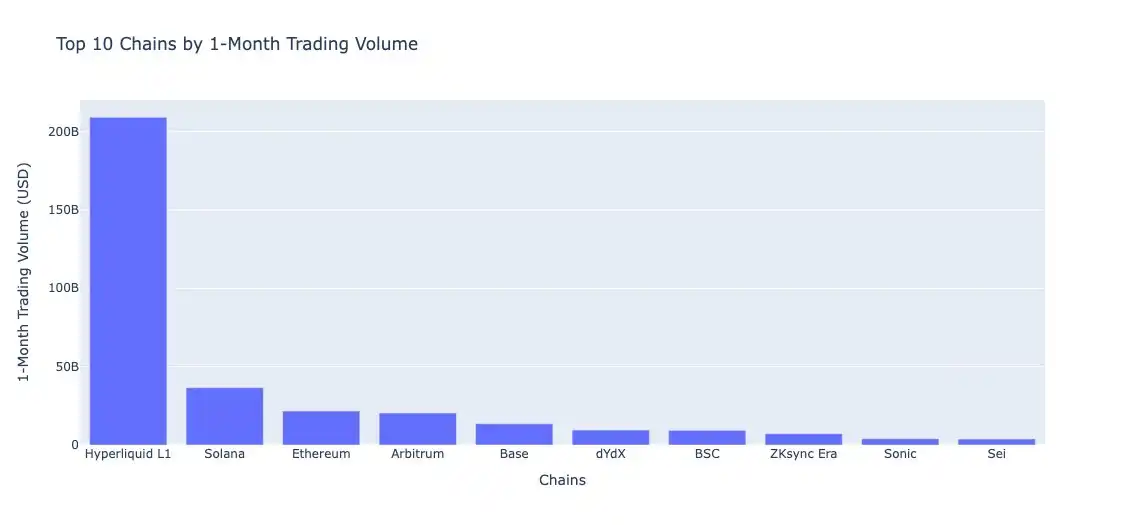
Top Ten Blockchains by 1-Month Trading Volume
Solana is the second-largest blockchain in terms of trading volume in the on-chain derivatives space. Hyperliquid's volume lags significantly behind other chains. As the industry progresses and Solana protocols introduce better features and incentives, this gap is expected to narrow. Through the increased throughput provided by the Firedancer validation client, the Solana protocol can achieve speed and efficiency comparable to its competitors.
6. Conclusion
Jupiter and Drift have shown a consistent growth pattern but lack capital efficiency. While GMX-Solana has a slight edge in capital efficiency, partly due to lower liquidity, there is still work to be done to catch up.
Jupiter drives simplicity through its JLP token, allowing LPs to purchase and hold JLP to provide liquidity to the platform. While GMX and Jupiter follow similar patterns in handling transactions, their approach to liquidity differs, with little similarity between GLV and JLP.
Drift provides advanced traders seeking better risk allocation with a cross-margin account. It allows for lower leverage and focuses on risk management through incentivized insurance funds.
Currently, the DEX-to-CEX derivatives trading volume ratio is at a historical high. As Solana is a key liquidity provider in the on-chain derivatives market, its ecosystem will benefit from the volume generated in this sector.
You may also like

Perp DEX: The Next Generation Exchange "War"

The AI gamble of mining companies: Valuations enter a phase of differentiation, and it's hard to turn the tide

A letter from Alliance to entrepreneurs: Written on the occasion of Cursor selling for 60 billion dollars

Stablecoins Finally Find Real Returns: On-Chain Reinsurance Re Explained | Interview with Re Founder Karan Saroya

The impossible triangle is simply a pseudo problem

Will MicroStrategy fall into a death spiral? What will the macro trend be in the second half of the year?

Blockchain Capital Partner: The Core Secret of Arbitrage
STRC unanchored by 11%, can the perpetual motion machine of Strategy still operate?

Bitcoin Market Analysis 2026: Can BTC Reach $150K by Year-End?
Bitcoin ETF Outflows Hit a Record $4.4 Billion: What Are Traders Doing With Their Cash?
WEEX App Just Got Smarter – New Tabs for Faster Trades & Easy Asset Management

WEEX All-New Search Features: Find, Trade & Earn Faster Than Ever

Morning Report | Illinois signs the strictest digital asset tax law in the U.S.; RWA tokenization market size surpasses $43 billion, institutions accelerate the migration of on-chain assets
Full version of the debut Q&A! Federal Reserve Chairman Waller: Sticking to the 2% inflation target, establishing five special working groups, individual did not submit the dot plot

From Disruptor to Shadow Market: The Crypto Market is Becoming a Colony of Traditional Finance
Dalio's important long article: How to position in the current market environment?
OKX Star analyzes Binance's competitive advantages: when regulation levels the playing field, competition has just begun
New gameplay for participating in initial offerings on cryptocurrency exchanges
Perp DEX: The Next Generation Exchange "War"
The AI gamble of mining companies: Valuations enter a phase of differentiation, and it's hard to turn the tide
A letter from Alliance to entrepreneurs: Written on the occasion of Cursor selling for 60 billion dollars
Stablecoins Finally Find Real Returns: On-Chain Reinsurance Re Explained | Interview with Re Founder Karan Saroya
The impossible triangle is simply a pseudo problem
Will MicroStrategy fall into a death spiral? What will the macro trend be in the second half of the year?


