
Interpreting Binance Launchpool's New Project GUNZ: Team Secures Over $100 Million in Funding, Is the Metaverse Gaming Sector Heating Up Again?


By: blockbeats|2025/03/28 13:00:03
0
Share
copy
Original Title: "Chain Game Back on Track? Preview of the First Battle Royale Game Off The Grid to Simultaneously Launch on PC and Console"
Original Source: DeepTech TechFlow
Editor's Note: On March 27th, Binance Launchpool launched the 66th project GUNZ (GUN), which is the AAA game "Off The Grid" L1 public chain developed by the game developer Gunzilla Games. GUN has a total supply of 10 billion tokens, with an initial circulation of 645 million tokens (6.05% of the total token supply), and the Launchpool allocation is 400 million tokens (4% of the total token supply). The GUN token serves as the native token of the game and the core of the OTG economic system. This article provides a detailed introduction to the game's background, gameplay, economic system, etc. Can the previously struggling chain game sector regain market attention due to the listing on Binance?
This article was first released on October 25, 2024, and some data may have changed. For the latest project updates, please visit the official website. The full text is reprinted by BlockBeats below.

Chain games have been struggling and have become a tacit consensus of the previous bear market, with most game projects quietly disappearing.

However, not all practitioners are bearish on the game sector.

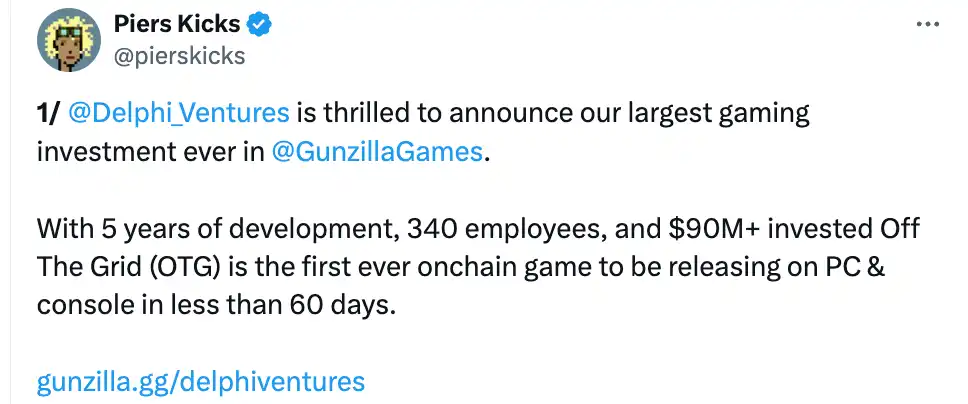
For example, Delphi Ventures partner Piers Kicks recently posted to cheer for the game developer Gunzilla Games and its upcoming flagship game Off The Grid.
Interpreting Binance Launchpool's New Project GUNZ: Team Secures Over src=

According to Piers' post, Delphi Ventures has placed a heavy bet on Off The Grid, making it the largest investment in the gaming sector. The game has also gone through 5 years of development by a team of 300 people, with a total investment in the game reaching $90 million.

On a side note, the estimated cost of Black Myth Wukong was previously revealed to be around 300-400 million RMB, roughly making the investment cost of Off The Grid even higher than Black Myth.

But as the old saying goes, after the whale falls, all things are born. In the chain game sector, it may be that when all things fall, only then does the whale rise.

In the context of numerous blockchain gaming projects failing one after another, what sets Off The Grid apart?

It is reported that Off The Grid plans to simultaneously launch on PC and console platforms (PS5/XBOX) within the next 60 days, marking the first time a blockchain game has launched on multiple platforms at the same time.

Moreover, let's not forget that PC and console players are often hardcore gamers who despise any pay-to-win elements and the smell of on-chain grind. For a blockchain game to succeed, it must strike a delicate balance in gameplay, graphics, on-chain economy, and marketing targeting this player base.

In an environment where blockchain games are generally looked down upon, can Off The Grid truly set an example for a "good game"?

Inviting Industry Leaders for Scriptwriting and Special Effects to Attract VC Investments

In the gaming industry, a successful title typically relies on two key elements: people and money.

The former refers to the development team, and the latter refers to financial support.

What does Gunzilla Games, the developer behind Off The Grid, bring to the table?

Established in 2020, Gunzilla Games is a relatively young company, but it boasts a solid team lineup and size. Currently, the company has around 340 employees, including many veterans from the gaming industry.

The core development team of the company mainly comes from the former Crytek Kyiv studio. This team was involved in the development of the popular online shooter game Warface, which attracted over 140 million players and generated over $1 billion in revenue. Additionally, team members have worked on renowned game series such as Far Cry and Crysis, as well as the development of the CRYENGINE game engine. At its peak, CRYENGINE drove cutting-edge graphics in games and provided technical support for many major titles.

Interestingly, the company has also enlisted Neill Blomkamp as a co-founder and Chief Creative Officer. Blomkamp has directed sci-fi blockbusters like District 9 and Elysium, bringing top-tier visual and narrative design to Off The Grid with his unique visual style and profound social insights.

Simultaneously, the game's 60-hour campaign storyline is penned by renowned sci-fi author Richard Morgan. Morgan is the author of best-selling novels like Altered Carbon, which have been adapted into popular Netflix series.

This is a bit different from the blockchain games we've seen before. They seem to have put a lot of effort into the script and special effects, aiming more towards a premium single-player game.

However, we'll have to wait for the official release to see the actual quality. After all, we can't be sure if this is just a big name endorsing the game or if they actually participated in its production.

Speaking of the financial side, the article mentioned that Delphi Ventures invested $6 million to become the largest validator and node operator on Gunzilla's GUNZ blockchain platform (source of funding: Coindesk).

In March this year, Gunzilla Games completed a $30 million funding round. This round was led by CoinFund and Avalanche's Avalanche Fund, with participation from renowned institutions such as Republic Capital and Morningstar Ventures.

With ample funding available, how polished will this game be?

Cyberpunk Battle Royale, Battle Royale Gameplay + On-Chain Items

The core gameplay of Off The Grid is actually Battle Royale, the classic mode seen in games like PUBG. A group of players competes for resources on a carefully designed map, aiming to be the last one standing.

However, this game incorporates more sci-fi and cyberpunk elements.

The game is set in a dystopian future, where on a massive battlefield called "Teardrop Island," participants from around the world engage in a ruthless "reality show" for a huge prize pool.

In the game's setting, all participants must amputate their limbs to use advanced prosthetic technology on Teardrop Island. This is not just a unique setting but also a core game mechanic. Players can gain various special abilities by swapping different prosthetics, such as a grappling hook, reconnaissance drones, or a quick dash. This design brings unprecedented tactical depth and flexibility to the game.

In terms of map design, OTG has created the largest Battle Royale map to date. Players can navigate between towering skyscrapers using their character's jetpack and prosthetic special abilities, enabling fast aerial movements. This highly flexible movement system not only increases the game's excitement but also encourages a more aggressive playstyle.

But how does this relate to on-chain activities?

OTG has introduced a mode called Extraction Royale. Players collect HEX cubes on the map, which represent blueprints for weapons, attachments, or prosthetics.

Players need to take these cubes to specific extraction points for decoding, while also defending against other players who covet your loot. After successful extraction, these items will be "3D printed" into the player's inventory, effectively minting the assets on the blockchain in the background.

To put it simply, this gameplay is a mix of off-chain battle royale and on-chain loot box mechanics.

The main gameplay involves battling to win loot boxes, which can then be opened. The items inside are turned into assets such as NFTs on the blockchain, with the player's account linked and a transaction logic set up.

The game does not have a traditional in-game store; all items entering the economic system and peer-to-peer market are obtained by players through an in-game extraction mechanism and minted on the blockchain.

This design ensures not only the scarcity and true ownership of items but also brings more dynamism to the game economy and player engagement.

It is worth mentioning that OTG has adopted a seamless integration approach to deal with on-chain issues. The parts of the game involving cryptography have become optional rather than mandatory, gradually attracting players to the blockchain in a completely optional manner.

Although the finished game product has not been seen yet, features like social login, built-in wallet, hidden entry and exit points, and gas fee abstraction are likely not to be missing.

On-Chain Economic System Outlook

In OTG, players obtain in-game item NFTs through the extraction of HEX cubes as described above. This process cleverly combines game mechanics with blockchain technology, making asset minting a natural extension of the gaming experience rather than a somewhat detached external operation.
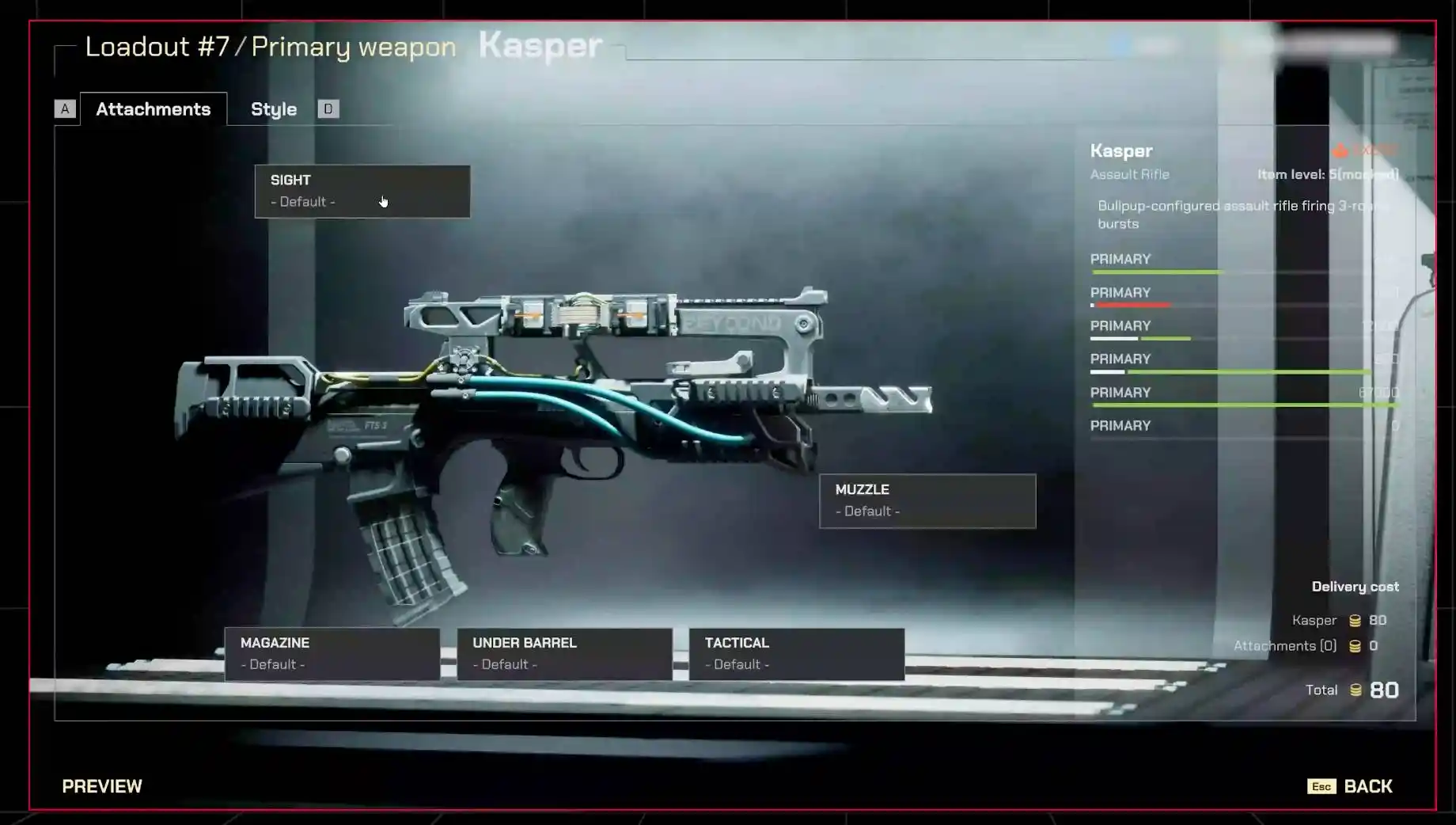
At the same time, the GUN token is the core of the OTG economic system. As the game's native token, GUN plays multiple roles in the game ecosystem:

a) Medium of Exchange: Players can use GUN to buy, sell, or trade NFT items on the in-game market.

b) Governance: Players holding GUN tokens can participate in critical game decisions, such as voting on new features or adjusting economic parameters.

c) Staking Rewards: Players can stake GUN tokens to receive additional in-game rewards or privileges.

d) Creator Incentives: Content creators can earn GUN tokens by creating game content such as custom skins or maps.

e) In-Game Fees: Certain advanced features or services may require payment in GUN tokens, such as speeding up manufacturing processes or unlocking special areas.

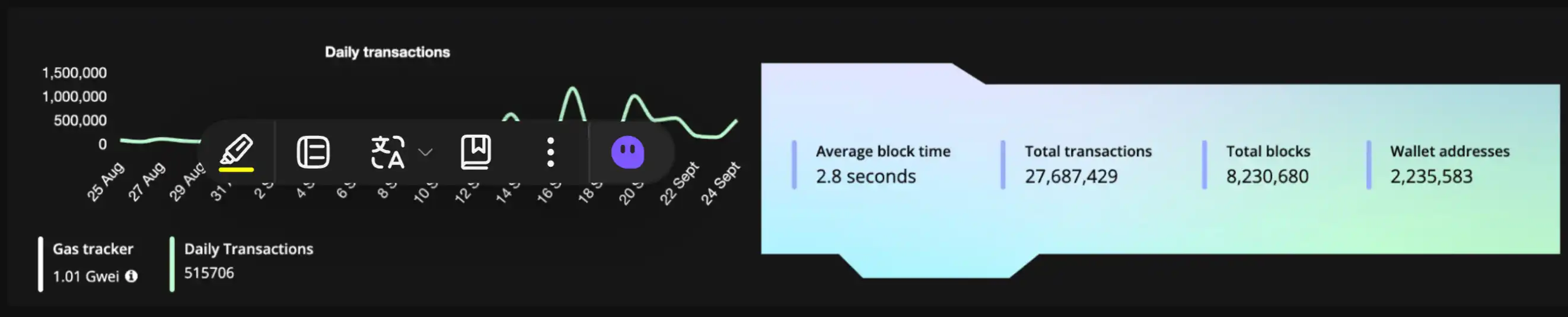
It is worth noting that the game has its own blockchain network called GUNZ, which is essentially an Avalanche-based subnet. By establishing a dedicated subnet to ensure fast and low-cost transactions, there is ample room for future expansion and optimization.

Public data shows that the GUNZ testnet has been running for nearly a year, processing 27 million transactions and accumulating over 220,000 registered wallets.
In the GUNZ subnet, validator nodes play a crucial role. They are not only responsible for validating and confirming all in-game transactions but also collectively maintain the security and stability of the entire network, with specific functions as follows:

a) Transaction Validation: Nodes are responsible for validating and confirming all in-game transactions, ensuring the security and reliability of the economic system.

b) Network Maintenance: Nodes collectively maintain the operation of the GUNZ network, ensuring the continuous and stable operation of the in-game economy.

c) Participation in Governance: Some nodes may have voting rights to participate in important network decisions.

d) Reward Mechanism: Participants running nodes may receive GUN tokens as a reward, further incentivizing community participation in network maintenance.

In the current design, the core of the ecosystem is 10,000 validators, which are responsible for processing transactions and minting all in-game items. From an investment perspective, these validator nodes are attractive because players must pay them USD-denominated in-game item minting fees; additionally, validators also collect commissions from all transactions of their minted items in the secondary market.

Supporting Off The Grid game is the full suite of Gunzilla ecosystem tools, including wallets (running on iOS and Android), marketplace, and blockchain explorer. Interested players can check real-time data displayed by the GUNZ testnet explorer here.

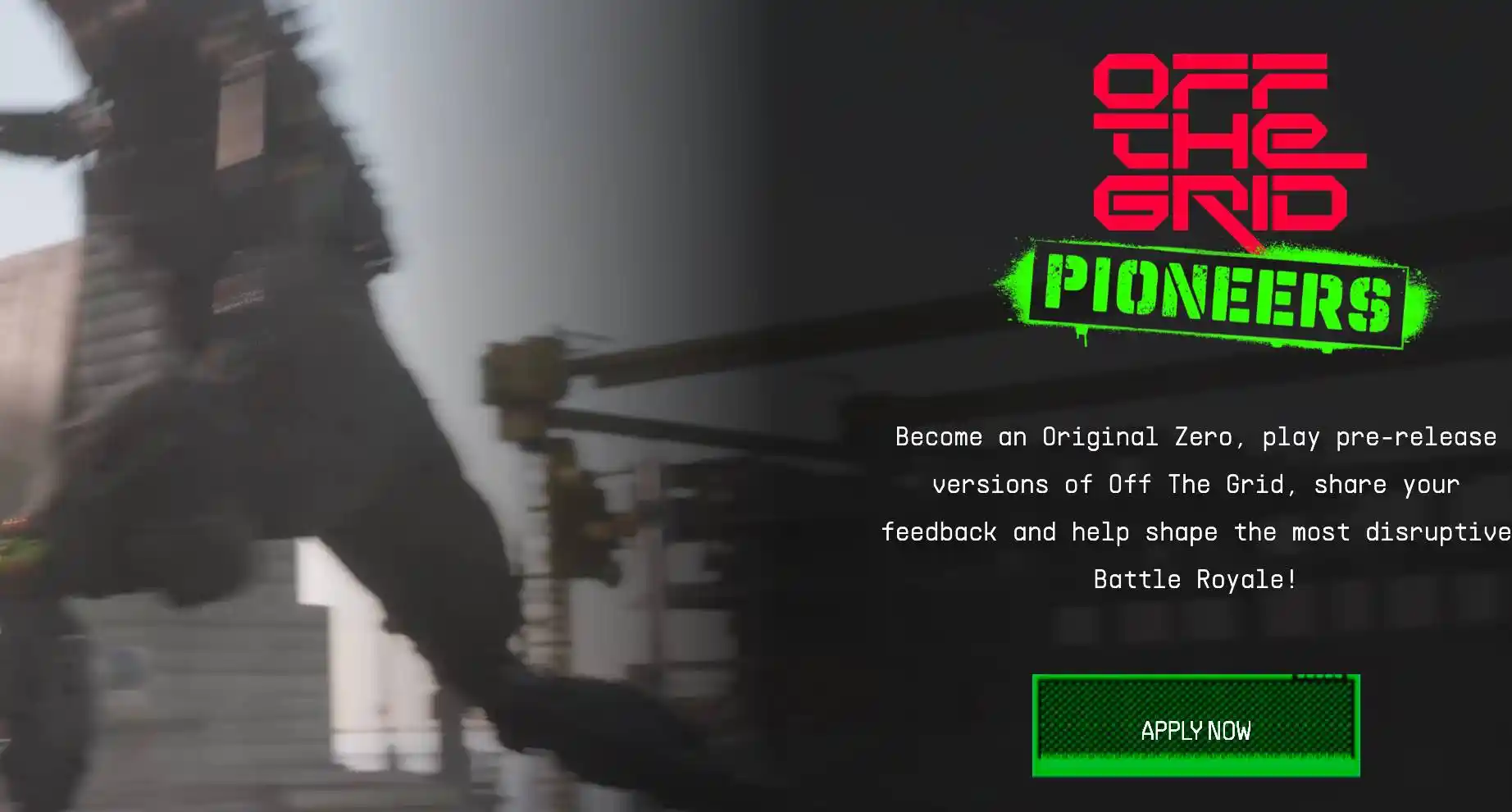
Currently, if you want to playtest the game early, you can only do so by filling out a form and answering questions on the official website's "Pioneer Program," selecting your gaming platform (console or PC), and then waiting for the game's official selection before receiving a playtest invitation.
Finally, it is important to emphasize that until the game is seen as a finished product, it cannot be said to have moved away from the "low-level fun" of gold farming and achieved pure gameplay.

In fact, the crypto world may not even need pure gameplay; but if the on-chain economic system can become a mature carrier of the "loot box model" without overshadowing everything else, then this game Off the Grid can still be looked forward to a little.

After all, with a free game available on PC and PS5/XBOX, there are still those who like to try their hand at freeloading.

Original Article Link

You may also like

Token Cannot Compound, Where Is the Real Investment Opportunity?

The next chapter in the crypto industry will undoubtedly be written by Crypto-empowered Stocks.

February 6th Market Key Intelligence, How Much Did You Miss?

1. On-chain Flows: $508.2M USD inflow to Ethereum today; $390.8M USD outflow from Arbitrum 2. Biggest Gainers/Losers: $HBTC, $AIO 3. Top News: Current Bitcoin weekly RSI oversold signal comparable to June 2022

China's Central Bank and Eight Other Departments' Latest Regulatory Focus: Key Attention to RWA Tokenized Asset Risk


Foreword: Today, the People's Bank of China's website published the "Notice of the People's Bank of China, National Development and Reform Commission, Ministry of Industry and Information Technology, Ministry of Public Security, State Administration for Market Regulation, China Banking and Insurance Regulatory Commission, China Securities Regulatory Commission, State Administration of Foreign Exchange on Further Preventing and Dealing with Risks Related to Virtual Currency and Others (Yinfa [2026] No. 42)", the latest regulatory requirements from the eight departments including the central bank, which are basically consistent with the regulatory requirements of recent years. The main focus of the regulation is on speculative activities such as virtual currency trading, exchanges, ICOs, overseas platform services, and this time, regulatory oversight of RWA has been added, explicitly prohibiting RWA tokenization, stablecoins (especially those pegged to the RMB). The following is the full text:


To the people's governments of all provinces, autonomous regions, and municipalities directly under the Central Government, the Xinjiang Production and Construction Corps:


  Recently, there have been speculative activities related to virtual currency and Real-World Assets (RWA) tokenization, disrupting the economic and financial order and jeopardizing the property security of the people. In order to further prevent and address the risks related to virtual currency and Real-World Assets tokenization, effectively safeguard national security and social stability, in accordance with the "Law of the People's Republic of China on the People's Bank of China," "Law of the People's Republic of China on Commercial Banks," "Securities Law of the People's Republic of China," "Law of the People's Republic of China on Securities Investment Funds," "Law of the People's Republic of China on Futures and Derivatives," "Cybersecurity Law of the People's Republic of China," "Regulations of the People's Republic of China on the Administration of Renminbi," "Regulations on Prevention and Disposal of Illegal Fundraising," "Regulations of the People's Republic of China on Foreign Exchange Administration," "Telecommunications Regulations of the People's Republic of China," and other provisions, after reaching consensus with the Cyberspace Administration of China, the Supreme People's Court, and the Supreme People's Procuratorate, and with the approval of the State Council, the relevant matters are notified as follows:


  I. Clarify the essential attributes of virtual currency, Real-World Assets tokenization, and related business activities


  (I) Virtual currency does not possess the legal status equivalent to fiat currency. Virtual currencies such as Bitcoin, Ether, Tether, etc., have the main characteristics of being issued by non-monetary authorities, using encryption technology and distributed ledger or similar technology, existing in digital form, etc. They do not have legal tender status, should not and cannot be circulated and used as currency in the market.


  The business activities related to virtual currency are classified as illegal financial activities. The exchange of fiat currency and virtual currency within the territory, exchange of virtual currencies, acting as a central counterparty in buying and selling virtual currencies, providing information intermediary and pricing services for virtual currency transactions, token issuance financing, and trading of virtual currency-related financial products, etc., fall under illegal financial activities, such as suspected illegal issuance of token vouchers, unauthorized public issuance of securities, illegal operation of securities and futures business, illegal fundraising, etc., are strictly prohibited across the board and resolutely banned in accordance with the law. Overseas entities and individuals are not allowed to provide virtual currency-related services to domestic entities in any form.


  A stablecoin pegged to a fiat currency indirectly fulfills some functions of the fiat currency in circulation. Without the consent of relevant authorities in accordance with the law and regulations, any domestic or foreign entity or individual is not allowed to issue a RMB-pegged stablecoin overseas.


(II)Tokenization of Real-World Assets refers to the use of encryption technology and distributed ledger or similar technologies to transform ownership rights, income rights, etc., of assets into tokens (tokens) or other interests or bond certificates with token (token) characteristics, and carry out issuance and trading activities.


  Engaging in the tokenization of real-world assets domestically, as well as providing related intermediary, information technology services, etc., which are suspected of illegal issuance of token vouchers, unauthorized public offering of securities, illegal operation of securities and futures business, illegal fundraising, and other illegal financial activities, shall be prohibited; except for relevant business activities carried out with the approval of the competent authorities in accordance with the law and regulations and relying on specific financial infrastructures. Overseas entities and individuals are not allowed to illegally provide services related to the tokenization of real-world assets to domestic entities in any form.


  II. Sound Work Mechanism


  (III) Inter-agency Coordination. The People's Bank of China, together with the National Development and Reform Commission, the Ministry of Industry and Information Technology, the Ministry of Public Security, the State Administration for Market Regulation, the China Banking and Insurance Regulatory Commission, the China Securities Regulatory Commission, the State Administration of Foreign Exchange, and other departments, will improve the work mechanism, strengthen coordination with the Cyberspace Administration of China, the Supreme People's Court, and the Supreme People's Procuratorate, coordinate efforts, and overall guide regions to carry out risk prevention and disposal of virtual currency-related illegal financial activities.


  The China Securities Regulatory Commission, together with the National Development and Reform Commission, the Ministry of Industry and Information Technology, the Ministry of Public Security, the People's Bank of China, the State Administration for Market Regulation, the China Banking and Insurance Regulatory Commission, the State Administration of Foreign Exchange, and other departments, will improve the work mechanism, strengthen coordination with the Cyberspace Administration of China, the Supreme People's Court, and the Supreme People's Procuratorate, coordinate efforts, and overall guide regions to carry out risk prevention and disposal of illegal financial activities related to the tokenization of real-world assets.


  (IV) Strengthening Local Implementation. The people's governments at the provincial level are overall responsible for the prevention and disposal of risks related to virtual currencies and the tokenization of real-world assets in their respective administrative regions. The specific leading department is the local financial regulatory department, with participation from branches and dispatched institutions of the State Council's financial regulatory department, telecommunications regulators, public security, market supervision, and other departments, in coordination with cyberspace departments, courts, and procuratorates, to improve the normalization of the work mechanism, effectively connect with the relevant work mechanisms of central departments, form a cooperative and coordinated working pattern between central and local governments, effectively prevent and properly handle risks related to virtual currencies and the tokenization of real-world assets, and maintain economic and financial order and social stability.


  III. Strengthened Risk Monitoring, Prevention, and Disposal


  (5) Enhanced Risk Monitoring. The People's Bank of China, China Securities Regulatory Commission, National Development and Reform Commission, Ministry of Industry and Information Technology, Ministry of Public Security, State Administration of Foreign Exchange, Cyberspace Administration of China, and other departments continue to improve monitoring techniques and system support, enhance cross-departmental data analysis and sharing, establish sound information sharing and cross-validation mechanisms, promptly grasp the risk situation of activities related to virtual currency and real-world asset tokenization. Local governments at all levels give full play to the role of local monitoring and early warning mechanisms. Local financial regulatory authorities, together with branches and agencies of the State Council's financial regulatory authorities, as well as departments of cyberspace and public security, ensure effective connection between online monitoring, offline investigation, and fund tracking, efficiently and accurately identify activities related to virtual currency and real-world asset tokenization, promptly share risk information, improve early warning information dissemination, verification, and rapid response mechanisms.


  (6) Strengthened Oversight of Financial Institutions, Intermediaries, and Technology Service Providers. Financial institutions (including non-bank payment institutions) are prohibited from providing account opening, fund transfer, and clearing services for virtual currency-related business activities, issuing and selling financial products related to virtual currency, including virtual currency and related financial products in the scope of collateral, conducting insurance business related to virtual currency, or including virtual currency in the scope of insurance liability. Financial institutions (including non-bank payment institutions) are prohibited from providing custody, clearing, and settlement services for unauthorized real-world asset tokenization-related business and related financial products. Relevant intermediary institutions and information technology service providers are prohibited from providing intermediary, technical, or other services for unauthorized real-world asset tokenization-related businesses and related financial products.


  (7) Enhanced Management of Internet Information Content and Access. Internet enterprises are prohibited from providing online business venues, commercial displays, marketing, advertising, or paid traffic diversion services for virtual currency and real-world asset tokenization-related business activities. Upon discovering clues of illegal activities, they should promptly report to relevant departments and provide technical support and assistance for related investigations and inquiries. Based on the clues transferred by the financial regulatory authorities, the cyberspace administration, telecommunications authorities, and public security departments should promptly close and deal with websites, mobile applications (including mini-programs), and public accounts engaged in virtual currency and real-world asset tokenization-related business activities in accordance with the law.


  (8) Strengthened Entity Registration and Advertisement Management. Market supervision departments strengthen entity registration and management, and enterprise and individual business registrations must not contain terms such as "virtual currency," "virtual asset," "cryptocurrency," "crypto asset," "stablecoin," "real-world asset tokenization," or "RWA" in their names or business scopes. Market supervision departments, together with financial regulatory authorities, legally enhance the supervision of advertisements related to virtual currency and real-world asset tokenization, promptly investigating and handling relevant illegal advertisements.


  (IX) Continued Rectification of Virtual Currency Mining Activities. The National Development and Reform Commission, together with relevant departments, strictly controls virtual currency mining activities, continuously promotes the rectification of virtual currency mining activities. The people's governments of various provinces take overall responsibility for the rectification of "mining" within their respective administrative regions. In accordance with the requirements of the National Development and Reform Commission and other departments in the "Notice on the Rectification of Virtual Currency Mining Activities" (NDRC Energy-saving Building [2021] No. 1283) and the provisions of the "Guidance Catalog for Industrial Structure Adjustment (2024 Edition)," a comprehensive review, investigation, and closure of existing virtual currency mining projects are conducted, new mining projects are strictly prohibited, and mining machine production enterprises are strictly prohibited from providing mining machine sales and other services within the country.


  (X) Severe Crackdown on Related Illegal Financial Activities. Upon discovering clues to illegal financial activities related to virtual currency and the tokenization of real-world assets, local financial regulatory authorities, branches of the State Council's financial regulatory authorities, and other relevant departments promptly investigate, determine, and properly handle the issues in accordance with the law, and seriously hold the relevant entities and individuals legally responsible. Those suspected of crimes are transferred to the judicial authorities for processing according to the law.


 (XI) Severe Crackdown on Related Illegal and Criminal Activities. The Ministry of Public Security, the People's Bank of China, the State Administration for Market Regulation, the China Banking and Insurance Regulatory Commission, the China Securities Regulatory Commission, as well as judicial and procuratorial organs, in accordance with their respective responsibilities, rigorously crack down on illegal and criminal activities related to virtual currency, the tokenization of real-world assets, such as fraud, money laundering, illegal business operations, pyramid schemes, illegal fundraising, and other illegal and criminal activities carried out under the guise of virtual currency, the tokenization of real-world assets, etc.


  (XII) Strengthen Industry Self-discipline. Relevant industry associations should enhance membership management and policy advocacy, based on their own responsibilities, advocate and urge member units to resist illegal financial activities related to virtual currency and the tokenization of real-world assets. Member units that violate regulatory policies and industry self-discipline rules are to be disciplined in accordance with relevant self-regulatory management regulations. By leveraging various industry infrastructure, conduct risk monitoring related to virtual currency, the tokenization of real-world assets, and promptly transfer issue clues to relevant departments.


  IV. Strict Supervision of Domestic Entities Engaging in Overseas Business Activities


(XIII) Without the approval of relevant departments in accordance with the law and regulations, domestic entities and foreign entities controlled by them may not issue virtual currency overseas.


  (XIV) Domestic entities engaging directly or indirectly in overseas external debt-based tokenization of real-world assets, or conducting asset securitization activities abroad based on domestic ownership rights, income rights, etc. (hereinafter referred to as domestic equity), should be strictly regulated in accordance with the principles of "same business, same risk, same rules." The National Development and Reform Commission, the China Securities Regulatory Commission, the State Administration of Foreign Exchange, and other relevant departments regulate it according to their respective responsibilities. For other forms of overseas real-world asset tokenization activities based on domestic equity by domestic entities, the China Securities Regulatory Commission, together with relevant departments, supervise according to their division of responsibilities. Without the consent and filing of relevant departments, no unit or individual may engage in the above-mentioned business.


  (15) Overseas subsidiaries and branches of domestic financial institutions providing Real World Asset Tokenization-related services overseas shall do so legally and prudently. They shall have professional personnel and systems in place to effectively mitigate business risks, strictly implement customer onboarding, suitability management, anti-money laundering requirements, and incorporate them into the domestic financial institutions' compliance and risk management system. Intermediaries and information technology service providers offering Real World Asset Tokenization services abroad based on domestic equity or conducting Real World Asset Tokenization business in the form of overseas debt for domestic entities directly or indirectly venturing abroad must strictly comply with relevant laws and regulations. They should establish and improve relevant compliance and internal control systems in accordance with relevant normative requirements, strengthen business and risk control, and report the business developments to the relevant regulatory authorities for approval or filing.


  V. Strengthen Organizational Implementation


  (16) Strengthen organizational leadership and overall coordination. All departments and regions should attach great importance to the prevention of risks related to virtual currencies and Real World Asset Tokenization, strengthen organizational leadership, clarify work responsibilities, form a long-term effective working mechanism with centralized coordination, local implementation, and shared responsibilities, maintain high pressure, dynamically monitor risks, effectively prevent and mitigate risks in an orderly and efficient manner, legally protect the property security of the people, and make every effort to maintain economic and financial order and social stability.


  (17) Widely carry out publicity and education. All departments, regions, and industry associations should make full use of various media and other communication channels to disseminate information through legal and policy interpretation, analysis of typical cases, and education on investment risks, etc. They should promote the illegality and harm of virtual currencies and Real World Asset Tokenization-related businesses and their manifestations, fully alert to potential risks and hidden dangers, and enhance public awareness and identification capabilities for risk prevention.


  VI. Legal Responsibility


  (18) Engaging in illegal financial activities related to virtual currencies and Real World Asset Tokenization in violation of this notice, as well as providing services for virtual currencies and Real World Asset Tokenization-related businesses, shall be punished in accordance with relevant regulations. If it constitutes a crime, criminal liability shall be pursued according to the law. For domestic entities and individuals who knowingly or should have known that overseas entities illegally provided virtual currency or Real World Asset Tokenization-related services to domestic entities and still assisted them, relevant responsibilities shall be pursued according to the law. If it constitutes a crime, criminal liability shall be pursued according to the law.


  (19) If any unit or individual invests in virtual currencies, Real World Asset Tokens, and related financial products against public order and good customs, the relevant civil legal actions shall be invalid, and any resulting losses shall be borne by them. If there are suspicions of disrupting financial order and jeopardizing financial security, the relevant departments shall deal with them according to the law.


  This notice shall enter into force upon the date of its issuance. The People's Bank of China and ten other departments' "Notice on Further Preventing and Dealing with the Risks of Virtual Currency Trading Speculation" (Yinfa [2021] No. 237) is hereby repealed.


Former Partner's Perspective on Multicoin: Kyle's Exit, But the Game He Left Behind Just Getting Started

Kyle knew his game, so he decided to focus on playing the game he was good at and interested in.

Why Bitcoin Is Falling Now: The Real Reasons Behind BTC's Crash & WEEX's Smart Profit Playbook

Bitcoin's ongoing crash explained: Discover the 5 hidden triggers behind BTC's plunge & how WEEX's Auto Earn and Trade to Earn strategies help traders profit from crypto market volatility.

Wall Street's Hottest Trades See Exodus

This time there is no single triggering factor, but rather market anxiety about asset valuation, with many already skeptical of these valuations being too high, leading to investors choosing to retreat almost simultaneously.

Popular coins

Latest Crypto News

Read more
