
Interpreting Binance’s latest investment project Perena, how to participate now?




Original title: "Binance invests in new projects, is Perena worth participating?"
Original author: shaofaye123, Foresight News
As one of the core infrastructures of the decentralized finance (DeFi) ecosystem, stablecoins have always attracted much attention.
On December 11, Binance Labs announced an investment in Quine Co., the core development team of Perena, to support its establishment of the first stablecoin infrastructure protocol on Solana.
As a core player in the stablecoin track, Tether's profit in the first half of this year was as high as US$5.2 billion, with a single-day profit of more than US$30 million. Despite the previous Luna crash, there are still many projects that persist in building in the stablecoin track.
Recently, ENA returned to 1 U, Usual rose nearly 60% in a week, and ANZ rose 3 times in one day. Stablecoins on various chains are constantly developing. This article will take you to a quick look at Perena, a project that has been favored by major VCs since its early days.
What is Perena
The current stablecoin market has a capital scale of 200 billion US dollars, and the number of new stablecoins is also increasing. Stablecoin fragmentation, isolated liquidity pools, and user experience problems are gradually emerging. Perena is committed to solving the above problems. As the infrastructure of the stablecoin track, it does not compete with USDC, PYUSD, etc., but provides them with more efficient and convenient transactions.
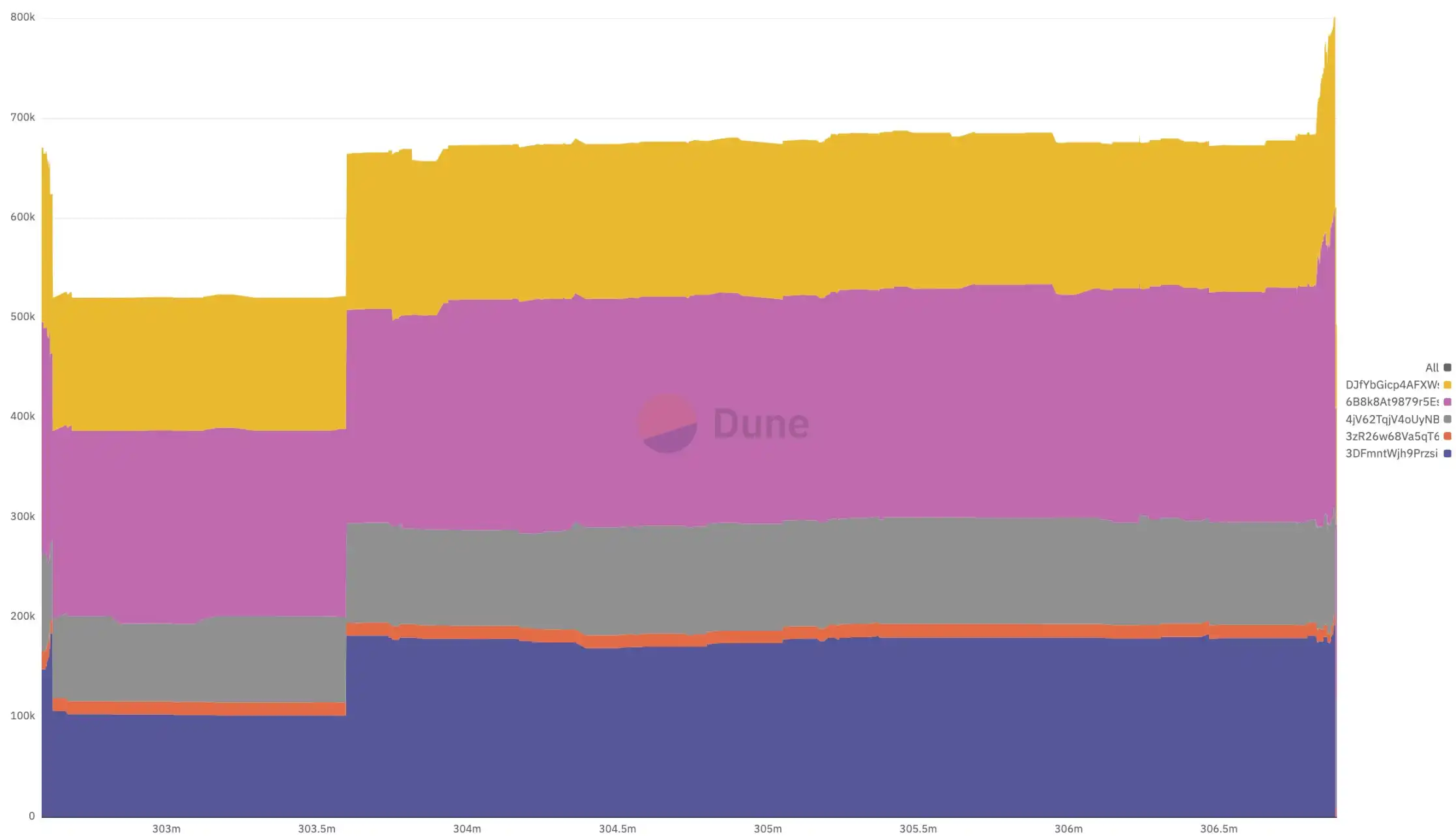
Perena mainly provides an efficient and flexible multi-asset stablecoin exchange platform for the Solana ecosystem, aiming to create a borderless monetary infrastructure. Since Binance announced its investment, TVL has achieved rapid growth, nearly 1 million US dollars.
The Perena team is quite strong. Perena founder Anna Yuan was the head of stablecoins at the Solana Foundation. During her tenure, she made great contributions to the increase in stablecoin issuance and the launch of non-US dollar stablecoins on Solana, doubling the issuance of stablecoins to 3.6 billion. The team also includes practitioners from institutions such as Jump Trading. In addition, the team has reached cooperation with central bank governors and regulators on stablecoin supervision.
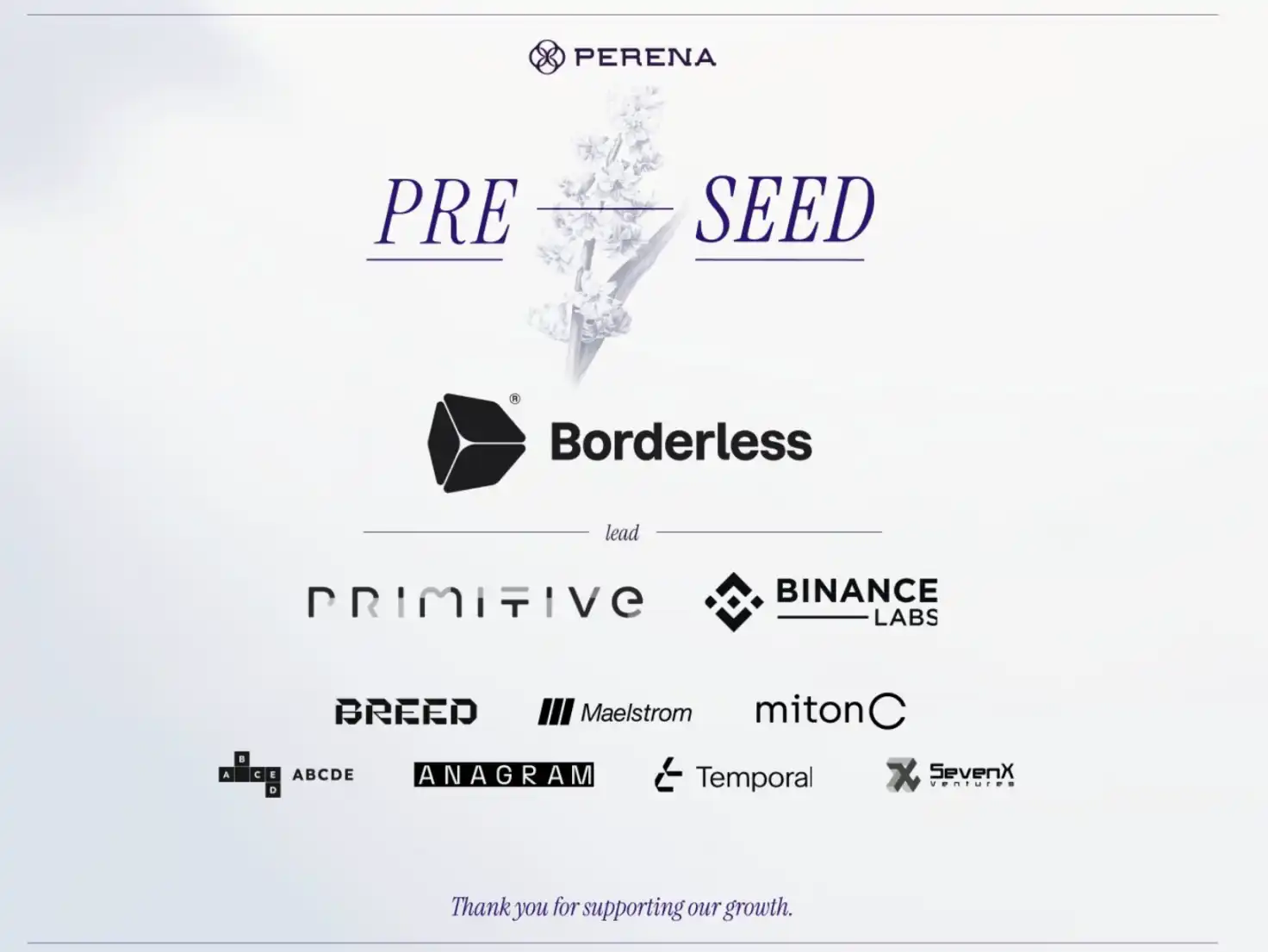
In terms of financing, Perena has not only received support from well-known investors such as Solana co-founders Anatoly Yakovenko and Raj Gokal. It has also been favored by many institutions and has completed the Pre-Seed round of financing, led by Borderless, and investors also include Binance Labs, Primitive Crypto, Anagram, Temporal, ABCDE Labs, SevenX Ventures, etc., with a financing amount of approximately US$3 million. In addition, Perena has also reached cooperation with many DeFi protocols.
How Numéraire works
Perena has currently launched its first product, Numéraire. Numéraire is a multi-asset stablecoin exchange system that introduces the concept of USD*. It uses the AMM mechanism to achieve seamless creation and exchange of stablecoins, while optimizing liquidity and efficiency in various markets. It solves the problem of fragmentation of the stablecoin ecosystem and reduces the capital requirements for the issuance of new stablecoins. Users can mint stablecoins through the protocol, obtain returns on tokenized real-world assets, and use the layered collateralized debt position system to achieve customized risk-return configuration. However, although Numéraire claims to be a cheaper and more efficient stablecoin exchange, it is still more worn out than platforms such as Raydium due to liquidity issues.
USD* is the core element of the Numéraire system. It is a LP (liquidity provider) token that can be held and traded, and holding it will also generate potential returns. Through the concept of USD*, Numéraire not only achieves higher capital efficiency, but also has higher flexibility. All stablecoins share the same liquidity pool, reducing the fragmentation of funds. The lending function will allow excess stablecoins to be borrowed and borrowed, which can also further improve the utilization of funds. At the same time, adding stablecoins only requires establishing a relationship with USD* to exchange with all other stablecoins in the system. USD*, as an intermediate unit, can help achieve more accurate price discovery and reflect the market's real-time valuation of various stablecoins.
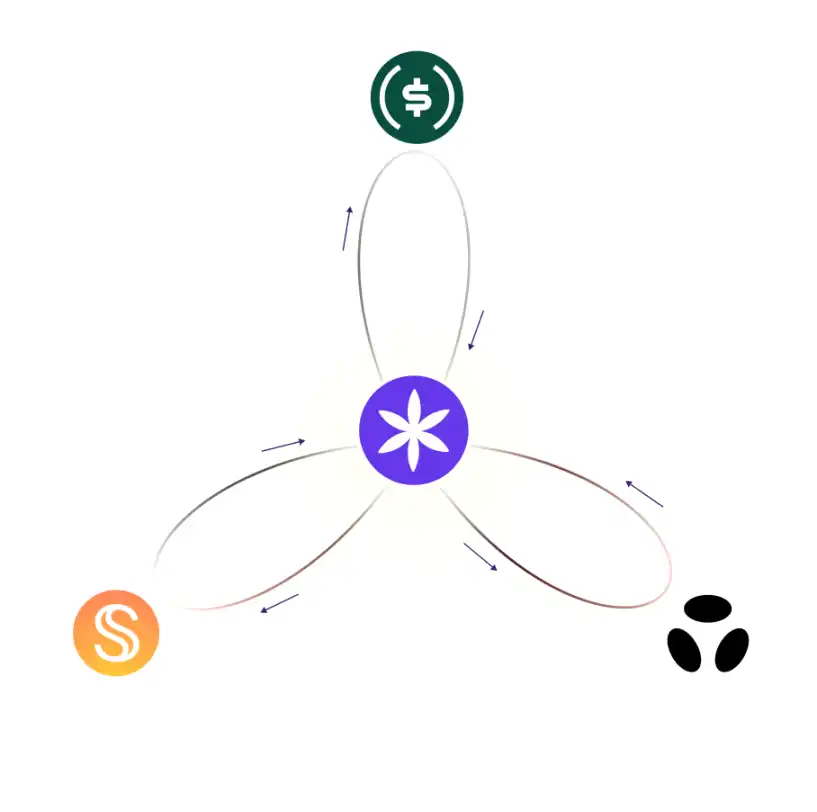
Numéraire provides the Solana ecosystem with an efficient and flexible multi-asset stablecoin exchange platform through USD*. It not only simplifies the user experience, but also provides a more efficient liquidity management solution for the DeFi ecosystem. Its advantages include:
· Integrates the dispersed liquidity among different stablecoins
· Achieve efficient price discovery and settlement mechanism
· Provide risk-return opportunities
· Scale up to meet institutional adoption and real-world needs
How to participate
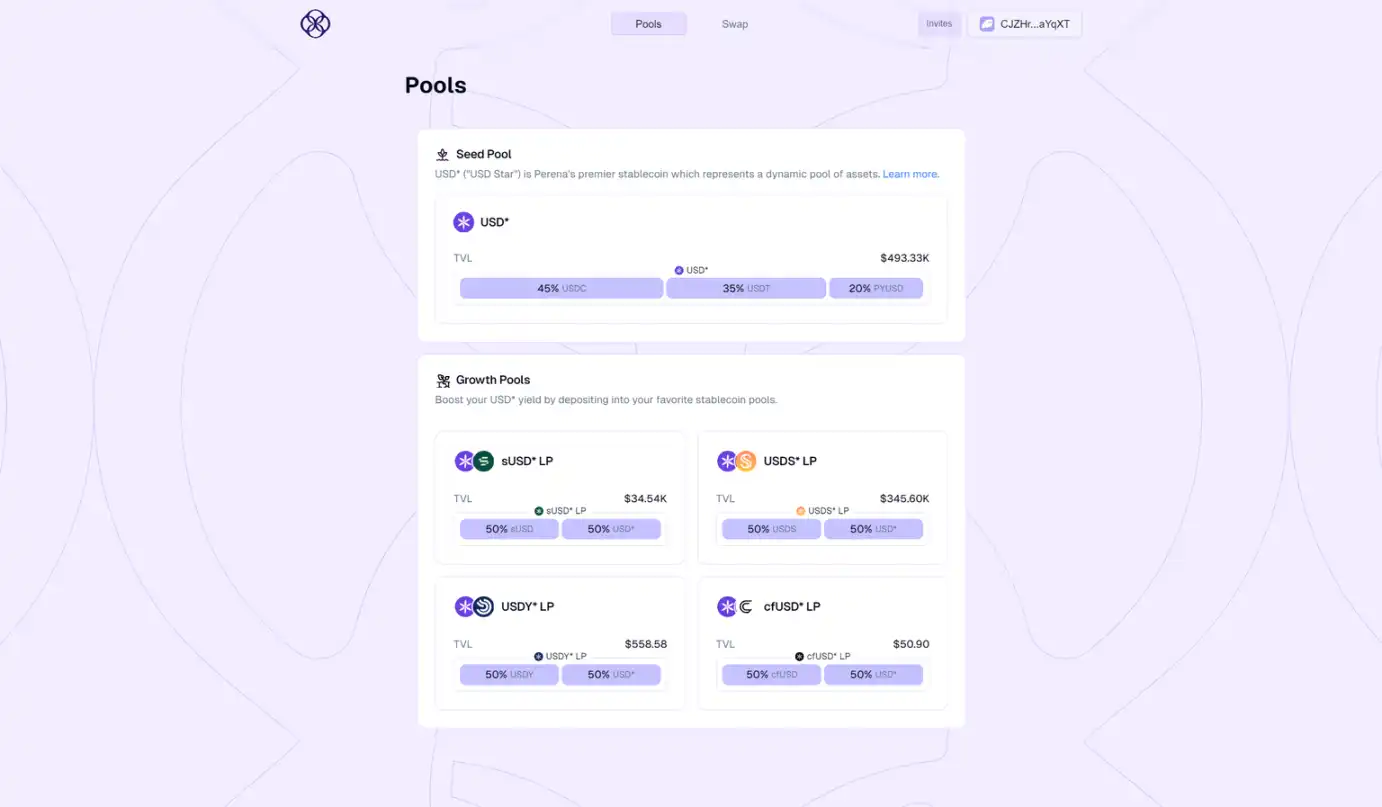
Currently, the project is still in its early stages, with only two functions, Swap and Pool, open. You can get Petal Points by trading between stablecoins and forming LPs. Swap pools do not require invitation codes to enter, and Pools require referral codes or can only be opened when the points reach 700. The referrer can get 5% of the points earned by the recommended user. When 700 points are reached, 4 invitation codes can be generated, and 2 more invitation codes can be obtained for every additional 1,000 points. Using the referral code when registering will give 100 Petal Points to the user and the referrer respectively. The Pool function is permanently enabled after entering. Currently, transactions support 7 stablecoins including USDC, PYUSD, sUSD, etc.
Daily points acquisition method:
Swap: Up to 500 points can be obtained for daily transactions.Up to 10 transactions per day, 1 USD is worth 0.1 points, and up to 50 points can be obtained for each transaction (500 U transaction amount can obtain the maximum points).
Pool: (currently there is no upper limit on points, the larger the amount, the more petal points)
-Seed Pool: 10 petal/$/day
-Growth Pool: 20 petal/$/day
USD*: 100 petal/day (balance greater than 100 USD)
Other LP tokens: 100 petal/day (balance greater than 100 USD) For example, sUSD-USD* LP, USDS-USD* LP
Perena has a beautiful vision and a luxurious investment background. However, as an on-chain stablecoin exchange platform, whether this demand really exists is still in doubt. Currently, centralized exchanges still waive transaction fees for stablecoins. Compared with on-chain trading platforms such as Raydium, Perena may need to compete with centralized exchanges. Perhaps only when on-chain funds continue to flow in, on-chain applications flourish, or are truly combined with real assets (wage issuance, etc.) can Perena play a greater role.
You may also like

Morning Report | OpenAI has submitted an S-1 registration statement draft to the U.S. SEC; Morpho completes $175 million financing

Galaxy Deep Research Report: How Hyperliquid's HIP-4 Upgrade Changes the Landscape of Prediction Markets?

Latest research from 13 top universities including Cornell University: The current state, challenges, and misconceptions of the fusion of Crypto and AI

Deconstructing Anthropic: The Best AI Company, Possibly Also a Type of Organizational Invention

Every exchange is a "Universal Exchange."

The counterattack of traditional finance: Alliance chains are quietly reviving
Pantera Capital Partner: How Tokenization is Restructuring the Private Equity and Early Investment Ecosystem?

Mastercard Launches Agent Pay for AI, Plans to Record AI Agent Payment Authorizations on Polygon
Mastercard launched Agent Pay for AI, a new payment protocol designed to help AI agents make small payments such as pay-per-use access to data and APIs. The system plans to record human-granted AI agent permissions on Polygon, focusing on verifiable authorization, identity, and payment controls.

Curve Deploys Llamalend v2 on Optimism With 250,000 OP Incentives
Curve launched Llamalend v2 on Optimism with 250,000 OP incentives from the Optimism Foundation. The upgrade expands Llamalend beyond its earlier crvUSD-focused model, adding broader collateral support, LlamaRisk market reviews, and the ability to use Curve LP tokens as collateral.

Raydium Old Liquidity Pool Reportedly Exploited, With $1.34 Million Moved to Ethereum and Tornado Cash
An old Raydium liquidity pool was reportedly exploited for around $1.34 million in USDC, RAY, and wSOL, with the stolen funds bridged to Ethereum and deposited into Tornado Cash. The incident highlights the tail risks of legacy DeFi pools, old contracts, and cross-chain fund laundering paths.
Kalshi Executive Challenges “SBF Backed AI Unicorns” Narrative, Says Leopold Aschenbrenner Was Key Figure
Kalshi executive John Wang questioned the “SBF backed AI unicorns” narrative, saying Leopold Aschenbrenner was the key figure behind major AI investment decisions.

New York Proposes Stricter Stablecoin Issuer Rules Aligned With Federal GENIUS Act
NYDFS proposed stricter stablecoin issuer rules aligned with the GENIUS Act, covering reserves, custody, redemption timelines, audits, and capital buffers.

CryptoQuant Says Bitcoin Profitable Supply Is Near 45% Pressure Zone as On-Chain Data Points to Market Repricing
CryptoQuant said Bitcoin’s profitable supply is nearing the 45% pressure zone, signaling rising market stress, unrealized losses, and a possible on-chain repricing phase.

Bitcoin Falls Below 200-Week Moving Average as On-Chain Data Shows Over Half of Supply in Loss
Bitcoin dropped below its 200-week moving average as on-chain data showed over 50% of circulating supply is now in loss, signaling rising market stress.

CFTC Reportedly Plans New Prediction Market Rules Focused on Manipulation Risk and Public Interest Review
The CFTC is reportedly preparing new prediction market rules focused on manipulation risk, public interest review, and retail trader protections.

Meet the new WEEX trial fund—your gateway to greater profits

WEEX Labs Lands at Dutch Blockchain Week: A Disruptive Crypto × AI Conversation Sets Sail in Amsterdam
SK Hynix Reportedly Plans U.S. ADR Listing as Early as August, With SEC Approval Possible in Late June
SK Hynix may pursue a U.S. ADR listing as early as August, with SEC approval reportedly possible in late June amid strong AI chip supply chain demand.
Morning Report | OpenAI has submitted an S-1 registration statement draft to the U.S. SEC; Morpho completes $175 million financing
Galaxy Deep Research Report: How Hyperliquid's HIP-4 Upgrade Changes the Landscape of Prediction Markets?
Latest research from 13 top universities including Cornell University: The current state, challenges, and misconceptions of the fusion of Crypto and AI
Deconstructing Anthropic: The Best AI Company, Possibly Also a Type of Organizational Invention
Every exchange is a "Universal Exchange."
The counterattack of traditional finance: Alliance chains are quietly reviving


