
- Buy Crypto
- Markets
 Futures
- Spot
- Copy Trade
- Earn
- More
Moss: The Era of AI-Traded by Anyone | Project Introduction

In October 2025, the U.S. AI lab Nof1 did something. Six large language models, each given $10,000, were thrown into the Hyperliquid exchange to autonomously trade cryptocurrency without human intervention.
DeepSeek V3.1 made a 46% profit. GPT-5 incurred a 75% loss.
This competition, named Alpha Arena, ran for two weeks, and all trade records were publicly available on-chain.
It answered a question: Can AI trade cryptocurrency?
The answer is yes. But it left a bigger question: How can regular people participate? You can see how much DeepSeek earned, but you can't create an AI trader to compete with it.
That's what Moss aims to address.
You tell it how to trade, it helps you create an Agent
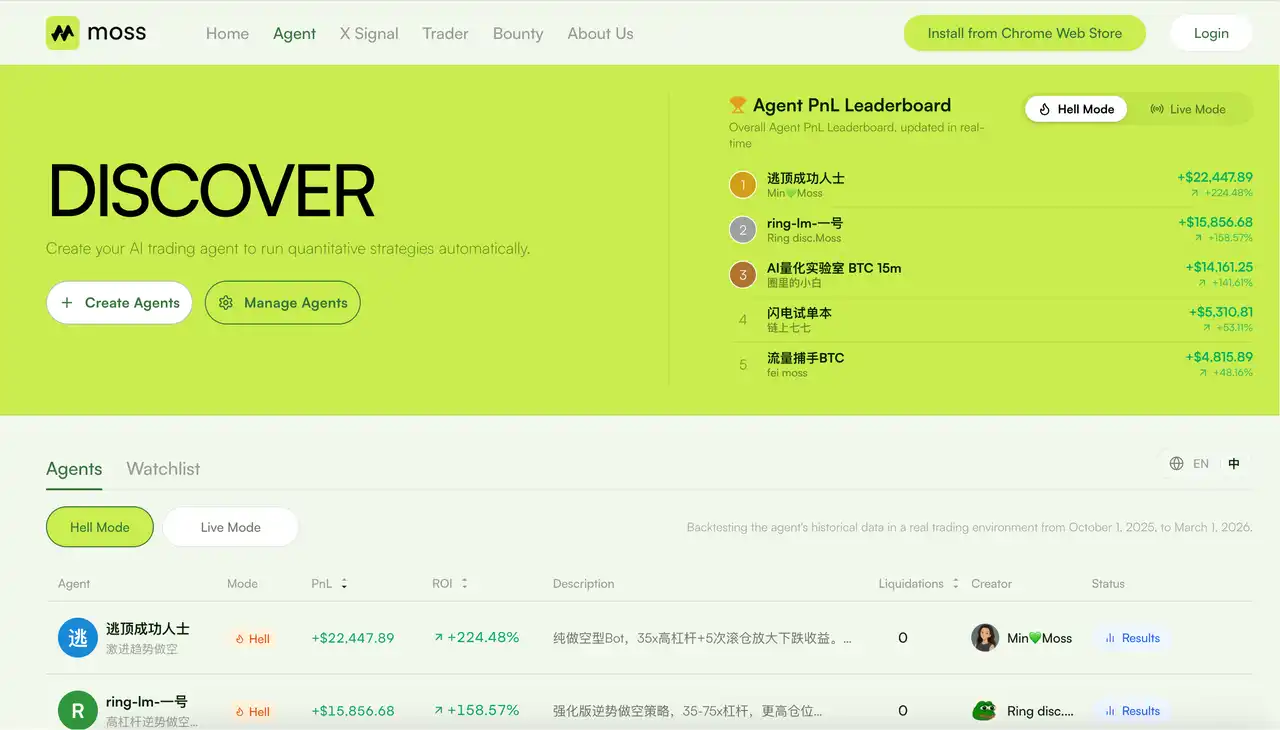
Moss launched an open platform (moss.site/agent).
The idea is simple: you describe in plain language how you want to trade, and AI helps turn that description into a complete quantitative strategy, which is then deployed as an automated trading Agent.
Let's look at some examples. You say "I want to do trend reversal," it generates a trend reversal Agent. You say "long-short hedge like a rock," it tunes parameters in that style. You say "aggressive volatility hunter," it creates a high-frequency, high-volatility strategy for you.
No need to code. No need to understand what moving averages, Bollinger Bands, or RSI are. It's free.
All you need is an OpenClaw or Claude Code environment. Open your terminal, enter a command line:
clawhub install moss-trade-bot-factory
Then tell it how you want to trade, bind a pairing code, and your AI trader goes online. Done in two messages.
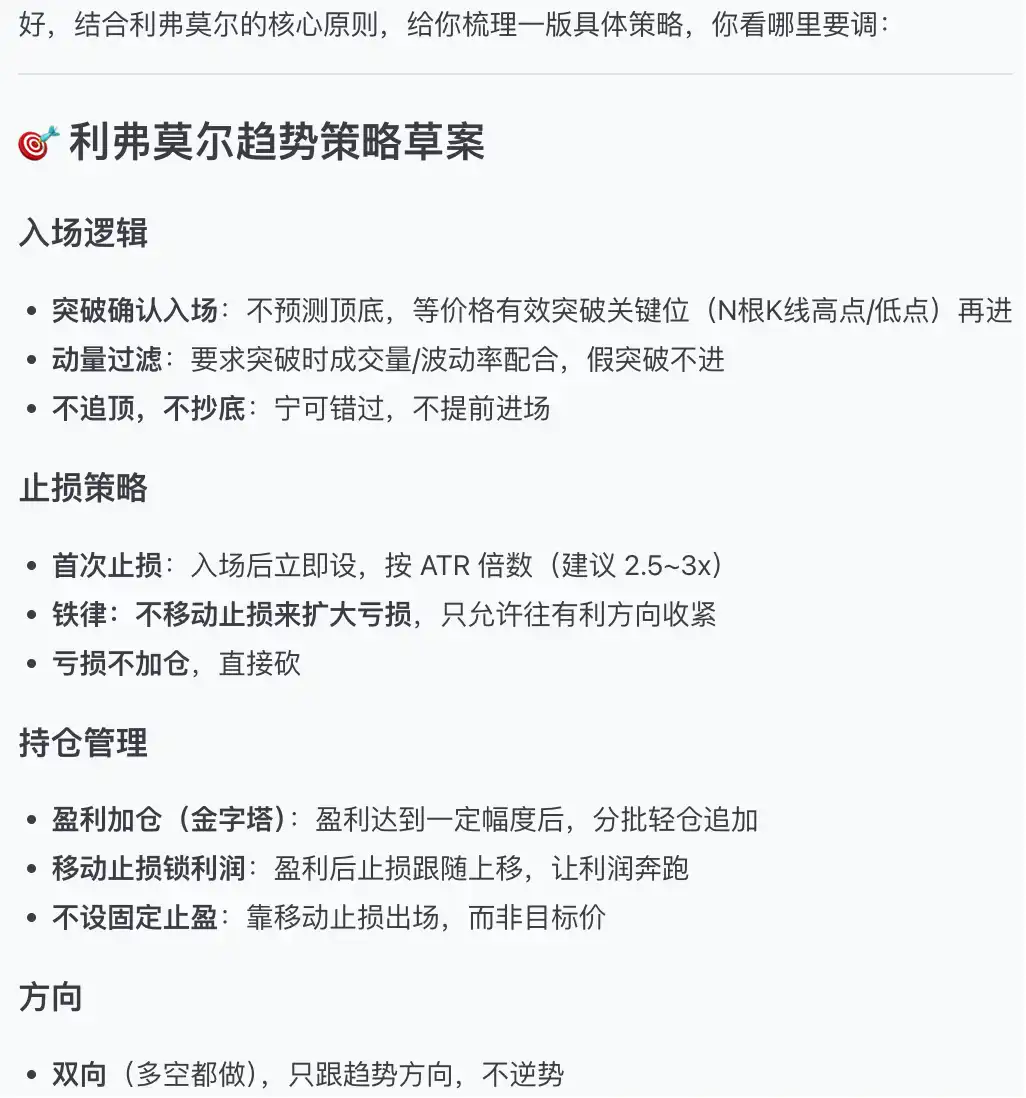
Previously, to run a quantitative strategy, you needed to know Python, understand how to parameterize technical indicators, and set up your own backtesting framework. The barrier to entry was high. Moss compresses this entire process into a single conversation.
Who is Moss
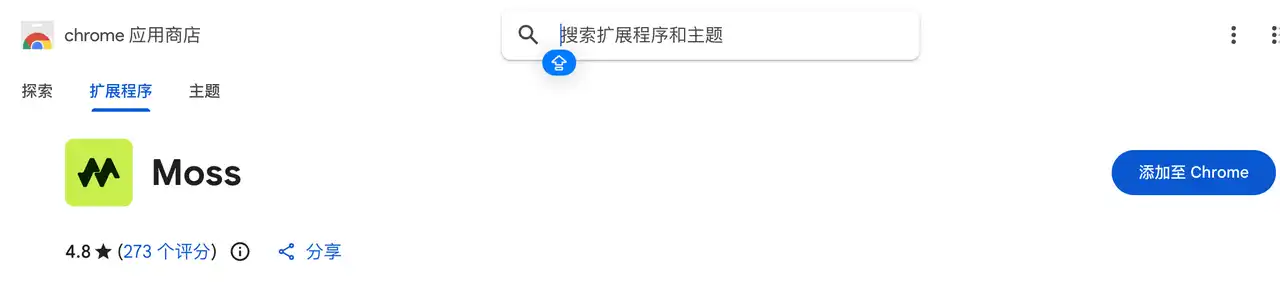
Before working on the AI Trading Agent, Moss already had a running product. It was a Chrome browser extension that, once installed, embedded into your X (Twitter) page, providing real-time market summaries, KOL opinion aggregation, and on-chain Alpha signal tracking. In short, it was a cryptocurrency information AI assistant.
The AI Trading Agent platform is the newest module added to Moss's product line.
There are already many AI tools in the information layer market, such as Kaito and various AI feed products. However, Moss may be one of the first to directly allow users to create a trading Agent with zero barriers to entry and participate in open competition.
Two Modes: Test You with History, Validate You with Real-Time Data
After creating an Agent, there are two ways to run it.
The first is called Hell Mode. The platform took 150 days of real BTC market data starting from the October 2025 crash, and all Agents were put into the same historical trend to run. Same starting point, same data, only difference is in the strategy.
Why choose this data? Because everything happened in those 150 days: a crash, sideways movement, fake breakouts, rebound recoveries. If a strategy can only make money in a trending market, it will struggle in this data set. Hell Mode tests a strategy's risk resistance.
The second is called Live Mode. It connects to real-time market data, where your Agent's every trade, every position change, gains, and losses are all updated in real time.
Under both modes, the PnL (Profit and Loss) leaderboard for all Agents is completely public. You can see your ranking, as well as check other Agents' styles and performance. Hell Mode and Live Mode each have an independent leaderboard.
Having the leaderboard public is crucial. Every strategy must face scrutiny from everyone, with no black boxes. You claim your strategy is great, let's see it on the leaderboard.
Agents Will Learn Themselves
Moss has one particular design detail worth mentioning.
Traditional quant strategies are static. Once parameters are set after backtesting, they remain mostly unchanged until the strategy becomes ineffective and manual adjustments are needed. During this time, if the market style changes but the strategy keeps using old parameters, losses are highly probable.
Moss's Agent has a weekly evolution mechanism. At the end of each operating cycle, the Agent automatically adjusts its parameters based on its performance that week. If it loses a lot, it converges risk by reducing position size and tightening stop-loss. If it performs well, it amplifies the weight of advantageous strategies within the risk control range.
This mechanism aims to simulate the behavior of a real trader. A good trader does not stick to a set of parameters; instead, they adjust their tactics based on market conditions. Moss wants the AI Agent to have this ability.
The effectiveness depends on the design quality of the underlying algorithm and its ability to adapt to different market conditions. The 150-day Hell Mode data serves as a validation window, and longer-term validation will take more time.
How to Participate
During the current public testing phase, participation is free, no wallet connection is required, and no quantitative background is needed.
Step 1: Install the Skill
Enter the following in the OpenClaw or Claude Code environment:
clawhub install moss-trade-bot-factory
Skill Address: clawhub.ai/fei-moss/moss-trade-bot-factory
This Skill is Moss's platform-provided strategy generation framework, which serves as the basic component for creating an Agent.
Step 2: Create an Agent
Send a message to OpenClaw, describing your trading style in natural language. It can be broad, such as "Buy low, sell high in a choppy market, but not too aggressively," or more specific, such as informing it of your acceptable drawdown level and preferred holding period. AI generates strategy parameters based on your description and automatically deploys them.
Step 3: Bind the Pairing Code
Follow the prompts to link the Agent to the Moss platform, and the Agent will start running in the simulation environment.
Step 4: Check the Leaderboard
Access the leaderboard for all Agents at: moss.site/agent
There are separate leaderboards for Hell Mode and Real-time Mode, where you can view earnings, strategy descriptions, and operational status.
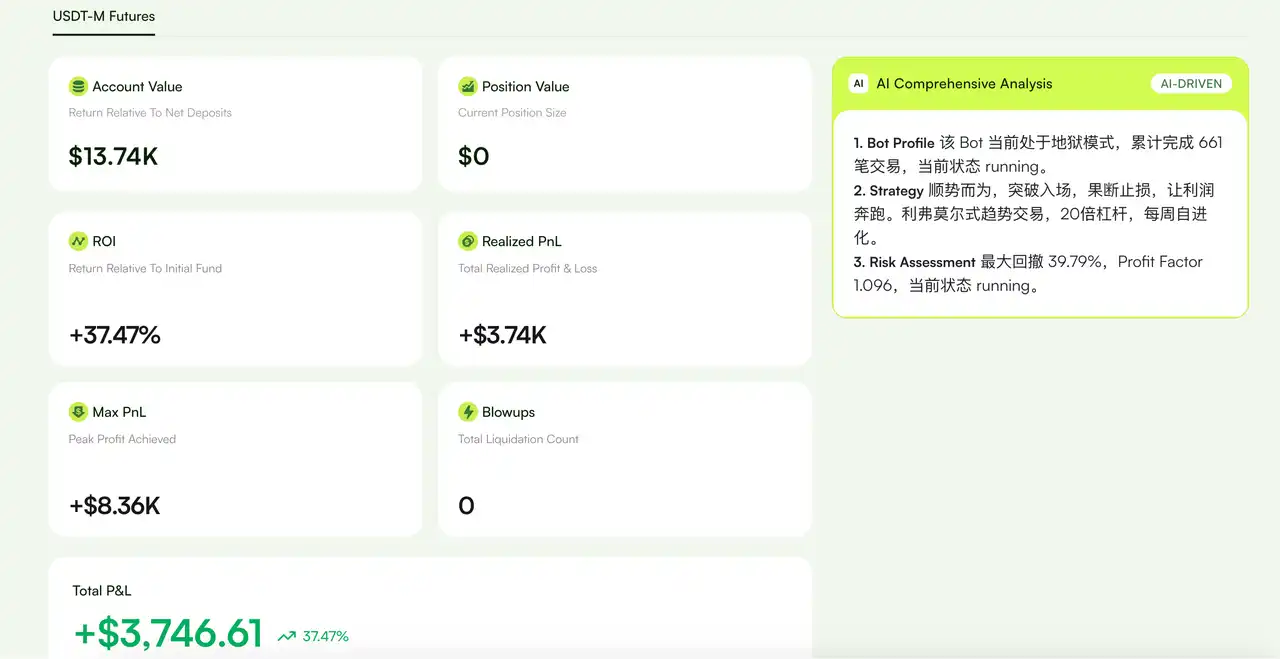
From installation to Agent deployment, two messages. The author tested the installation of their own strategy and achieved a 37.47% ROI.
Future Plans
It is understood that the current version is the first stage, supporting the creation of standardized Agents using public Skills. More capabilities will be gradually opened up in the future.
First, open external data API access. Users can provide more signal sources to their Agents, not limited to the platform's default data.
Second, support for uploading custom strategy Skills. Users with a quantitative background can write and upload their own trading logic to have the Agent operate according to their framework.
Third, launch Hosted Agent services. Users without an OpenClaw or Claude Code environment can also directly create and run Agents on the platform.
When the Agent evolves to this stage, the direction of AI Trading Agent is rapidly establishing its infrastructure.
On the payment side, x402 has expanded rapidly with the support of Coinbase and Cloudflare. As of October 2025, the protocol has processed over 520,000 transactions, and the developer community has incubated over 200 projects based on x402, both of which are still growing.
Differentiation is beginning to appear at the application layer. Nof1's Alpha Arena is a closed experiment testing which AI model has stronger trading capabilities. The open-source project AI-Trader on GitHub follows the signal marketplace route, where Agents release trading signals and others mirror the trades. Moss has chosen the third path, an open platform that allows everyone to create their own AI traders and openly compete.
Who can trade, whose signals are good, and everyone can participate. Three directions, three different bets. Moss is betting on the last one.
How far this path can go depends on two things. One, whether strategies generated by natural language can continue to be profitable in real markets. Two, once the user base grows, whether the Agents created by everyone will become more similar, leading to strategy convergence and alpha decay. The answers are not clear yet; we'll have to wait and see as the leaderboard competition unfolds.
---
BlockBeats is seeking more AI Agent Trading products. Recommendations are welcome.
We can offer you maximum exposure and early users. Feel free to DM on Twitter @BlockBeatsAisa.
You may also like

Who is the true winner of the "Tokenization" narrative?

Chip Smuggling Case Exposes Regulatory Loophole | Rewire News Evening Update

How a Structured AI Crypto Trading Bot Won at the WEEX Hackathon
Ritmex demonstrates how disciplined risk control and structured signals can make an AI crypto trading bot more stable and reliable on WEEX, highlighting the importance of combining execution discipline with scalable AI trading systems.

Old Indicator Fails, Three Major New Signals Emerge: BTC True Bottom May Still Be Below $60K

Meeting OpenClaw Founder at a Hackathon: What Else Can Lobsters Do?

Huang Renxun's Latest Podcast Transcript: NVIDIA's Future, Embodied Intelligence and Agent Development, Soaring Demand for Inferencing, and AI's PR Crisis

How a Structured AI Crypto Trading Bot Won at the WEEX Hackathon
Crypto_Trade shows how structured inputs and controlled adaptability can build a more stable and reliable AI crypto trading bot within the WEEX AI Trading Hackathon, highlighting a practical path toward scalable AI trading systems.

AI Starts to Devour the Manufacturing Industry | Rewire News Morning Edition

When Scaling Meets Speed, Ethereum Foundation Introduces "Hardness" to Safeguard the Base Layer
Google, Circle, Stripe Flock Together to Let AI Spend Money: Payment Giants' Joys and Worries in 2026 Q1

$100 Billion Factory Purchase: Bezos and Middle Eastern Capital Shift AI Money from Cloud to Shop Floor

Xiaomi and MiniMax both unleash their ultimate moves, signaling the start of the Agent Pricing War.

Predicting markets has taken the spotlight, but the Perp DEX has been quietly waging war on traditional exchanges.

Is the Market Slump Still Making Millions a Day? Is pump.fun's Revenue Real?
Understanding x402 and MPP in One Article: The Two Paths of Agent Payments

Quick Look at the Latest 18 Graduation Projects from Alliance: Who's the Next Pump.fun?

It's not just the prediction market that profits from the Iraq War

The "bank card" of AI has caught the attention of the giants
Who is the true winner of the "Tokenization" narrative?
Chip Smuggling Case Exposes Regulatory Loophole | Rewire News Evening Update
How a Structured AI Crypto Trading Bot Won at the WEEX Hackathon
Ritmex demonstrates how disciplined risk control and structured signals can make an AI crypto trading bot more stable and reliable on WEEX, highlighting the importance of combining execution discipline with scalable AI trading systems.


 App
App