
Rejecting the "Security Theater": Wallet Security is Entering the Era of Verifiability

 Prefer us on Google


Source: OKX
By 2025, Web3 will enter a new stage of "larger scale, higher-frequency usage," and wallets will accelerate their evolution from a "coin storage tool" to a chain-entry and transaction operating system. Market research firm Fortune Business Insights estimates that the cryptocurrency wallet market will reach around $12.2 billion in 2025 and may grow to $98.57 billion by 2034.
User-side expansion is also evident: a16z crypto estimated in the "State of Crypto 2025" that there are approximately 40-70 million active crypto users, with about 716 million crypto asset holders who "hold assets but may not necessarily be active on-chain"; Crypto.com Research's report also states that the global crypto holders increased from 681 million in the first half of 2025 to 708 million.
On the flip side of the increasing scale and penetration rate is the simultaneous amplification of security risks. It is no longer just about "whether the smart contract has vulnerabilities" but about intercepting risks at the user's critical points, such as clicking on links, connecting wallets, signing authorizations, and processing transactions.
In the on-chain world, the "attack surface" often extends beyond smart contract vulnerabilities and is more commonly related to low-barrier phishing, fake domains, impersonation of customer service, and authorization fraud as "pre-transaction risks." For example, Chainalysis defines "crypto drainers (wallet emptiers/phishing authorization tools)" as tools that do not steal account passwords but instead deceive users into connecting their wallets and approving malicious transaction authorizations, allowing assets to be drained directly. Public data also shows that in 2024, losses related to "wallet drainers" were close to the $500 million mark.
Therefore, enhancing the security of Web3 wallets will no longer focus solely on whether smart contracts have vulnerabilities but will need to pay further attention to how to proactively intercept risks at key user behavior points, known as "pre-transaction security."
In such an industry context, "security" is becoming increasingly challenging to address with a simple slogan but instead resembles a governance capability that needs continuous validation: whether it can be verified, whether it can be traced, and whether it can be disclosed in a timely manner are becoming important criteria for users in choosing a wallet.
From "Security Claims" to "Understandable Security Capability List"
For a long time, when wallet projects discussed security, common rhetoric included "we have undergone audits," "we have a whitepaper," and "we focus heavily on risk management." However, with the industrialization of scams and phishing, this "security claim" is losing its persuasiveness. The moment users truly encounter issues often happens in very brief interactions such as clicking on links, connecting wallets, and signing authorizations. The "crypto drainers" described by Chainalysis are a typical path: attackers disguise themselves as a legitimate page, guide users to complete authorization, and then transfer the assets; their research even mentions cases of forging Magic Eden pages and carrying out malicious transactions targeting Ordinals users.
Public data is also driving the industry narrative towards "understandability." Security Week, citing Scam Sniffer's statistics, reported that in 2024, nearly $500 million in losses were caused by wallet emptiers, with over 332,000 victims. These types of events do not require attackers to breach complex systems but rather rely more on users not understanding the risks during interactions. On the other hand, Chainalysis, in its 2025 disclosure, estimated that in 2024, on-chain scam revenue was at least $9.9 billion and could increase as more addresses are identified. When the main risk comes from the "user-side readability gap," wallet manufacturers must shift security from backend engineering to front-facing expression.
As a result, more and more wallets in the industry are starting to "productize" their security capabilities: they no longer just tell you "we are secure" but break down protective actions into a list that users can understand—such as which tokens will be flagged as high risk, which transactions will trigger alerts, which addresses or DApps will be blocked, and why the blocking is happening. The essence of this change is to transform security from a "qualification narrative" to an "interaction narrative": enabling users to receive actionable information before signing, rather than having to look at an audit PDF afterwards.
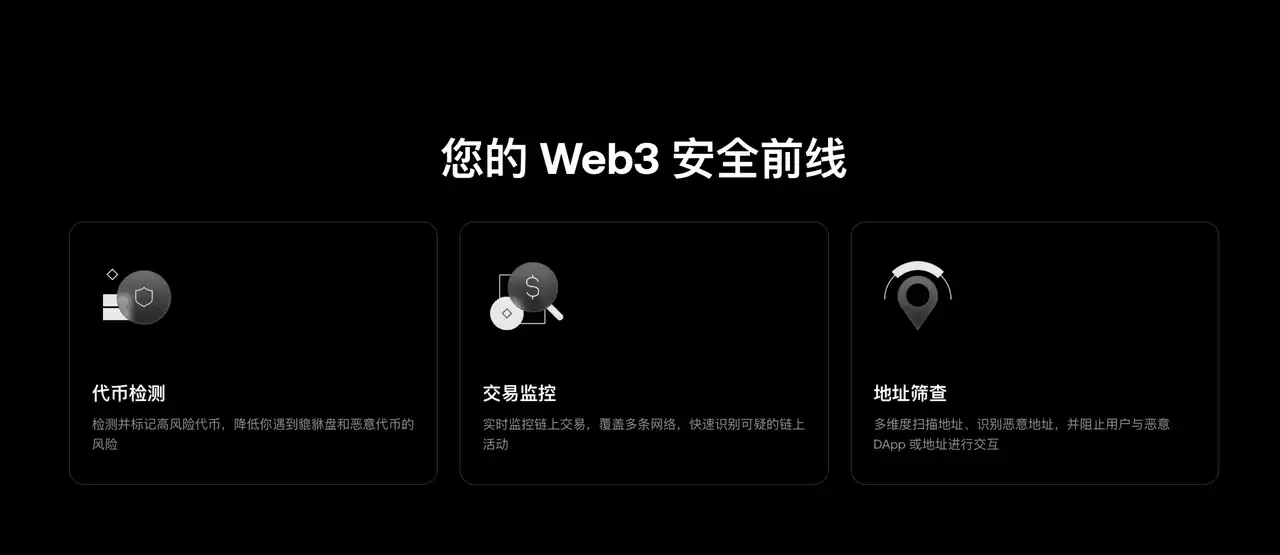
Following this trend, the newly launched and upgraded Security Center page of the OKX wallet provides a more typical example of "expressing in a list format." The page explicitly outlines three "frontline defenses" aimed at users: Token risk detection, Transaction monitoring, and Address screening, and explains their functions in a single sentence each, such as "Flagging high-risk tokens to reduce exposure to honeypots and bad actors," "Cross-chain real-time monitoring to identify suspicious on-chain activities," and "Intercepting interactions with malicious DApps and addresses." The benefit of this approach is that even if users do not understand security terminology, they can quickly relate to the action they are currently taking—whether to click, sign, or transfer.
Click to visit: OKX Wallet Security Landing Page Audit Report
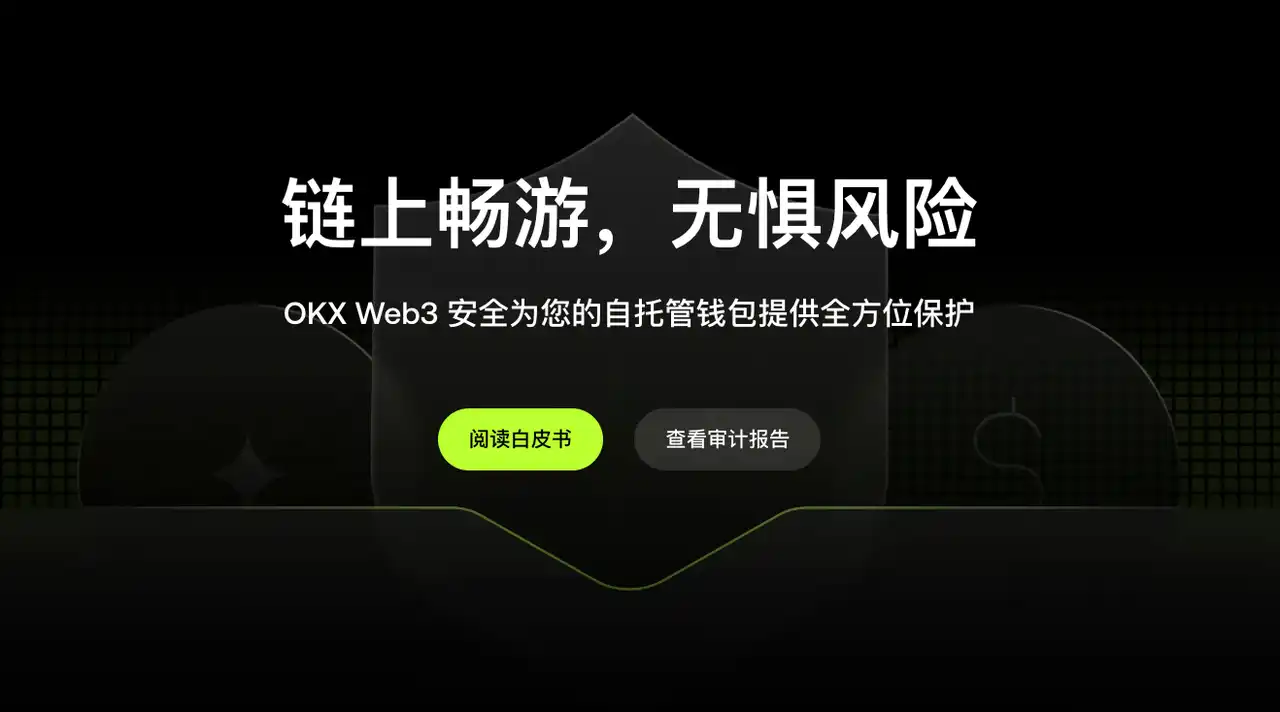
More importantly, "understandability" does not mean "talking to oneself." On the same page, the OKX wallet also provides an "View audit reports" link, connecting the "capability list" with "third-party verification." Furthermore, the audit report collection page in its help center further elaborates on the audit scope, number of issues found, and repair status, allowing users to transition from "understanding capabilities" to "verifying evidence" when needed.
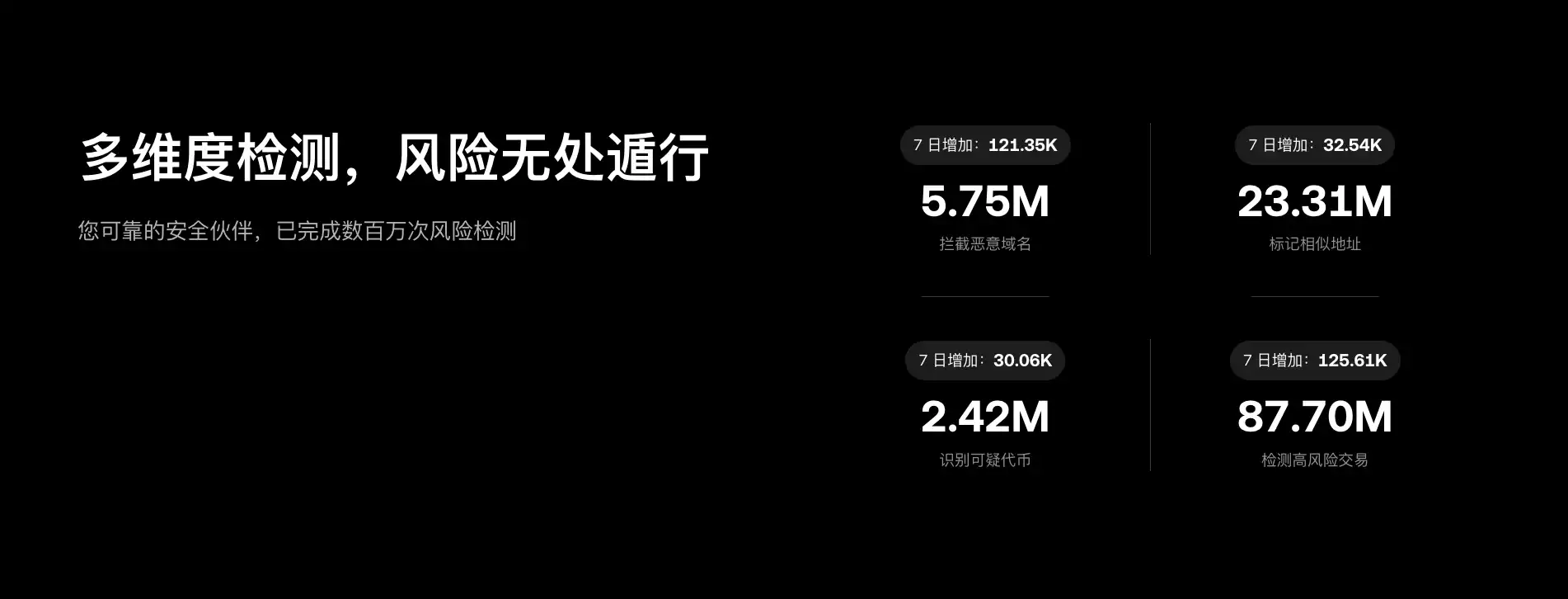
This kind of transition from "security claim" to "understandable checklist" is not about making security sound grander, but about making security more actionable: as fraud increasingly relies on deception and disguise, whether a wallet can place risk alerts at interaction points, explain in user-friendly language "where the danger lies, why it's dangerous, and what you should do," is becoming part of security capability and increasingly determines whether users will stumble at a crucial step.
Audit Information "Publicly Verifiable": Transforming Third-Party Endorsement from "Linked" to "Verifiable Evidence Chain"
In the wallet industry, audits have long faced a practical problem: many projects have indeed "undergone audits," but the information is scattered across announcements, PDFs, and social media reposts, making it difficult for ordinary users to quickly understand "who audited it, what was audited, whether any issues were fixed, and when was it last updated." This time, the more prominent action by the OKX wallet is to consolidate publicly available third-party audit reports into a unified portal and directly indicate on the page "published on November 11, 2022, updated on November 17, 2025," allowing users to quickly determine at a glance that this is not just a one-time showcase but an ongoing information disclosure window that is actively maintained.
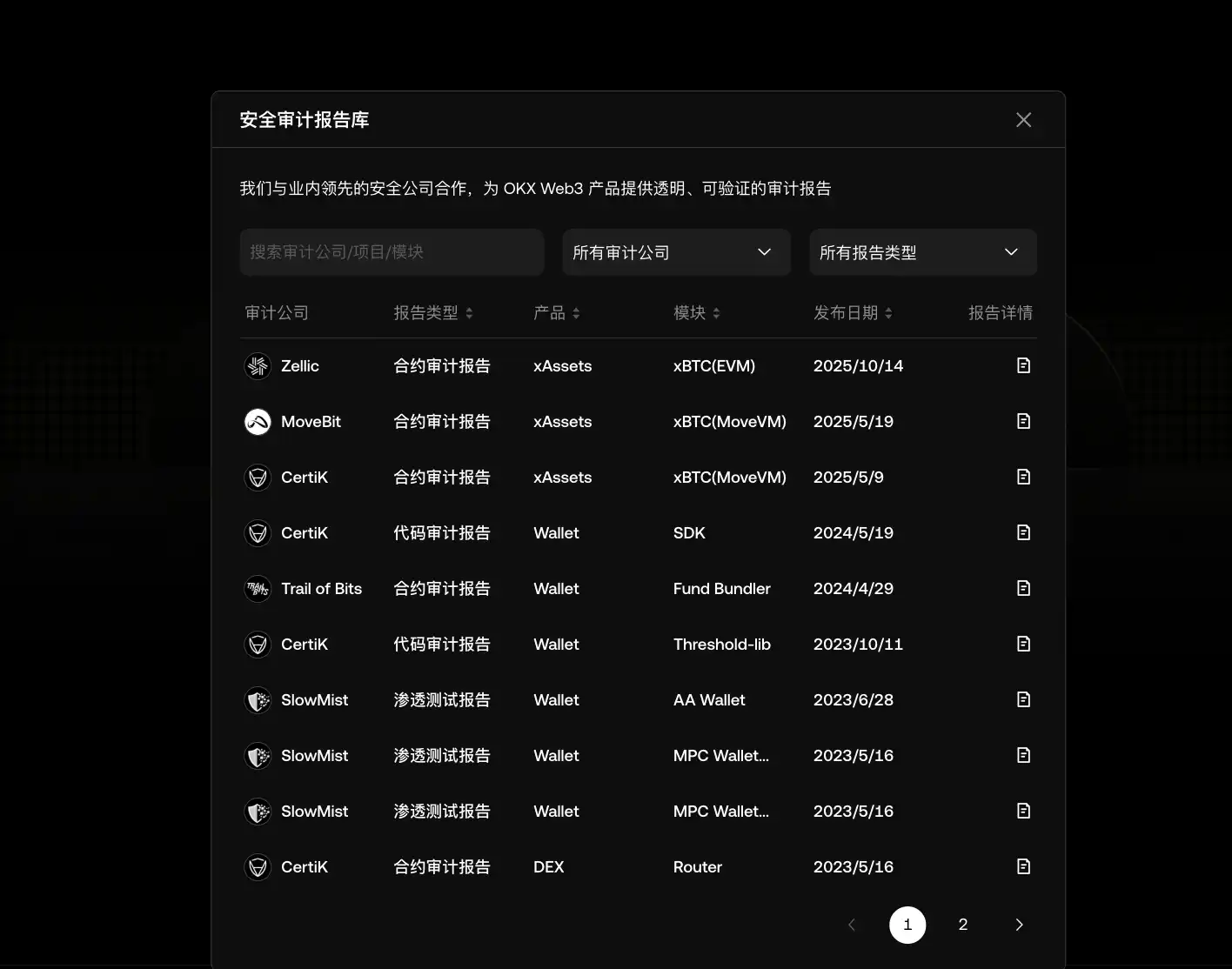
From the entries publicly displayed on this collection page, the scope of disclosure has not only focused on the traditional audit target of "smart contracts." Taking CertiK's entry dated May 23, 2024, as an example, the audit content clearly covers key code paths on the mobile end and frontend: including iOS/Android components, frontend ReactJS UI components, JS controllers interacting with the keyring, and multiple wallet SDK modules, while also providing the audit methodology and conclusion criteria.
In the same page, SlowMist's entry is closer to the "new paradigm" of wallet evolution in the past two years—auditable objects such as AA smart contract accounts, MPC keyless wallets, Ordinals transaction modules are all listed; in addition, audit information on the "private key security module" is separately presented, stating directly "private keys or mnemonic phrases are only stored on the user's device and are not transmitted to external servers," responding to the user's core concerns about key security with clearer boundary descriptions.
The value of this "centralized display" is not only in having more comprehensive information but, more crucially, in binding "new capabilities" with "verifiability" at the same entry point: as the wallet industry increasingly moves towards complex architectures such as AA and MPC, what users need most is not just a statement saying "we are very secure" but evidence that can be quickly verified—whether the audit scope covers critical modules, what the methodology is, whether risks have been mitigated, and if the information is consistently updated.
Furthermore, according to the OKX Wallet, after this upgrade, new audit reports and related information can be directly updated through configuration without the need for a new release. If this mechanism can operate stably in the long term, it effectively shortens the "externally verifiable" path, saving not only development and release costs.
For users, this means that when an audit is added or completed, the public entrance can more quickly reflect the "latest status," reducing the uncertainty of "having to rely on forwarding screenshots/old links" during key risk windows. For third-party observers and researchers, it is easier to form a traceable timeline: which modules completed the audit when, what level of issues were discovered, when the fixes were confirmed and publicly updated. This turns "third-party endorsement" into a continuously auditable evidence chain, rather than a one-time display of a PDF.
This article is a contributed submission and does not represent the views of BlockBeats.
-- Price
This content is provided for general informational purposes only and doesn't constitute financial, investment, legal, or tax advice. Any events, rewards, online promotions, or related information mentioned herein should not be considered a recommendation, solicitation, or invitation to purchase, sell, trade, or otherwise deal in any crypto assets. Crypto assets are highly volatile and may result in loss. The availability of WEEX services, products, and related events may vary by region. You are responsible for ensuring that your participation is in accordance with applicable local laws and regulations.
You may also like

The euro stablecoin's retail VASP transaction volume increased 12 times to $777 million over 15 months
Y Combinator launches the YC Crypto Deals program, with participation from the Solana Foundation and others
The Federal Reserve is seeking feedback on the "streamlined master account" framework, proposing to allow cryptocurrency companies to access its payment system

Futures Trading Hours Explained: How Smart Traders Cut Futures Fees and Earn More Cryptocurrency in 2026

BNKR’s Recent Surge Marks New Heights in Cryptocurrency Market
Key Takeaways BNKR Token Peak: BNKR reached an all-time high of $0.0011 on July 31, 2025. Significant Market…

Beast Industries Acquires Step – Expanding Fintech Horizons
Key Takeaways Beast Industries, led by YouTube celeb MrBeast, has acquired the teen-focused fintech banking app Step, aiming…
SlowMist’s Latest Alert: A Deep Dive into LiteLLM’s Data Breach
Key Takeaways SlowMist identifies a major breach in the LiteLLM library, with approximately 300GB of sensitive data compromised.…

Steakhouse Financial Experiences Phishing Attack: A Comprehensive Overview
Key Takeaways Steakhouse Financial’s domain experienced a phishing attack, prompting user safety advisories. Depositors’ funds and smart contracts…
FTX/Alameda Wallet Transfers Over $8 Million in ZRO Tokens to Wintermute
Key Takeaways An FTX/Alameda-associated wallet moved 4.126 million ZRO tokens to market maker Wintermute, with an approximate value…

Analysis of Recent Ethereum Short Position Activity on HyperLiquid
Key Takeaways Recently, a newly created wallet deposited $4.89 million into HyperLiquid, opening a short ETH position with…

Upbit and Bithumb Designate DRIFT as a Trading Alert Item
Key Takeaways Upbit and Bithumb have labeled DRIFT as a “trading alert” asset following guidance from the Digital…
“Brother Maji” Faces Potential Liquidation with ETH Long Position
Key Takeaways “Brother Maji” currently holds a substantial 25x leveraged long position of 6,000 ETH. The position was…
Binance’s Strategic Delisting of Trading Pairs Enhances Market Health
Key Takeaways Binance has decided to remove 23 spot trading pairs, focusing on those with low liquidity and…
Renew the Spirit, Reveal the Worth: Insights on U.S. Economic Trends
Key Takeaways U.S. Treasury Secretary Scott Bessent confirms the Federal Reserve plans to eventually lower interest rates. Current…

Hackers in Brazil Use Fake Google Play Store to Steal Cryptocurrency
Key Takeaways Hackers in Brazil are exploiting fake Google Play Store pages to spread Android malware. Infected devices…

Binance to Delist Key Spot Trading Pairs: What You Need to Know
Key Takeaways Binance is set to remove several spot trading pairs on March 27, 2026, at 11:00 AM…
Dragonfly Receives $55.8 Million Worth of LIT Tokens, Locked Until December 2026
Key Takeaways Dragonfly has acquired 55.8 million LIT tokens from Lighter, according to Arkham. The tokens are valued…
Circle and Tether Freeze Iranian Exchange Wallex Wallet with $2.49M Assets on Hold
Key Takeaways Circle and Tether have frozen a significant amount of assets from an Iranian exchange called Wallex,…
Binance to Delist 10 Spot Pairs Including ARB/EUR
Key Takeaways Binance has announced the delisting of 10 spot trading pairs. The affected pairs include ARB/EUR, BANANA/FDUSD,…

SpaceX Stock Prediction: Hitting $1,200 at 2026 IPO?
Key Takeaways Elon Musk confirms SpaceX is advancing its IPO plans, with expected filing as early as weeks…

OpenClaw 3.28 Update: Potential Security Risks with Axios
Key Takeaways Recent findings suggest OpenClaw version 3.28 may contain a compromised version of the Axios library. Dependency…
Massive Whale Movement: Unstaking $84.96 Million in HYPE Tokens
Key Takeaways A crypto whale, known as TechnoRevenant, has unstaked approximately $84.96 million in HYPE tokens. The tokens…

Security Risks of Fake Ledger Nano S+ Devices Emerging Through Chinese E-Commerce
Key Takeaways Counterfeit Ledger Nano S+ devices are being sold on Chinese e-commerce platforms, posing significant risks to…

How Crypto Futures Markets Are Fueling ‘Scam Coin’ Insider Schemes
Key Takeaways: RAVE’s market cap skyrocketed to $6.7 billion before plummeting by 95% due to insider control and…

SEC’s “Innovation Exemption” Sets New Rails for Tokenized Securities
Key Takeaways: SEC Chair Paul Atkins introduces an “innovation exemption” to regulate tokenized securities. A five-category token framework…

Ripple Sets 2028 Deadline for Quantum-Ready XRPL
Key Takeaways: Ripple commits to a 2028 deadline for XRPL’s quantum-readiness, focusing on quantum-resistant cryptographic systems. Google’s research…
Breaking: Crypto Investor Tim Cook Steps Down as Apple CEO
Key Takeaways: Tim Cook will transition from CEO to Executive Chairman on September 1, 2026. John Ternus, a…
UK Fintech Stratiphy Reopens Tax-Free Crypto ETNs Through IF ISAs
Key Takeaways: Stratiphy now offers UK investors tax-free crypto ETNs via Innovative Finance (IF) ISAs. Recent policies restrict…

Stratiphy Reopens Tax-Free Crypto ETNs for UK Investors
Key Takeaways: Stratiphy reintroduces tax-free access to crypto ETNs in the UK, reversing limitations imposed by HMRC’s ISA…
Uzbekistan Launches Tax-Free Crypto Mining Zone in Karakalpakstan
Key Takeaways: Uzbekistan has initiated the “Besqala Mining Valley” in Karakalpakstan, offering a supervised zone for crypto mining…
The euro stablecoin's retail VASP transaction volume increased 12 times to $777 million over 15 months
Y Combinator launches the YC Crypto Deals program, with participation from the Solana Foundation and others
The Federal Reserve is seeking feedback on the "streamlined master account" framework, proposing to allow cryptocurrency companies to access its payment system
Futures Trading Hours Explained: How Smart Traders Cut Futures Fees and Earn More Cryptocurrency in 2026
BNKR’s Recent Surge Marks New Heights in Cryptocurrency Market
Key Takeaways BNKR Token Peak: BNKR reached an all-time high of $0.0011 on July 31, 2025. Significant Market…
Beast Industries Acquires Step – Expanding Fintech Horizons
Key Takeaways Beast Industries, led by YouTube celeb MrBeast, has acquired the teen-focused fintech banking app Step, aiming…