
Trump's Chosen Wall Street "Sheriff," Jay Clayton: Whose Side Will His Regulatory Scalpel Target?

By: blockbeats|2025/03/24 18:15:03
0
Share
copy
Original Article Title: "Trump's Wall Street 'Sheriff,' Jay Clayton: Which Way Will His Regulatory Scalpel Cut?"
Original Article Authors: Ava Benny-Morrison, Sridhar Natarajan, Bloomberg
Original Article Translation: Luffy, Foresight News
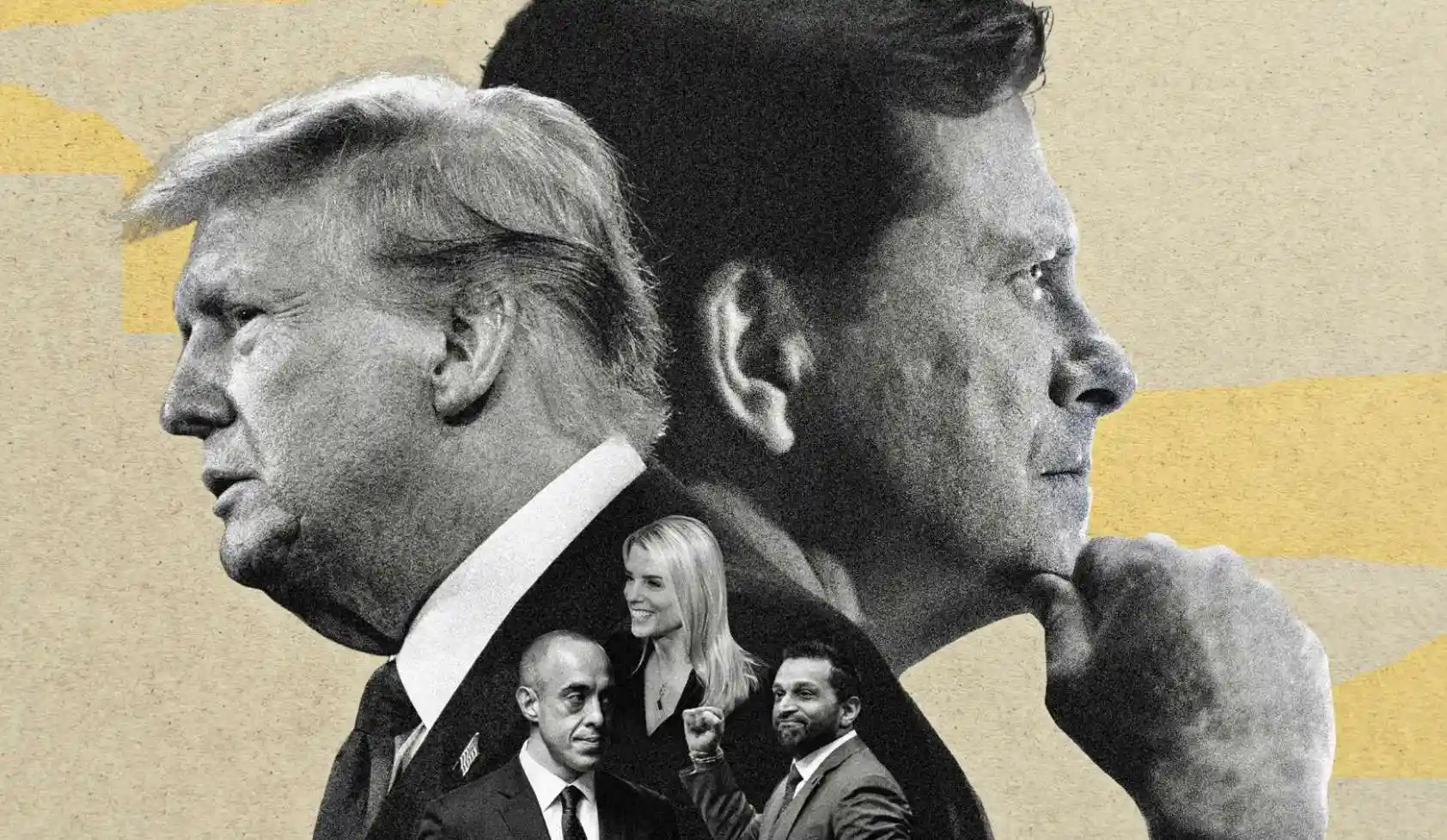
Trump's Chosen Wall Street

His professional background is nothing short of legendary: a top law firm partner, a Washington regulator, and a Wall Street dealmaker.

It was Jay Clayton who stepped in when the Leon Black and Jeffrey Epstein entanglement triggered a seismic event at Apollo Global Management. The seasoned lawyer successfully quelled internal strife, rebuilt trust, and steered the trillion-dollar asset management behemoth back on course.

Now, he is set to replay all this drama at another power hub in New York.

Clayton is poised to take on one of the most coveted positions in the U.S. legal world — the Chief Prosecutor of the Southern District of New York, becoming Wall Street's "de facto sheriff." As President Trump vows to wield the Justice Department against his perceived enemies, the 58-year-old Clayton is gearing up to take over this institution that has always staunchly defended its independence.

"We were facing a reputation crisis at that time, and Jay joined despite personal risks, bringing an incredible stabilizing force," said Apollo CEO Marc Rowan in an interview. Rowan predicts that Clayton will excel in his new role once again, saying, "Whether you are a Republican, Democrat, or Independent, you will like Jay Clayton."
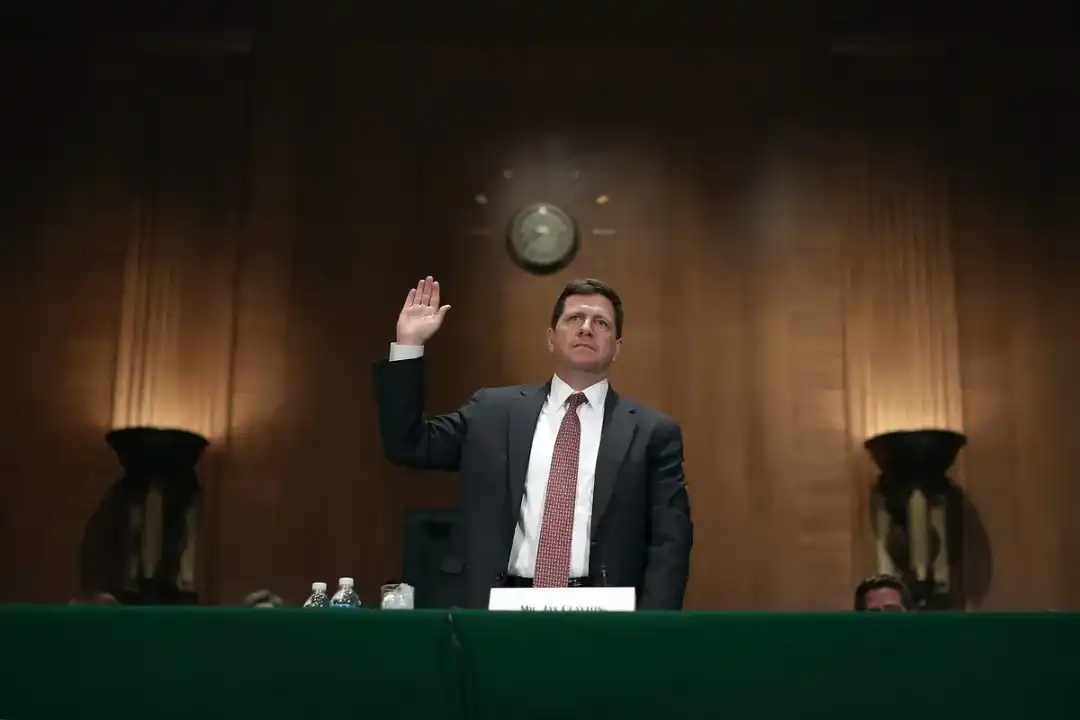
Clayton previously led the U.S. Securities and Exchange Commission (SEC) during Trump's first term and later became Chairman of Apollo. Source: Getty Images

In private discussions with allies, acquaintances, and potential new members, Clayton has conveyed to the Southern District of New York Prosecutor's Office (SDNY) a message of staying the course: he can maintain the office's integrity and address Washington's pressures by aligning with Trump's policy priorities.

"His pro-America stance aligns with the President's expectations," said Rowan, who just a few months ago was on the list of government officials.

However, Trump's unorthodox intervention in this office known as the "Sovereign District" has made Clayton's task more complex. Senior officials in the Trump administration pressured the office to drop charges against New York City Mayor Eric Adams, a demand that led to a series of prosecutors resigning, exacerbating concerns that the office would become a White House political tool and a weapon to attack Trump's enemies.

This game carries huge risks. From 1980s junk bond king Michael Milken to cryptocurrency prodigy Sam Bankman-Fried, and even the mysterious billionaire Bill Hwang, all of them have been pursued by the office Clayton is set to inherit. Trump later pardoned Milken.

This article is based on conversations with over 30 sources who chose not to be identified, describing interactions with Clayton and other prosecutors in the Southern District of New York. Clayton declined to comment.

His primary challenge is to free the office from Trump's intervention. Just weeks ago, the office refused to handle the Adams case as the president wished, prompting Justice Department leaders to dig up messages in an attempt to portray the well-respected prosecutor as a political opportunist.
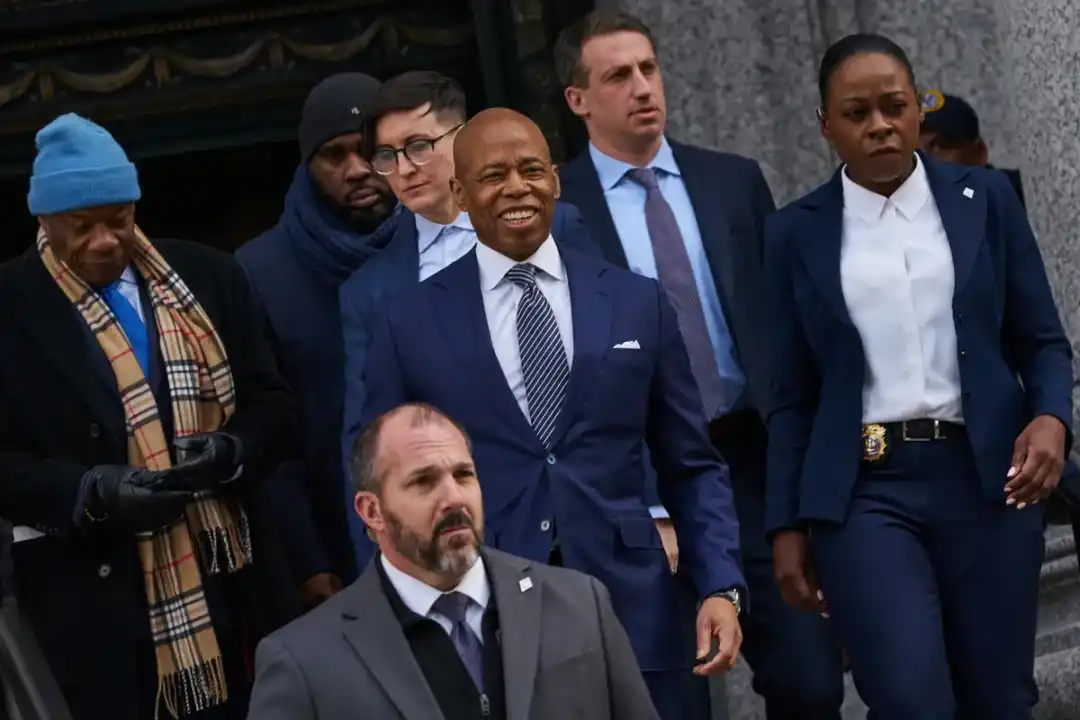
Trump pressured the Southern District of New York prosecutor to drop charges against Mayor Adams (center), Source: Bloomberg

Clayton stated that during his tenure leading the SEC in Trump's first term, he successfully avoided friction and undue interference, even though the agency had clashed with cryptocurrency entrepreneurs and Elon Musk (both of whom later became Trump supporters). However, his new role may be more perilous.

"I have never seen Trump take any interest in or intervene in the SEC; he might have thought it was the NFL," said former hedge fund manager and New York City mayoral candidate Whitney Tilson. "On the other hand, he wants the Justice Department to be a tool for his agenda and be thoroughly politicized. If Clayton doesn't cooperate, he will be fired."

While awaiting Senate confirmation, Clayton has been in discussions with judges and former heads of the Southern District of New York prosecutors (including Damian Williams and Preet Bharara). Bharara was famously fired during Trump's first term.

Unlike the radical ways that reshaped other U.S. institutions, Clayton is planning a prosecution agenda that aligns with government priorities.

One can imagine that this office may particularly focus on human trafficking, anti-Semitic hate crimes, and university protest activities. Recently, when federal agents arrested a Palestinian activist at Columbia University and attempted to revoke his green card, this issue came to the forefront. The office may also align with the Washington Department of Justice to play a broader role in enforcing Trump's tough immigration stance. This could unsettle the long-standing autonomy of the New York Southern District prosecutors.

The move to deport a Palestinian activist sparked a courtroom protest. Source: Bloomberg

It is widely expected that Clayton will continue to pursue white-collar crimes such as money laundering but not necessarily as aggressively as in the Biden era. He has publicly opposed the U.S. investigation into Wall Street's use of WhatsApp, criticized the excessive scrutiny of short sellers in private, and questioned regulatory agencies' lack of market sensitivity in reviewing large trades.

He is enthusiastic about taking action against non-U.S. companies involved in scandals, such as those that plagued China's Luckin Coffee and Germany's Wirecard. This caters to the dissatisfaction of Trump and the American business community, who believe that strict scrutiny only on U.S. companies will give their international competitors an advantage.

"Jay takes a pragmatic approach when prosecuting and does not get bogged down in minor issues," said Goldman Sachs President John Waldron. "His influence will extend beyond the Southern District of New York."

During his tenure as Chairman of the U.S. Securities and Exchange Commission, Clayton touted himself as a '401(k) champion,' and now he also hopes to closely monitor whether celebrity meme stock traders are harming the interests of ordinary retail investors.

This may disappoint those who prefer the hardline regulatory approach to Wall Street during the Biden era.

Although Clayton is not seen as a core member of the Trump camp, he has maintained a close relationship with Trump and they are golfing buddies. This lawyer is highly respected in New York's social circles. While not as bombastic as many regulars on Fox News, he will articulate Trump's views on television.

This mild-mannered image contrasts sharply with some other leaders in the Department of Justice. FBI Director Kash Patel once likened investigators into the President to "criminal thugs." Attorney General Pam Bondi publicly vowed to "clean house" of Justice Department staff who dislike Trump. This month, after she accused the FBI's New York office of concealing Epstein documents, the office's top official was forced to resign. A few days later, two senior New York Southern District prosecutors in charge of the Adams case were also reassigned.
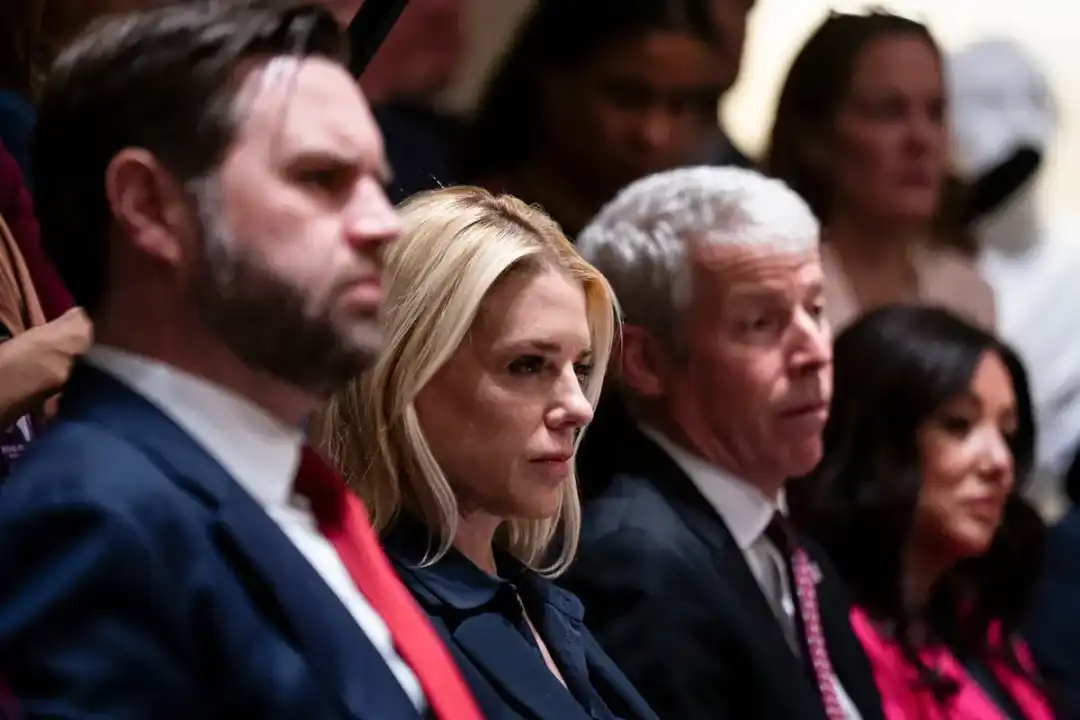
Attorney General (Acting) vows to 'clean house' of Trump-disliking staffers at the Justice Department. Source: Bloomberg

This disdainful attitude toward career civil servants is at odds with the image Clayton cultivated. During his tenure as Chairman of the U.S. Securities and Exchange Commission, his 'call me Jay' mantra helped relax staff. He was a member of the agency's softball team. He hosted happy hours on the agency's tenth-floor terrace with beer and wine. This stood in stark contrast to the MAGA hardliners' advocacy for clearing out the 'deep state' management philosophy.

'He wasn't well known at the time, but quickly won over the staff,' said Steve Peikin, who helped lead the SEC's enforcement division, 'I took some controversial issues to him, and only once was it a politically sensitive issue, he told us to be tougher, not gentler.'

Under Clayton's leadership, the SEC worked with the Southern District of New York U.S. Attorney's Office to bring insider trading charges against the first sitting U.S. congressman to endorse Trump, New York Republican Chris Collins. One former Justice Department senior official said Trump was furious about this. Trump later pardoned Collins.

His career trajectory is roughly as follows: raised in Hershey, Pennsylvania, educated at the University of Pennsylvania, and quickly rose in the New York legal world. During the 2008 financial crisis, he sought life-saving investments for the failing Lehman Brothers, participated in JPMorgan's emergency rescue of Bear Stearns, and helped Goldman Sachs raise $5 billion from Warren Buffett.

In 2020, while playing golf, Trump asked Clayton what position he would like to hold in the next administration. The SEC Chairman expressed interest in becoming the U.S. Attorney for the Southern District of New York.

However, Trump attempted to replace the then-U.S. Attorney Geoffrey Berman with Clayton, a clumsy trial balloon that sparked a political firestorm, derailing Clayton's chances. So Clayton returned to the white-shoe law firm Sullivan & Cromwell, leveraging his corporate connections to work, eventually becoming a mediator for Apollo.
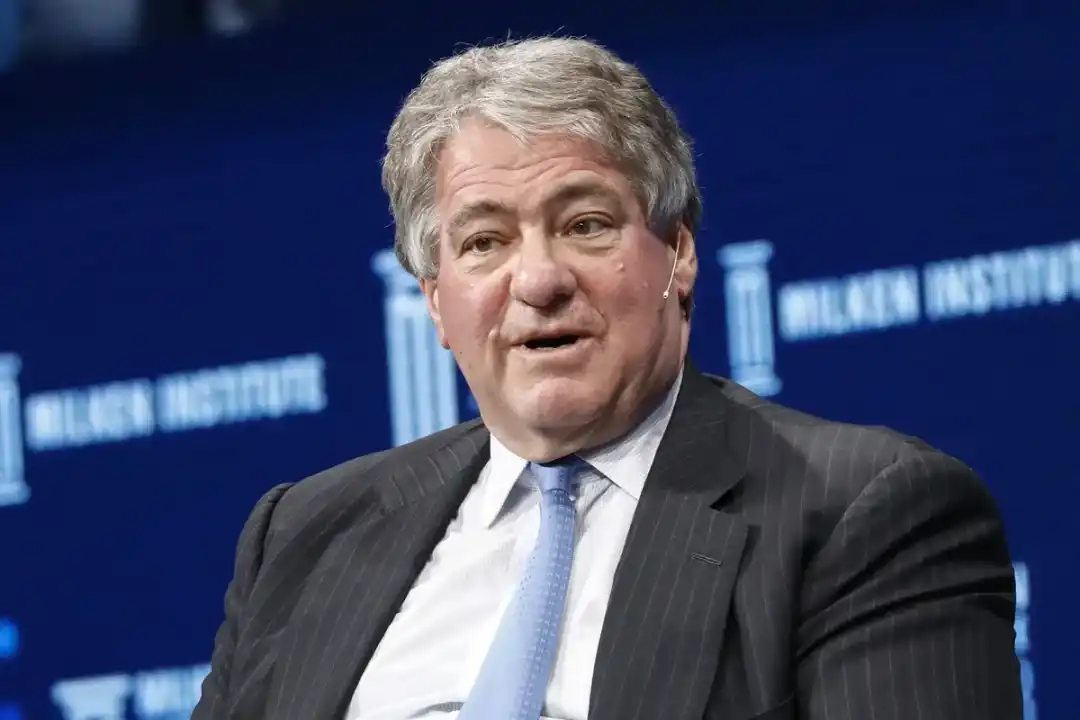
Former Apollo CEO Leon Black. Source: Bloomberg

After the revelation that Apollo's CEO Leon Black paid $158 million to Epstein for various financial services, investor confidence in the company was shaken. Co-founder Josh Harris seized the opportunity to attempt a takeover, further exacerbating the turmoil. In a settlement, co-founder Rowan became the CEO, and Clayton was appointed Chairman.

During the four years working with Rowan, Clayton helped restructure the board and drive the company's expansion. The company's stock price doubled. "Clayton has played a crucial role in guiding the company's transformation," said Apollo board member and former Pennsylvania Senator Pat Toomey.

Before Clayton even took office at the Southern District of New York prosecutor's office, Trump had already started exerting his influence on the office.

The new administration appointed Danielle Sassoon—a prosecutor with an outstanding conservative background—to temporarily lead the office before Clayton received Senate confirmation. However, she quickly faced pressure to withdraw a high-profile prosecution against Mayor Adams. She chose to resign, and other prosecutors also resigned, including Special Forces veteran Hagan Scotten, who was affectionately called "Captain America" by his colleagues.

In his resignation letter, Scotten mentioned that the Department of Justice would eventually find "someone foolish enough or cowardly enough" to drop the charges. Acting Deputy Attorney General Emil Bove eventually had to personally intervene to complete the dismissal. Clayton had predicted to confidants that after the June mayoral primary in New York City, the Adams case would no longer be an issue. Adams himself denied any wrongdoing.
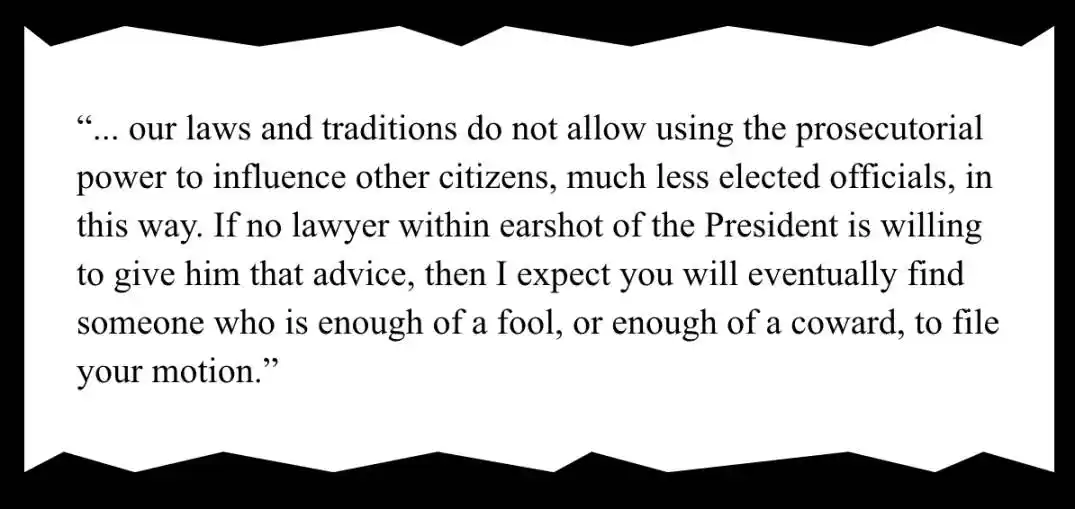
Excerpt from Scotten's Resignation Letter

"Jay will be beneficial for the Southern District of New York prosecutor's office, especially during this tumultuous period," said former Manhattan federal prosecutor Nicole Friedlander. "He won't barge in like a bull in a china shop and meddle in other people's work."

There are other sources of turmoil in the office. Government officials warned that assistant U.S. attorneys on probation could be fired, and other prosecutors were told they might need to go to the U.S. border to handle immigration cases. At least one prosecutor involved in the Southern District's case against Ross Ulbricht received threats after Trump pardoned the Silk Road founder, calling the prosecutors in his case "scum" and "nuts." Defense lawyers lobbied the Deputy Attorney General's office to intervene and attacked other cases in the Southern District.

「What is deeply unsettling is that norms continue to be eroded," former New York Governor Eliot Spitzer said, "This is just the 83rd example."
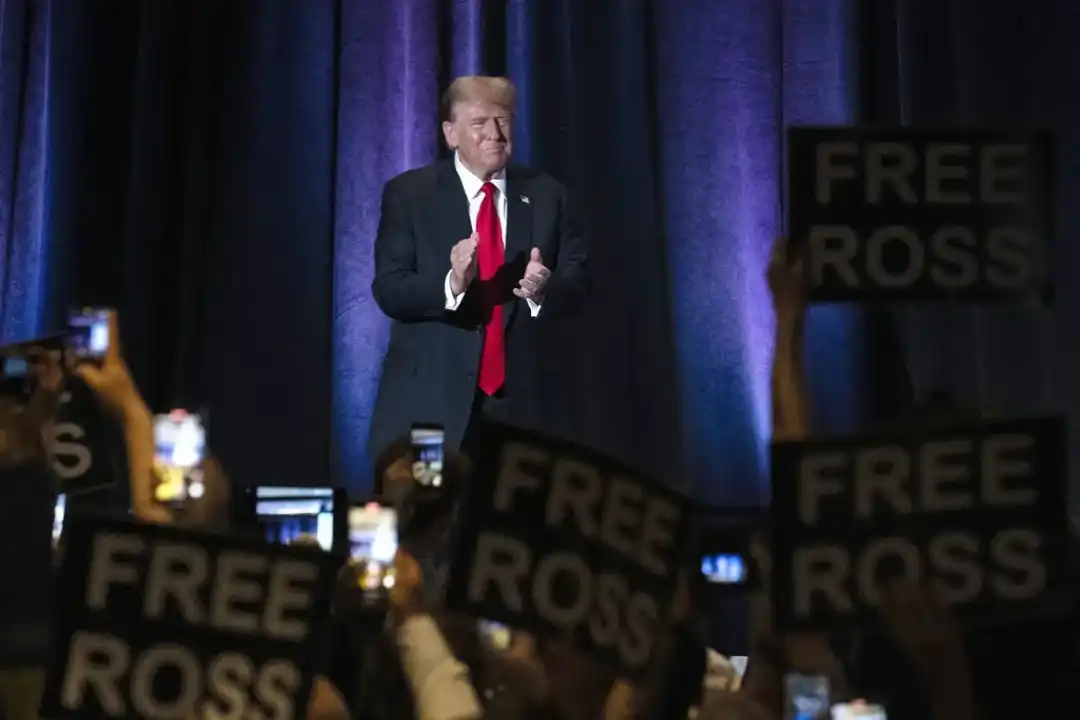
During a speech at a conference last year, Trump saw attendees holding up a sign that read "Free Ross." Source: AFP

A common criticism of Clayton is that he lacks prosecutorial experience, which is typically a prerequisite for the role.

Bob Stebbins, who worked with him at the SEC, said that this criticism is unfounded. He compared Clayton's experience to his brief stint as captain of the basketball team at Cambridge University, a part of his resume Clayton himself has called "the least credible part."

"He wasn't a great shooter, not tall," Stebbins said, "but he was a great leader."

Matthew Podolsky, the current head of the New York Southern District Attorney's Office, has had four different titles since his election. He was a former editor of the Harvard Lampoon known for handling high-stakes Wall Street cases and now leads a beleaguered office.

Just this month, prosecutors from the Southern District of New York gathered at a city winery in Chelsea, enjoying mini-burgers and drinks from an open bar, discussing the turmoil in an office that was once seen as launching many bright careers. Despite the festive atmosphere, attendees expressed deep-seated concerns.

According to attendees' recollections, the host of the event, Bharara, said the events had "broken my heart." He also joked about Podolsky, saying he had set the record for "longest-tenured (in weeks) Southern District of New York prosecutor."

Original Article Link

You may also like

Token Cannot Compound, Where Is the Real Investment Opportunity?

The next chapter in the crypto industry will undoubtedly be written by Crypto-empowered Stocks.

February 6th Market Key Intelligence, How Much Did You Miss?

1. On-chain Flows: $508.2M USD inflow to Ethereum today; $390.8M USD outflow from Arbitrum 2. Biggest Gainers/Losers: $HBTC, $AIO 3. Top News: Current Bitcoin weekly RSI oversold signal comparable to June 2022

China's Central Bank and Eight Other Departments' Latest Regulatory Focus: Key Attention to RWA Tokenized Asset Risk


Foreword: Today, the People's Bank of China's website published the "Notice of the People's Bank of China, National Development and Reform Commission, Ministry of Industry and Information Technology, Ministry of Public Security, State Administration for Market Regulation, China Banking and Insurance Regulatory Commission, China Securities Regulatory Commission, State Administration of Foreign Exchange on Further Preventing and Dealing with Risks Related to Virtual Currency and Others (Yinfa [2026] No. 42)", the latest regulatory requirements from the eight departments including the central bank, which are basically consistent with the regulatory requirements of recent years. The main focus of the regulation is on speculative activities such as virtual currency trading, exchanges, ICOs, overseas platform services, and this time, regulatory oversight of RWA has been added, explicitly prohibiting RWA tokenization, stablecoins (especially those pegged to the RMB). The following is the full text:


To the people's governments of all provinces, autonomous regions, and municipalities directly under the Central Government, the Xinjiang Production and Construction Corps:


  Recently, there have been speculative activities related to virtual currency and Real-World Assets (RWA) tokenization, disrupting the economic and financial order and jeopardizing the property security of the people. In order to further prevent and address the risks related to virtual currency and Real-World Assets tokenization, effectively safeguard national security and social stability, in accordance with the "Law of the People's Republic of China on the People's Bank of China," "Law of the People's Republic of China on Commercial Banks," "Securities Law of the People's Republic of China," "Law of the People's Republic of China on Securities Investment Funds," "Law of the People's Republic of China on Futures and Derivatives," "Cybersecurity Law of the People's Republic of China," "Regulations of the People's Republic of China on the Administration of Renminbi," "Regulations on Prevention and Disposal of Illegal Fundraising," "Regulations of the People's Republic of China on Foreign Exchange Administration," "Telecommunications Regulations of the People's Republic of China," and other provisions, after reaching consensus with the Cyberspace Administration of China, the Supreme People's Court, and the Supreme People's Procuratorate, and with the approval of the State Council, the relevant matters are notified as follows:


  I. Clarify the essential attributes of virtual currency, Real-World Assets tokenization, and related business activities


  (I) Virtual currency does not possess the legal status equivalent to fiat currency. Virtual currencies such as Bitcoin, Ether, Tether, etc., have the main characteristics of being issued by non-monetary authorities, using encryption technology and distributed ledger or similar technology, existing in digital form, etc. They do not have legal tender status, should not and cannot be circulated and used as currency in the market.


  The business activities related to virtual currency are classified as illegal financial activities. The exchange of fiat currency and virtual currency within the territory, exchange of virtual currencies, acting as a central counterparty in buying and selling virtual currencies, providing information intermediary and pricing services for virtual currency transactions, token issuance financing, and trading of virtual currency-related financial products, etc., fall under illegal financial activities, such as suspected illegal issuance of token vouchers, unauthorized public issuance of securities, illegal operation of securities and futures business, illegal fundraising, etc., are strictly prohibited across the board and resolutely banned in accordance with the law. Overseas entities and individuals are not allowed to provide virtual currency-related services to domestic entities in any form.


  A stablecoin pegged to a fiat currency indirectly fulfills some functions of the fiat currency in circulation. Without the consent of relevant authorities in accordance with the law and regulations, any domestic or foreign entity or individual is not allowed to issue a RMB-pegged stablecoin overseas.


(II)Tokenization of Real-World Assets refers to the use of encryption technology and distributed ledger or similar technologies to transform ownership rights, income rights, etc., of assets into tokens (tokens) or other interests or bond certificates with token (token) characteristics, and carry out issuance and trading activities.


  Engaging in the tokenization of real-world assets domestically, as well as providing related intermediary, information technology services, etc., which are suspected of illegal issuance of token vouchers, unauthorized public offering of securities, illegal operation of securities and futures business, illegal fundraising, and other illegal financial activities, shall be prohibited; except for relevant business activities carried out with the approval of the competent authorities in accordance with the law and regulations and relying on specific financial infrastructures. Overseas entities and individuals are not allowed to illegally provide services related to the tokenization of real-world assets to domestic entities in any form.


  II. Sound Work Mechanism


  (III) Inter-agency Coordination. The People's Bank of China, together with the National Development and Reform Commission, the Ministry of Industry and Information Technology, the Ministry of Public Security, the State Administration for Market Regulation, the China Banking and Insurance Regulatory Commission, the China Securities Regulatory Commission, the State Administration of Foreign Exchange, and other departments, will improve the work mechanism, strengthen coordination with the Cyberspace Administration of China, the Supreme People's Court, and the Supreme People's Procuratorate, coordinate efforts, and overall guide regions to carry out risk prevention and disposal of virtual currency-related illegal financial activities.


  The China Securities Regulatory Commission, together with the National Development and Reform Commission, the Ministry of Industry and Information Technology, the Ministry of Public Security, the People's Bank of China, the State Administration for Market Regulation, the China Banking and Insurance Regulatory Commission, the State Administration of Foreign Exchange, and other departments, will improve the work mechanism, strengthen coordination with the Cyberspace Administration of China, the Supreme People's Court, and the Supreme People's Procuratorate, coordinate efforts, and overall guide regions to carry out risk prevention and disposal of illegal financial activities related to the tokenization of real-world assets.


  (IV) Strengthening Local Implementation. The people's governments at the provincial level are overall responsible for the prevention and disposal of risks related to virtual currencies and the tokenization of real-world assets in their respective administrative regions. The specific leading department is the local financial regulatory department, with participation from branches and dispatched institutions of the State Council's financial regulatory department, telecommunications regulators, public security, market supervision, and other departments, in coordination with cyberspace departments, courts, and procuratorates, to improve the normalization of the work mechanism, effectively connect with the relevant work mechanisms of central departments, form a cooperative and coordinated working pattern between central and local governments, effectively prevent and properly handle risks related to virtual currencies and the tokenization of real-world assets, and maintain economic and financial order and social stability.


  III. Strengthened Risk Monitoring, Prevention, and Disposal


  (5) Enhanced Risk Monitoring. The People's Bank of China, China Securities Regulatory Commission, National Development and Reform Commission, Ministry of Industry and Information Technology, Ministry of Public Security, State Administration of Foreign Exchange, Cyberspace Administration of China, and other departments continue to improve monitoring techniques and system support, enhance cross-departmental data analysis and sharing, establish sound information sharing and cross-validation mechanisms, promptly grasp the risk situation of activities related to virtual currency and real-world asset tokenization. Local governments at all levels give full play to the role of local monitoring and early warning mechanisms. Local financial regulatory authorities, together with branches and agencies of the State Council's financial regulatory authorities, as well as departments of cyberspace and public security, ensure effective connection between online monitoring, offline investigation, and fund tracking, efficiently and accurately identify activities related to virtual currency and real-world asset tokenization, promptly share risk information, improve early warning information dissemination, verification, and rapid response mechanisms.


  (6) Strengthened Oversight of Financial Institutions, Intermediaries, and Technology Service Providers. Financial institutions (including non-bank payment institutions) are prohibited from providing account opening, fund transfer, and clearing services for virtual currency-related business activities, issuing and selling financial products related to virtual currency, including virtual currency and related financial products in the scope of collateral, conducting insurance business related to virtual currency, or including virtual currency in the scope of insurance liability. Financial institutions (including non-bank payment institutions) are prohibited from providing custody, clearing, and settlement services for unauthorized real-world asset tokenization-related business and related financial products. Relevant intermediary institutions and information technology service providers are prohibited from providing intermediary, technical, or other services for unauthorized real-world asset tokenization-related businesses and related financial products.


  (7) Enhanced Management of Internet Information Content and Access. Internet enterprises are prohibited from providing online business venues, commercial displays, marketing, advertising, or paid traffic diversion services for virtual currency and real-world asset tokenization-related business activities. Upon discovering clues of illegal activities, they should promptly report to relevant departments and provide technical support and assistance for related investigations and inquiries. Based on the clues transferred by the financial regulatory authorities, the cyberspace administration, telecommunications authorities, and public security departments should promptly close and deal with websites, mobile applications (including mini-programs), and public accounts engaged in virtual currency and real-world asset tokenization-related business activities in accordance with the law.


  (8) Strengthened Entity Registration and Advertisement Management. Market supervision departments strengthen entity registration and management, and enterprise and individual business registrations must not contain terms such as "virtual currency," "virtual asset," "cryptocurrency," "crypto asset," "stablecoin," "real-world asset tokenization," or "RWA" in their names or business scopes. Market supervision departments, together with financial regulatory authorities, legally enhance the supervision of advertisements related to virtual currency and real-world asset tokenization, promptly investigating and handling relevant illegal advertisements.


  (IX) Continued Rectification of Virtual Currency Mining Activities. The National Development and Reform Commission, together with relevant departments, strictly controls virtual currency mining activities, continuously promotes the rectification of virtual currency mining activities. The people's governments of various provinces take overall responsibility for the rectification of "mining" within their respective administrative regions. In accordance with the requirements of the National Development and Reform Commission and other departments in the "Notice on the Rectification of Virtual Currency Mining Activities" (NDRC Energy-saving Building [2021] No. 1283) and the provisions of the "Guidance Catalog for Industrial Structure Adjustment (2024 Edition)," a comprehensive review, investigation, and closure of existing virtual currency mining projects are conducted, new mining projects are strictly prohibited, and mining machine production enterprises are strictly prohibited from providing mining machine sales and other services within the country.


  (X) Severe Crackdown on Related Illegal Financial Activities. Upon discovering clues to illegal financial activities related to virtual currency and the tokenization of real-world assets, local financial regulatory authorities, branches of the State Council's financial regulatory authorities, and other relevant departments promptly investigate, determine, and properly handle the issues in accordance with the law, and seriously hold the relevant entities and individuals legally responsible. Those suspected of crimes are transferred to the judicial authorities for processing according to the law.


 (XI) Severe Crackdown on Related Illegal and Criminal Activities. The Ministry of Public Security, the People's Bank of China, the State Administration for Market Regulation, the China Banking and Insurance Regulatory Commission, the China Securities Regulatory Commission, as well as judicial and procuratorial organs, in accordance with their respective responsibilities, rigorously crack down on illegal and criminal activities related to virtual currency, the tokenization of real-world assets, such as fraud, money laundering, illegal business operations, pyramid schemes, illegal fundraising, and other illegal and criminal activities carried out under the guise of virtual currency, the tokenization of real-world assets, etc.


  (XII) Strengthen Industry Self-discipline. Relevant industry associations should enhance membership management and policy advocacy, based on their own responsibilities, advocate and urge member units to resist illegal financial activities related to virtual currency and the tokenization of real-world assets. Member units that violate regulatory policies and industry self-discipline rules are to be disciplined in accordance with relevant self-regulatory management regulations. By leveraging various industry infrastructure, conduct risk monitoring related to virtual currency, the tokenization of real-world assets, and promptly transfer issue clues to relevant departments.


  IV. Strict Supervision of Domestic Entities Engaging in Overseas Business Activities


(XIII) Without the approval of relevant departments in accordance with the law and regulations, domestic entities and foreign entities controlled by them may not issue virtual currency overseas.


  (XIV) Domestic entities engaging directly or indirectly in overseas external debt-based tokenization of real-world assets, or conducting asset securitization activities abroad based on domestic ownership rights, income rights, etc. (hereinafter referred to as domestic equity), should be strictly regulated in accordance with the principles of "same business, same risk, same rules." The National Development and Reform Commission, the China Securities Regulatory Commission, the State Administration of Foreign Exchange, and other relevant departments regulate it according to their respective responsibilities. For other forms of overseas real-world asset tokenization activities based on domestic equity by domestic entities, the China Securities Regulatory Commission, together with relevant departments, supervise according to their division of responsibilities. Without the consent and filing of relevant departments, no unit or individual may engage in the above-mentioned business.


  (15) Overseas subsidiaries and branches of domestic financial institutions providing Real World Asset Tokenization-related services overseas shall do so legally and prudently. They shall have professional personnel and systems in place to effectively mitigate business risks, strictly implement customer onboarding, suitability management, anti-money laundering requirements, and incorporate them into the domestic financial institutions' compliance and risk management system. Intermediaries and information technology service providers offering Real World Asset Tokenization services abroad based on domestic equity or conducting Real World Asset Tokenization business in the form of overseas debt for domestic entities directly or indirectly venturing abroad must strictly comply with relevant laws and regulations. They should establish and improve relevant compliance and internal control systems in accordance with relevant normative requirements, strengthen business and risk control, and report the business developments to the relevant regulatory authorities for approval or filing.


  V. Strengthen Organizational Implementation


  (16) Strengthen organizational leadership and overall coordination. All departments and regions should attach great importance to the prevention of risks related to virtual currencies and Real World Asset Tokenization, strengthen organizational leadership, clarify work responsibilities, form a long-term effective working mechanism with centralized coordination, local implementation, and shared responsibilities, maintain high pressure, dynamically monitor risks, effectively prevent and mitigate risks in an orderly and efficient manner, legally protect the property security of the people, and make every effort to maintain economic and financial order and social stability.


  (17) Widely carry out publicity and education. All departments, regions, and industry associations should make full use of various media and other communication channels to disseminate information through legal and policy interpretation, analysis of typical cases, and education on investment risks, etc. They should promote the illegality and harm of virtual currencies and Real World Asset Tokenization-related businesses and their manifestations, fully alert to potential risks and hidden dangers, and enhance public awareness and identification capabilities for risk prevention.


  VI. Legal Responsibility


  (18) Engaging in illegal financial activities related to virtual currencies and Real World Asset Tokenization in violation of this notice, as well as providing services for virtual currencies and Real World Asset Tokenization-related businesses, shall be punished in accordance with relevant regulations. If it constitutes a crime, criminal liability shall be pursued according to the law. For domestic entities and individuals who knowingly or should have known that overseas entities illegally provided virtual currency or Real World Asset Tokenization-related services to domestic entities and still assisted them, relevant responsibilities shall be pursued according to the law. If it constitutes a crime, criminal liability shall be pursued according to the law.


  (19) If any unit or individual invests in virtual currencies, Real World Asset Tokens, and related financial products against public order and good customs, the relevant civil legal actions shall be invalid, and any resulting losses shall be borne by them. If there are suspicions of disrupting financial order and jeopardizing financial security, the relevant departments shall deal with them according to the law.


  This notice shall enter into force upon the date of its issuance. The People's Bank of China and ten other departments' "Notice on Further Preventing and Dealing with the Risks of Virtual Currency Trading Speculation" (Yinfa [2021] No. 237) is hereby repealed.


Former Partner's Perspective on Multicoin: Kyle's Exit, But the Game He Left Behind Just Getting Started

Kyle knew his game, so he decided to focus on playing the game he was good at and interested in.

Why Bitcoin Is Falling Now: The Real Reasons Behind BTC's Crash & WEEX's Smart Profit Playbook

Bitcoin's ongoing crash explained: Discover the 5 hidden triggers behind BTC's plunge & how WEEX's Auto Earn and Trade to Earn strategies help traders profit from crypto market volatility.

Wall Street's Hottest Trades See Exodus

This time there is no single triggering factor, but rather market anxiety about asset valuation, with many already skeptical of these valuations being too high, leading to investors choosing to retreat almost simultaneously.

Popular coins

Latest Crypto News

Read more
