
Why Can Coinbase Halt a CLARITY Act Vote with Just One Sentence?


Original Title: The Biggest U.S. Crypto Company Asserts Its Power in Washington
Original Author: David Yaffe-Bellany, The New York Times
Translation: Peggy, BlockBeats
Editor's Note: The Clarity Act, which was about to enter a critical vote, was urgently halted due to Coinbase CEO Brian Armstrong's public opposition. The controversy centered around the stablecoin interest payment restriction and SEC's jurisdiction. In fact, with the regulatory shift since the Trump administration, the crypto industry has transitioned from being the "regulated" to the "rule negotiator." This intervention not only altered the voting process but also exposed the true interest game behind crypto legislation.
Below is the original text:
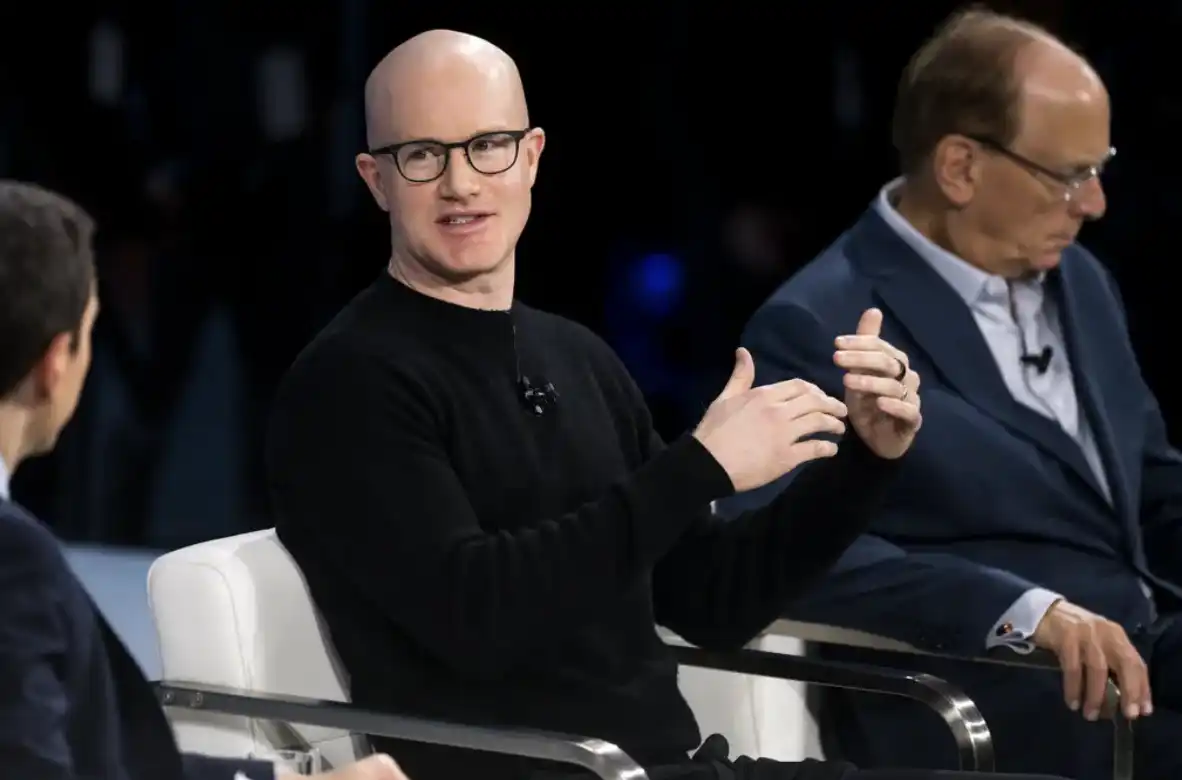
A cryptocurrency bill vote scheduled for Thursday was canceled after Coinbase CEO Brian Armstrong publicly spoke out against the bill on Wednesday evening. Image Source: The New York Times
After months of negotiations, a significant cryptocurrency bill was scheduled to enter the Senate committee's voting phase on Thursday, a critical step in the legislative process.
However, the head of the largest U.S. crypto company, Coinbase, voiced concerns on social media. Coinbase CEO Brian Armstrong wrote on X Wednesday night, "Unfortunately, Coinbase cannot support the current version of the bill. This version would be significantly worse than the current regulatory status quo. We would rather have no bill than a bad bill."
Hours later, the Senate vote was canceled.
Typically, the trajectory of a contentious legislative vote depends on a few key moderate lawmakers amid partisan tug-of-war. But the shift in the fate of this milestone crypto bill this week highlights the immense influence Coinbase now holds in Washington—a position the crypto industry has rapidly ascended to during the Trump presidency.
Over the past few months, congressional staff have been advancing the Clarity Act's drafting. This nearly 300-page bill aims to establish a regulatory framework for almost every crucial aspect of the crypto industry, with many rules co-developed and promoted by industry participants. However, at the eleventh hour, Armstrong expressed opposition to a particular proposed wording, believing it could put one of Coinbase's products at risk of being banned; he also stated that the bill would give too much power to the U.S.' primary financial regulator, the Securities and Exchange Commission (SEC).
Coinbase's decisive move this time is the result of the company's years-long operation of political influence in Washington. As a nearly $700 billion publicly traded company, Coinbase has funded a political action committee (PAC) network that, in 2024, poured over $1.3 billion into influencing congressional elections to support more pro-crypto industry lawmakers.
This intense wave of political contributions to Congress sends a clear message: anyone opposing the crypto industry could become a target.
Today, top industry companies have enough leverage to advance their own interests. Todd Phillips, a finance expert at Georgia State University, stated, "Coinbase played this move very nicely." A Coinbase spokesperson declined to comment on this.
Founded in 2012, Coinbase provides users with a platform to buy, sell, and store cryptocurrencies like Bitcoin and Ethereum. Anyone can log in to their application and make a purchase with a few clicks.
However, not long ago, this company faced a more challenging environment in Washington. In 2023, the U.S. Securities and Exchange Commission (SEC) sued Coinbase, alleging that it operated as an "unregistered exchange," as part of the Biden administration's broader crackdown on the crypto industry. Armstrong, a co-founder of Coinbase, criticized the SEC's "enforcement-led regulation" approach and called for clearer crypto regulatory rules.
Trump's election as president in 2024 changed the landscape entirely. Shortly before taking office, Trump and his sons launched a crypto venture, with Trump publicly stating his intention to make the U.S. the "global capital of crypto."
Within weeks of Trump taking office, the U.S. Securities and Exchange Commission (SEC) dropped its lawsuit against Coinbase and other crypto companies. Subsequently, the crypto industry pushed for legislation to enshrine this regulatory "rollback" into law, preventing harsh future government crackdowns on the crypto industry.
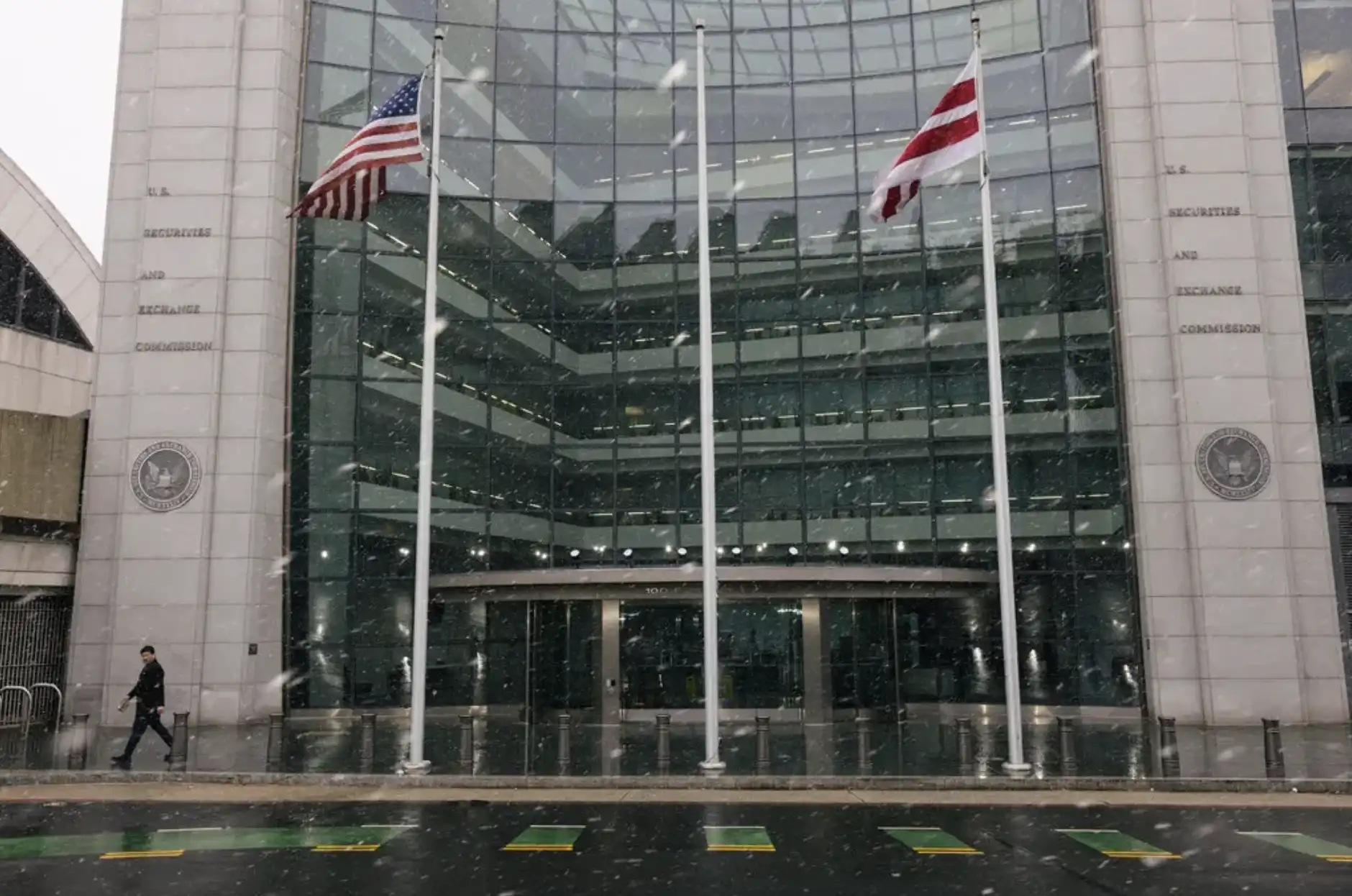
The U.S. Securities and Exchange Commission (SEC) dropped its lawsuit against Coinbase shortly after Trump's inauguration last year. Image Source: The New York Times
In July of this year, with government backing, the House passed its version of the "Clarity Act," largely adopting the crypto industry's proposed new regulatory framework. This act will make it easier for companies like Coinbase to argue that digital currencies are not securities, thus avoiding federal securities regulations aimed at protecting investors and markets.
However, the bill faced resistance in the Senate. Last fall, Senate Democrats proposed rules to tightly regulate Decentralized Finance (DeFi), a branch of the crypto space, sparking strong industry backlash.
Meanwhile, banking industry lobbying groups pushed to include a provision in the bill banning cryptocurrency exchanges like Coinbase from paying interest to stablecoin holders. Stablecoins are a type of digital currency designed to maintain a price of 1 USD. The banking industry believes that such "interest-bearing products" offered by crypto exchanges would undermine traditional banking as they compete with traditional deposit accounts.
This issue quickly became a key concern for Coinbase. The potential ban on interest payments could impact one of its revenue streams. Coinbase's head of policy, Kara Calvert, stated, "Competition is about offering these kinds of incentive programs, and that's critical."
The latest version of the "Clarity Act" draft bill in the Senate was released close to midnight on Monday. Congressional staff and crypto industry executives immediately began reviewing the text, rushing to complete the reading before the Senate committee meeting scheduled for Thursday. This meeting, known as a "markup," would provide senators with an opportunity to propose amendments. As the markup approached, despite other crypto industry executives expressing support for the bill on social media, Armstrong announced he would withdraw his support.
On Wednesday night, Senator Tim Scott, a Republican from South Carolina and chairman of the Senate Banking Committee, announced that the markup would be postponed, with the specific timing yet to be determined. In his statement, he said, "All parties continue to communicate in good faith. Our goal is to establish clear 'rules of the road' that protect consumers, enhance national security, and ensure the future of finance is built in America."
You may also like

The other side of Musk's trillion-dollar fortune: 85% cannot be sold

The U.S. government prohibits foreigners from using Fable 5, Anthropic issues a rebuttal

Citibank releases "2030 Asset Tokenization Market Outlook": 6 major trends may create a $8.2 trillion market

The trillion-dollar valuation test: Are the three major super IPOs a celebration for tech stocks or a nightmare for the crypto market?

Morning Report | Digital Asset completes $355 million financing led by a16z Crypto; Meta completes operational separation from Manus

a16z Crypto Partner: Cash flow is the moat

Cryptocurrency market makers collectively seek change as it becomes increasingly difficult to make money

How TradeXYZ, xStocks, and Alpaca break down the SpaceX IPO into three different strategies
$75 billion in risk asset redistribution: How will SpaceX's IPO affect U.S. stocks and Bitcoin?

Why Is BlackRock Investing $5 Billion in the SpaceX IPO?
Morning News | CME Group launches Nasdaq Cryptocurrency Index futures; Asset management giant Janus Henderson strategically invests in Ethena

Bitcoin Layer 2 Network Botanix: Why Did We Choose to Dissolve?

Why did Oracle deliver the strongest financial report in history, yet its stock price fell?
When the P2P illicit funds from ten years ago turned into 60,000 bitcoins
Dialogue with OmenX Founder: Why does the prediction market need an evolution from "spot" to "derivatives"?
Galaxy in-depth report: Is Solana still worth paying attention to?
Young people in South Korea make a "final effort" in the epic bull market
The pricing controversy of Trade.xyz exposes the fatal weakness of Pre-IPO perpetual contracts
The other side of Musk's trillion-dollar fortune: 85% cannot be sold
The U.S. government prohibits foreigners from using Fable 5, Anthropic issues a rebuttal
Citibank releases "2030 Asset Tokenization Market Outlook": 6 major trends may create a $8.2 trillion market
The trillion-dollar valuation test: Are the three major super IPOs a celebration for tech stocks or a nightmare for the crypto market?
Morning Report | Digital Asset completes $355 million financing led by a16z Crypto; Meta completes operational separation from Manus
a16z Crypto Partner: Cash flow is the moat


