
Amazon Stock and the Anthropic IPO: Why It Could Change Everything for AMZN




Amazon stock has been one of the steadier performers in the Magnificent Seven this year, gaining roughly 91% without the dramatic single day swings that have characterized names like AMD, Sandisk, or SpaceX. The Anthropic IPO changes that dynamic in a specific way that investors should understand before it happens rather than after.
Amazon stock's relationship with Anthropic is not a minor portfolio position. Amazon has invested billions in Anthropic across multiple funding rounds, securing a relationship that goes well beyond a passive financial stake. Understanding what that relationship looks like, what Anthropic is currently worth, and what a public offering would mean for how the market values Amazon stock is the core of this guide.
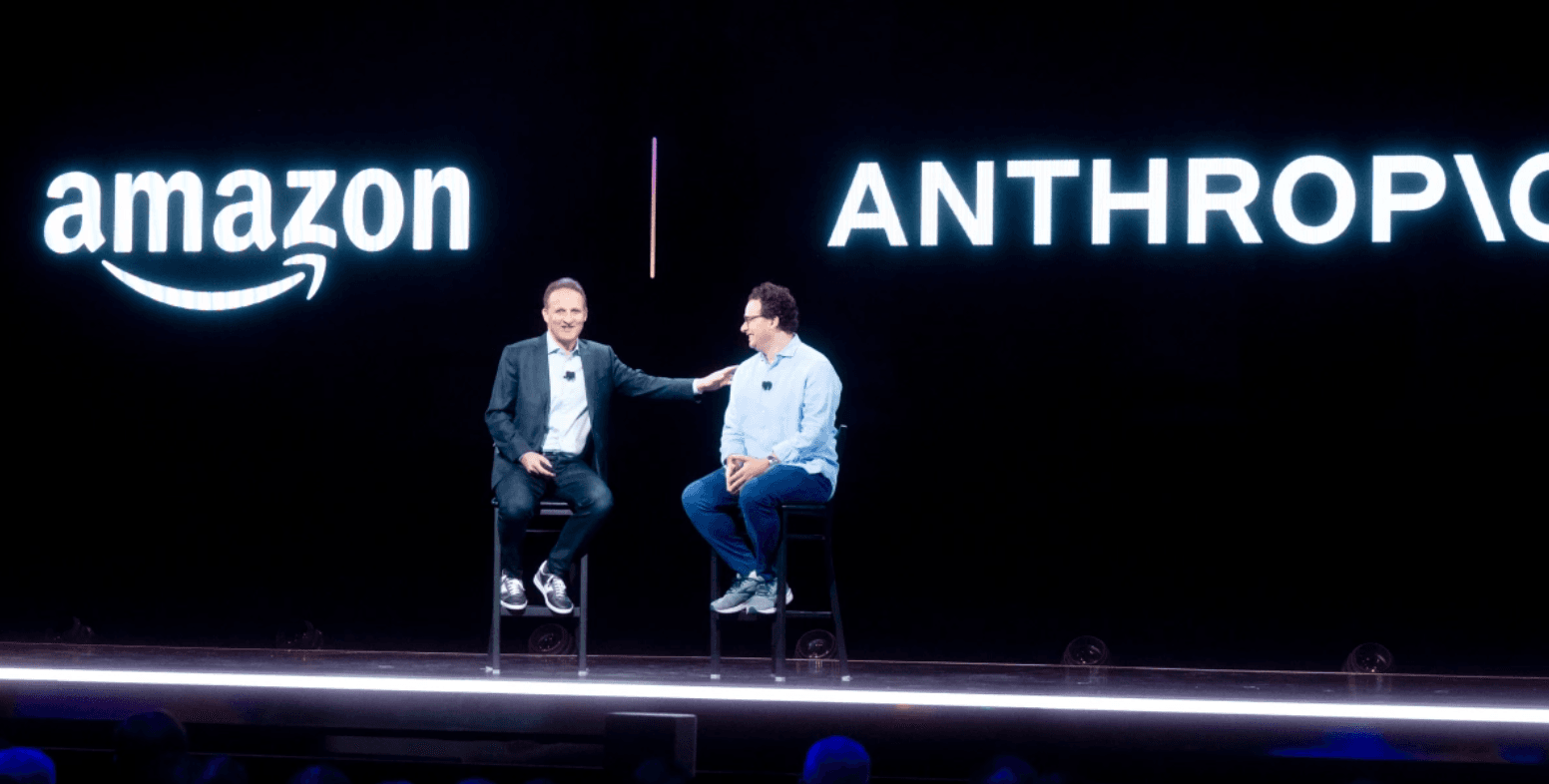
What Amazon's Relationship With Anthropic Actually Is
The Amazon and Anthropic relationship has two distinct components that are often conflated in media coverage but that matter differently for Amazon stock.
The first is the financial investment. Amazon has committed billions to Anthropic across multiple funding rounds, making it one of Anthropic's largest investors alongside Google. The exact ownership percentage is not publicly disclosed, but estimates from people familiar with the structure suggest Amazon holds a meaningful stake that would be worth significant money at Anthropic's anticipated IPO valuation.
The second component is the infrastructure relationship. Anthropic runs its AI models on Amazon Web Services and has committed to making AWS its primary cloud provider. That arrangement means Amazon benefits from Anthropic in two simultaneous ways: as an investor that will gain financially if Anthropic's equity value rises, and as an infrastructure provider that generates revenue every time Anthropic's models run inference or training workloads at scale.
Anthropic's revenue trajectory makes the infrastructure relationship increasingly valuable regardless of what happens with the IPO. Reports indicate Anthropic's revenue is expected to approach eleven billion dollars in the second quarter of 2026 alone. A company generating that kind of revenue and running primarily on AWS is a meaningful contributor to the AWS growth story that Amazon investors are already paying attention to.
What the Anthropic IPO Could Be Worth to Amazon
The most direct impact of an Anthropic IPO on Amazon stock is the recalculation of what Amazon's balance sheet is actually worth.
Currently, Amazon's Anthropic investment is carried on the balance sheet at a cost figure that reflects what Amazon paid for its shares across its investment tranches. That figure bears no relationship to what those shares might be worth at a public market valuation. When Anthropic files for its IPO and sets a target valuation, that gap between cost basis and market value becomes visible to every analyst who covers Amazon stock.
The Microsoft and OpenAI situation provides the most relevant recent precedent. When OpenAI filed confidential IPO documents targeting a $1 trillion valuation, Microsoft stock moved significantly as investors recalculated the value of Microsoft's approximately 27% OpenAI stake at roughly $270 billion. That recalculation happened before OpenAI had even set a price for the offering. The mere existence of a credible public valuation was enough to force model revisions across the analyst community.
Anthropic's situation has parallels and differences. If Anthropic goes public at a valuation in the hundreds of billions, which the revenue trajectory makes credible, Amazon's stake would be worth a sum that is material relative to Amazon's own market capitalization. That value has been sitting on Amazon's balance sheet largely invisible to investors who focus on the operating business. An IPO makes it visible, quantifiable, and incorporable into analyst price targets in a way that the current private valuation cannot.
Why the Timing of the Anthropic IPO Matters for Amazon Stock
The specific timing of an Anthropic IPO affects Amazon stock in ways that are worth mapping rather than simply noting that it would be positive.
Reports suggest Anthropic could file for its IPO before end of 2026. Amazon reports Q2 earnings in late July and Q3 earnings in late October. Those earnings calls are the two most likely venues for management to update investors on the Anthropic relationship and any developments related to a public offering, which creates specific catalyst windows within the next six months where Amazon stock could reprice meaningfully.
If Anthropic files confidential IPO documents in the second half of 2026, the same dynamic that moved Microsoft stock when OpenAI filed would move Amazon stock. The filing itself forces the market to begin modeling the stake's value at a public market reference point rather than leaving it invisible in the balance sheet. Analyst price target revisions following the filing would represent incremental upside to Amazon stock that does not depend on the core e-commerce or AWS businesses performing above expectations.
The sequential nature of the catalyst matters. If Anthropic files for its IPO after Amazon's Q3 earnings have already confirmed AWS growth acceleration and margin improvement, Amazon stock would be absorbing two positive developments in close succession. That kind of sequential positive catalyst is the environment where stocks can move dramatically over relatively short periods without any single development being unusually large.
What the Anthropic Revenue Story Tells Amazon Investors
Anthropic's revenue trajectory is informative for Amazon investors beyond the IPO equity value question because it reflects directly on the health of the AWS enterprise AI business.
Anthropic's models, including Claude, run on AWS. When Anthropic sells AI services to enterprise customers, those customers' workloads run on Amazon's infrastructure. Anthropic reaching nearly eleven billion dollars in quarterly revenue does not just mean Amazon's equity stake is worth more. It means AWS is hosting an extraordinary and rapidly growing volume of AI inference workload that is being paid for by Anthropic's customers.
This relationship creates a multiplier effect on AWS revenue that is not fully visible in Amazon's reported segment numbers but that becomes increasingly material as Anthropic's revenue scales. The larger Anthropic's commercial business becomes, the more AWS revenue that business generates, which is separate from and additive to the equity value that an Anthropic IPO would crystallize.
The competitive dimension adds context. Google has also invested in Anthropic and has its own cloud relationship with the company. The fact that Anthropic has grown to this revenue scale while running primarily on AWS is evidence of AWS's capability as an AI infrastructure platform that goes beyond what Amazon's own marketing materials can credibly claim. A third-party company choosing AWS for the workloads at the frontier of AI capability is a more persuasive endorsement of AWS than any benchmark Amazon might publish.
The Hidden Asset Problem That the IPO Resolves
One of the recurring analytical challenges with Amazon stock is what investors often call the hidden assets problem.
Amazon is simultaneously an e-commerce business, a cloud computing business, an advertising business, a logistics business, a streaming service, a healthcare company, a grocery retailer, and now a major AI investor. The aggregate of these businesses is worth more than the sum of its parts in most analytical frameworks, but the opacity of how much each piece contributes to overall value makes it difficult for investors to know exactly what they are paying for at any given stock price.
The Anthropic investment is a specific example of this hidden asset problem. Amazon owns a valuable stake in one of the world's most consequential AI companies, but that stake is buried in the balance sheet at a cost figure that tells investors nothing about its actual worth. Investors who do not actively track private AI company valuations have no way of knowing how much of Amazon's market capitalization they are attributing to the core businesses versus the financial investments.
An Anthropic IPO resolves this opacity for that specific asset. It gives every investor, analyst, and journalist covering Amazon stock a specific number to point to when describing what the Anthropic stake contributes to Amazon's intrinsic value. That clarity tends to be re-rated positively by markets even when the underlying value was always there, because markets price what they can measure more accurately than what they cannot.
What Could Go Wrong With the Anthropic Catalyst
Honest treatment of the Anthropic IPO's impact on Amazon stock requires mapping the scenarios where it does not play out as the bull case assumes.
The most obvious risk is timing. If Anthropic delays its IPO into 2027 or beyond, the catalyst that Amazon stock investors are anticipating in the current year does not arrive on the expected schedule. IPO timelines are notoriously difficult to predict, and Anthropic's decision about when to go public will be driven by factors including market conditions, regulatory approval timelines, and internal business readiness that are outside Amazon's control.
The valuation risk is the second concern. If Anthropic's IPO prices at a valuation significantly below what the current revenue trajectory might suggest, the recalculation of Amazon's stake value would be less dramatic than the bull case assumes. AI company valuations have moderated from the most extreme multiples that earlier funding rounds implied, and the IPO price will reflect whatever the public market is willing to pay at the time rather than whatever private investors might have paid in earlier rounds.
The structural risk involves the specific nature of Amazon's stake. The details of how Amazon's investment is structured, what classes of shares it holds, what liquidity restrictions apply, and what happens to the AWS infrastructure relationship if Anthropic becomes a public company with its own strategic flexibility are all questions that will become clearer only as the IPO process develops.
How Analysts Are Thinking About the Anthropic Impact
The analyst community is beginning to incorporate the Anthropic relationship into Amazon stock models, but the range of approaches reflects genuine uncertainty about how to value it.
Some analysts are treating the Anthropic stake as a call option on the broader AI software market that adds optionality to Amazon stock without requiring precise valuation. In this framing, the stake is a positive but not a primary driver of the stock's fair value, and the AWS and advertising businesses are doing the work of justifying current prices.
Others are treating it more like the Microsoft and OpenAI situation, where the stake becomes a separate and significant line item in the sum-of-parts valuation once a public market reference price exists. In this framing, the Anthropic IPO is a genuine catalyst that could drive meaningful price target revisions across the analyst community covering Amazon stock.
The average analyst price target for Amazon stock is approximately $312, and the most bullish targets run considerably higher. Those targets were set before Anthropic's IPO timing became more concrete, and the trajectory of AI revenue growth at Anthropic through 2026 may cause analysts to revise those targets upward as the picture clarifies.
For those looking to participate in global financial markets, having access to the right trading platform matters. WEEX offers crypto and stock trading products, covering major global markets including US stocks and digital assets.
Conclusion
The Anthropic IPO matters for Amazon stock in a way that is structurally different from most other potential catalysts. It does not require the core e-commerce or AWS businesses to perform above expectations. It does not depend on macroeconomic conditions improving. It requires Anthropic to proceed with a public offering that makes a currently invisible balance sheet asset visible and quantifiable to every analyst who covers Amazon.
When the Microsoft and OpenAI situation played out, the recalculation happened quickly and moved Microsoft stock before the IPO even priced. The Amazon and Anthropic situation has the same structure. The filing is the catalyst, not the pricing. And Amazon's relationship with Anthropic, combining equity investment with infrastructure revenue, creates a double benefit that Microsoft's OpenAI relationship does not fully replicate.
FAQ
1. How much of Anthropic does Amazon own?
The exact ownership percentage is not publicly disclosed. Amazon has invested billions across multiple funding rounds and is one of Anthropic's largest investors alongside Google. The stake is expected to be worth a significant sum at any realistic Anthropic IPO valuation based on the company's current revenue trajectory.
2. When is Anthropic expected to go public?
Reports suggest Anthropic could file for its IPO before end of 2026. The exact timing depends on market conditions, regulatory approval, and Anthropic's internal readiness. Amazon's Q2 and Q3 earnings calls in late July and late October are the most likely venues for updates on the Anthropic relationship.
3. How does the Anthropic IPO affect Amazon stock specifically?
An Anthropic IPO would force analysts to assign a concrete public market value to Amazon's stake, which is currently invisible to most investors as a cost-basis balance sheet item. The recalculation of that stake's value would likely drive analyst price target revisions for Amazon stock similar to what happened with Microsoft stock when OpenAI filed its IPO documents.
4. Is Amazon's Anthropic relationship just financial or is there more to it?
Both. Amazon has a financial equity stake and an infrastructure relationship where Anthropic runs its AI models primarily on AWS. This means Amazon benefits from Anthropic's growth both through equity appreciation and through incremental AWS revenue generated by Anthropic's expanding commercial workloads.
5. What is the biggest risk to the Anthropic catalyst for Amazon stock?
Timing delay is the primary risk. If Anthropic postpones its IPO into 2027 or beyond, the catalyst does not arrive on the schedule Amazon investors are currently anticipating. IPO pricing coming in below expectations relative to private funding round valuations is the secondary risk that would make the recalculation less dramatic than the bull case assumes.
Disclaimer
For informational purposes only. Not financial advice. Any activities, rewards, campaigns, or promotions mentioned do not constitute an offer, solicitation, or recommendation to buy, sell, or trade crypto assets. Crypto assets are highly volatile and may lose value. WEEX services, products, or campaigns may not be available in all regions. Users are responsible for complying with applicable local laws before participating.
You may also like
Norway vs England Prediction Market: Haaland vs Bellingham in the World Cup Semifinal
olymarket gives England a 53% chance of beating Norway in Saturday's World Cup quarterfinal in Miami, with a draw at 27% and Norway at 23%. The gap between the two favorites is the narrowest of any quarterfinal at this tournament. This guide examines what those numbers say about the Haaland versus Bellingham matchup and what the prediction market might be underpricing.
Argentina vs Switzerland Prediction Market: Can Messi Lead Argentina to the Final?
Polymarket gives Argentina a 57% chance of winning in 90 minutes against Switzerland, with a draw at 28% and Switzerland at 17%. Argentina escaped a two-goal deficit against Egypt in the round of 16. Switzerland have not been beaten in 90 minutes all tournament. This guide examines what those numbers reveal about Saturday's quarterfinal in Kansas City and what they leave unanswered.
What Does It Mean to Short Bitcoin? A Beginner’s Guide
Shorting is the opposite of buying. Instead of hoping Bitcoin goes up, you take a bitcoin short to…
How to Join GROVE Airdrop and Unlock 50,000 USDT Rewards
The GROVE airdrop marks Grove Finance’s token debut on WEEX with a clear, rules-based campaign that rewards deposits,…
What is Cash Cat (CASHCAT) Coin? Everything You Need to Know Before Trading CASHCAT/USDT
This article explains what Cash Cat (CASHCAT) is, how it works on Robinhood Chain, what drives demand, how…
Can CASHCAT Reach $0.15 in 2026? Cash Cat Price Prediction
KEY TAKEAWAYS CASHCAT trades around $0.09585 today based on live market dashboards such as CoinMarketCap and CoinGecko, with…
Cash Cat (CASHCAT) Price Prediction (July 2026): Forecast, Technical Levels, and Market Outlook
Cash Cat (CASHCAT) has been in the spotlight after Robinhood CEO Vlad Tenev followed the project’s account, amplifying…
SK Hynix vs Micron: Which AI Memory Stock Offers Better Value in 2026?
SK Hynix vs Micron: Which AI memory stock is the better buy in 2026? Compare HBM leadership, valuation, and risks. Trade SKHYNIX and MU on WEEX with perpetual futures.
Spain vs Belgium Prediction Market: What Polymarket Odds Say About the World Cup Quarterfinal
Polymarket gives Spain a 60% chance of beating Belgium in Friday's World Cup quarterfinal in Los Angeles. Belgium sits at 17% and a draw at 25%. Spain has not conceded a single goal in five matches. Belgium barely survived their group stage. This guide explains what the prediction market odds actually mean and what they are telling you about Friday's match.
Apple Stock Is About to Overtake Nvidia as the World's Most Valuable Company
Apple stock and Nvidia are separated by roughly $200 billion in market capitalization, the smallest gap between the two since Nvidia first overtook Apple to claim the top spot. Apple stock has gained significantly in recent sessions while Nvidia has faced pressure. This guide examines what closing that gap would mean, what is driving it, and whether Apple stock reclaiming the top position changes anything fundamental for investors.
Apple Stock Price Prediction 2026–2027: Can AAPL Reach $400?
Apple stock is trading around $312, close to its all time high of $317. Getting to $400 by end of 2027 means roughly 28% appreciation from current levels. This guide examines what the path to $400 actually requires and what the realistic range of outcomes looks like over the next eighteen months.
Apple Stock and the $30 Billion Broadcom Chip Deal: What It Means for AAPL Investors
Apple stock rose after announcing an expanded chip supply partnership with Broadcom extending through 2031. The deal covers custom ASIC chips and represents one of the largest supply commitments Apple has made with a single partner. This guide examines what the Broadcom deal actually means for Apple stock and why the market reacted the way it did.
SK Hynix Nasdaq Listing 2026: What Investors Need to Know About SKHY Stock
SK Hynix stock analysis 2026: Is SKHY a good investment after the Nasdaq debut? Learn how to trade SKHYNIX/USDT on WEEX.
Is Amazon Stock a Buy After a 91% Rally and a $25 Billion Bond Sale?
Amazon stock has gained roughly 91% over the past year and is trading around $245. The company just announced a $25 billion bond sale to fund AI infrastructure, its largest debt offering in recent history. This guide focuses on the buy-or-wait decision at current levels rather than repeating what the business does.
Amazon Stock Price Prediction 2026–2030: Can AMZN Reach $500?
Amazon stock is trading around $245, up roughly 91% over the past year. Getting to $500 by 2030 requires approximately doubling from current levels over four years. This guide examines what that path requires across the three independent business drivers that will determine where Amazon stock trades by the end of the decade.
SK Hynix Stock Forecast 2026: Is SKHYNIX a Good Investment in July 2026?
SK Hynix stock analysis 2026: HBM demand, earnings growth, and risks explained. Should you invest in SKHYNIX? Read our full forecast and trading guide.
CDOF Crypto Review 2026: Is the Chinese Digital Oil Fund Token a Good Investment in July?
What is CDOF crypto? Learn about the Chinese Digital Oil Fund token on Solana, its market performance, potential risks, and whether it's worth buying in July 2026.
Sensex Nifty Stock Market Crash: What Trump's Iran Remark Did to Indian Markets
The Sensex Nifty stock market fell sharply on July 8 after Donald Trump declared the US Iran interim agreement was over. Indian markets suffered their steepest single-day fall since March as crude oil surged and global risk sentiment collapsed. This guide explains what happened, why India felt the pain more than most, and what investors should watch next.
Norway vs England Prediction Market: Haaland vs Bellingham in the World Cup Semifinal
olymarket gives England a 53% chance of beating Norway in Saturday's World Cup quarterfinal in Miami, with a draw at 27% and Norway at 23%. The gap between the two favorites is the narrowest of any quarterfinal at this tournament. This guide examines what those numbers say about the Haaland versus Bellingham matchup and what the prediction market might be underpricing.
Argentina vs Switzerland Prediction Market: Can Messi Lead Argentina to the Final?
Polymarket gives Argentina a 57% chance of winning in 90 minutes against Switzerland, with a draw at 28% and Switzerland at 17%. Argentina escaped a two-goal deficit against Egypt in the round of 16. Switzerland have not been beaten in 90 minutes all tournament. This guide examines what those numbers reveal about Saturday's quarterfinal in Kansas City and what they leave unanswered.
What Does It Mean to Short Bitcoin? A Beginner’s Guide
Shorting is the opposite of buying. Instead of hoping Bitcoin goes up, you take a bitcoin short to…
How to Join GROVE Airdrop and Unlock 50,000 USDT Rewards
The GROVE airdrop marks Grove Finance’s token debut on WEEX with a clear, rules-based campaign that rewards deposits,…
What is Cash Cat (CASHCAT) Coin? Everything You Need to Know Before Trading CASHCAT/USDT
This article explains what Cash Cat (CASHCAT) is, how it works on Robinhood Chain, what drives demand, how…
Can CASHCAT Reach $0.15 in 2026? Cash Cat Price Prediction
KEY TAKEAWAYS CASHCAT trades around $0.09585 today based on live market dashboards such as CoinMarketCap and CoinGecko, with…