From Colapinto to the crisis: War has changed everything for Argentina

On Saturday, March 1, Argentines were excitedly following Franco Colapinto's training sessions in Bahrain, preparing for a historic season with Alpine in Formula 1. Four days later, an Iranian missile landed just 20 kilometers from the Sakhir circuit where the Argentine driver had been testing his car; Pirelli tests were canceled for security reasons, and the Bahrain Grand Prix on April 12 was left in doubt. Meanwhile, in Buenos Aires, President Javier Milei received U.S. Ambassador Peter Lamelas, and Argentina became the only country in Latin America to openly support the U.S. and Israeli bombings against Iran.
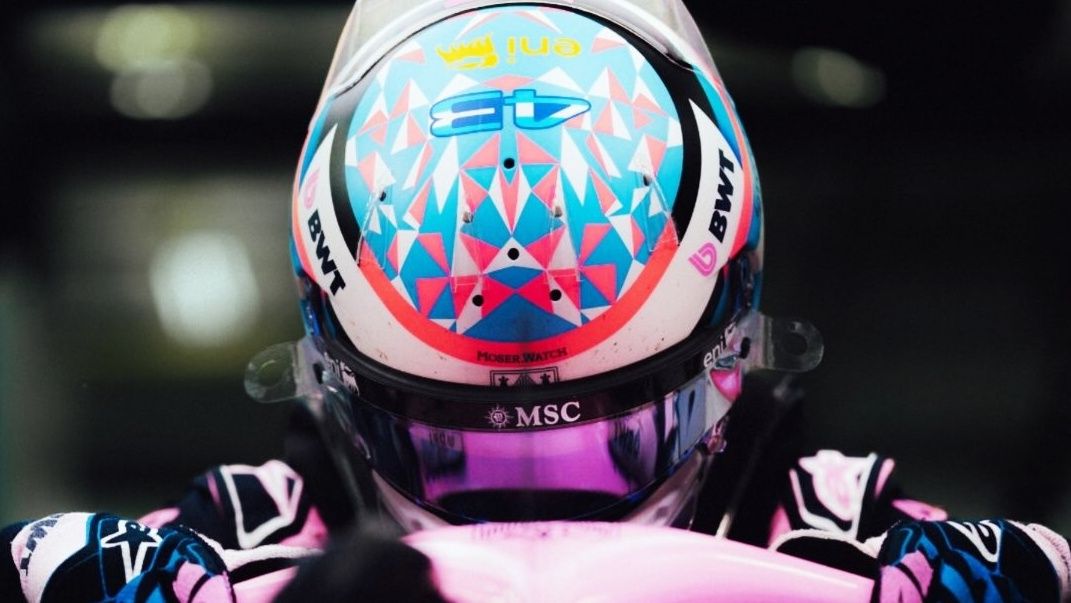
What seemed like a promising sports season for Colapinto turned into a symbol of how the war in the Middle East is directly affecting Argentines: from Formula 1 to your investments, from the price of gasoline to national security. As reported by El Intransigente, "the debut of the 2026 season and Franco Colapinto's participation remain subject to the evolution of geopolitical tension."
When a missile threatens Colapinto's dreams
Franco Colapinto had completed an impeccable preseason in Bahrain. As 442 points out, the Argentine driver "demonstrated amply that he is up to the task" during official tests with Alpine. But everything changed when an Iranian ballistic missile impacted approximately 20-25 kilometers from the Bahrain International Circuit.
According to Carburando, "the missile landed approximately 20–25 km from the track, which caused airspace closures in certain parts of the Gulf. Pirelli stated that its staff is safe and they are evaluating traveling to Europe to conduct the test." McLaren and Mercedes were scheduled to conduct an official test with the tire supplier, but the activity was immediately canceled.
The impact was near the headquarters of the U.S. Navy's Fifth Fleet, according to El Intransigente. "For the moment, there is no official confirmation regarding Formula 1 structures that may have been affected by this military action in the region," the source clarifies, but the message is clear: the war has reached the circuit where Colapinto had been racing days earlier.
The calendar in check
The Fédération Internationale de l'Automobile (FIA) is now permanently evaluating the situation to decide the future of the Bahrain Grand Prix on April 12 and the Saudi Arabian Grand Prix on April 19. As A24 explains, "if it cannot guarantee the safety of the teams and personnel, it will cancel the Bahrain and Saudi Arabia dates."
Radio Rafaela notes that although "for the moment there has been no official announcement of cancellation, the final confirmation of the race will depend on the evolution of the conflict and security guarantees." The F1 structure itself implies extremely complex logistics: the transport of cars, parts, technical equipment, and personnel requires international air coordination.
Colapinto trapped in geopolitics
The Argentine driver and his teammate Pierre Gasly had to completely modify their travel plans to Australia for the first race of the calendar. As 442 reports, "due to the cancellation of flights, because of airspace restrictions in the Middle East, the drivers and staff were forced to change their flight plan to reach Australia, since the airports in Dubai and Doha (Qatar), where they usually have layovers, are closed."
Pierre Gasly "had to get off the plane that was going to take him to Australia with a layover in the Middle East, after it was canceled," according to the same source. El Intransigente details that "viable options include diverting flights through South America or making connections through Johannesburg, in South Africa. These alternatives are considerably longer and more expensive."
For those of us in Argentina who proudly follow every step Colapinto takes in Formula 1, the reality is frustrating: the war in the Middle East not only threatens the F1 calendar but also puts at risk fundamental opportunities for our driver's sporting growth in his season with Alpine.
Milei's alignment: between supporting Trump and the risk
While Colapinto navigated logistical complications due to the conflict, President Milei consolidated Argentina's alignment with the United States and Israel. As reported by CNN en Español, Argentina is the only country in Latin America that supported the bombings, along with Canada globally (although Ottawa clarified that it will not participate militarily).
On March 3, Milei received Ambassador Peter Lamelas at the Olivos residence. As Ahora Misiones Noticias explains, "the meeting took place in the midst of the open conflict in the Middle East, following the attacks by Washington and Israel against Iran and the military escalation that is already impacting the global economy."
The message from the Argentine government was forceful. Deputy Foreign Minister Pablo Quirno expressed support for the offensive aimed at "neutralizing the threat represented by the Iranian regime." The Presidency went further, celebrating "the operation that resulted in the elimination of leader Ali Khamenei," whom it described as "one of the most evil, violent, and cruel people in the history of humanity."
State policy: Milei's vision
During the opening of Congress sessions on March 2, Milei made it clear that this is not a situational position but a long-term strategic bet. As reported by El Cronista, the president stated that he will make the geopolitical and strategic alliance with the United States a "state policy."
"The South Atlantic will be the terrain of strategic dispute for the coming decades," Milei indicated. "We have to build the century of the Americas, from Alaska to Tierra del Fuego. Let's make Argentina and America great again." At that moment, Ambassador Lamelas stood up and applauded.
Milei also announced the modernization of military equipment, "with the incorporation of 24 F-16 aircraft, Stryker helicopters, and defense systems in line with current threats." As Infobae details, the Government is finalizing the details to carry out a combined exercise between the Special Operations Commands of Argentina and the United States called "Atlantic Dagger," initially scheduled for April 6.
Economic consequences you feel in your pocket
Milei's geopolitical alignment has immediate economic costs for all Argentines:
Collapse in financial markets
Argentine dollar-denominated bonds fell by up to 1%, the S&P Merval lost 0.6%, and ADRs plummeted by up to 4% on Wall Street. If you have investments in Cedears, bonds, or Argentine stocks, you likely saw your wealth evaporate in a matter of days.
More expensive gasoline due to oil
Oil soared to $67 per barrel. For a country that imports fuel, this means that gasoline will continue to rise, making transport, freight, and practically everything you buy more expensive.
Maximum security alert
Milei activated a "HIGH" level alert throughout the country. This includes surveillance at mosques, reinforced security at Jewish institutions and embassies, and stricter controls at airports and borders. The ghost of the AMIA reappeared when Iran designated Ahmad Vahidi as commander of the Revolutionary Guard, who is identified by the Argentine justice system as one of the masterminds of the 1994 attack.
How to protect your money in this context
Faced with this uncertainty, many Argentines are looking for havens to protect their savings. Cryptocurrencies, especially digital gold, are emerging as a concrete alternative.
The boom of tokenized gold
While Argentine bonds were falling, gold reached $5,392 per ounce. More importantly, tokenized gold like PAXG (Pax Gold) exceeded $5,400 per ounce with trading volumes of more than $1 billion in 24 hours.
For Argentines, accustomed to currency controls that make buying dollars difficult, tokenized gold offers a revolutionary solution: all the security of physical gold but with the accessibility of a cryptocurrency. You can buy it from your cell phone without the need for a bank account abroad.
As the analysis by PAXG (PAX Gold): Digital Gold to Win in 2026 explains, this is the most practical way for any Argentine to access gold without the complications of buying physical bars or coins.
Bitcoin: volatility but resilience
Bitcoin initially fell 3.8% when the conflict broke out, touching $62,938. But it recovered quickly to over $70,000, demonstrating surprising resilience. As detailed in the analysis of the article Bitcoin breaks $87k: What's next for the crypto market?, the cryptocurrency is consolidating itself as an alternative refuge during crises.
For Argentines accustomed to looking for dollars under the mattress, Bitcoin offers a decentralized alternative that does not depend on the stability of any government. You can check the bitcoin price on WEEX or review the guide on How to buy Bitcoin.
WEEX: your secure platform in turbulent times
In this context of war, financial volatility, and uncertainty, you need a reliable exchange platform. WEEX has consolidated itself as one of the most respected options for Argentine investors.
Why WEEX in this crisis?
Top-tier security: With a User Protection Fund of 1,000 BTC, WEEX gives you peace of mind when other exchanges are having liquidity problems.
Access to digital gold: WEEX allows you to trade with PAXG and other safe-haven assets, taking advantage of the gold rebound without the need to buy physical bars or open complicated accounts abroad.
Deep liquidity: With more than 1,800 trading pairs, you can execute large trades without problems, something critical in times of high volatility.
24/7 operation: While traditional markets close, WEEX operates continuously. You can adjust your positions at any time, which is crucial when Middle East news arrives in the early morning.
Spanish interface: WEEX understands the needs of Argentine investors and offers dedicated support in your language.
Strategies for Argentines at this moment
How should you position yourself given the current context?
If you seek security above all
- 50-60% in tokenized gold (PAXG)
- 30-40% in stablecoins (USDT, USDC)
- 10% in Bitcoin
This protects you against inflation and peso devaluation while maintaining liquidity.
If you want a balance between protection and growth
- 40% in tokenized gold
- 20% in stablecoins
- 30% in Bitcoin
- 10% in selected altcoins
If you are willing to take more risks for better returns
- 20% in tokenized gold (defensive base)
- 10% in stablecoins (liquidity)
- 50% in Bitcoin
- 20% in high-potential altcoins
And Colapinto? The hope of the Circuit Paul Ricard
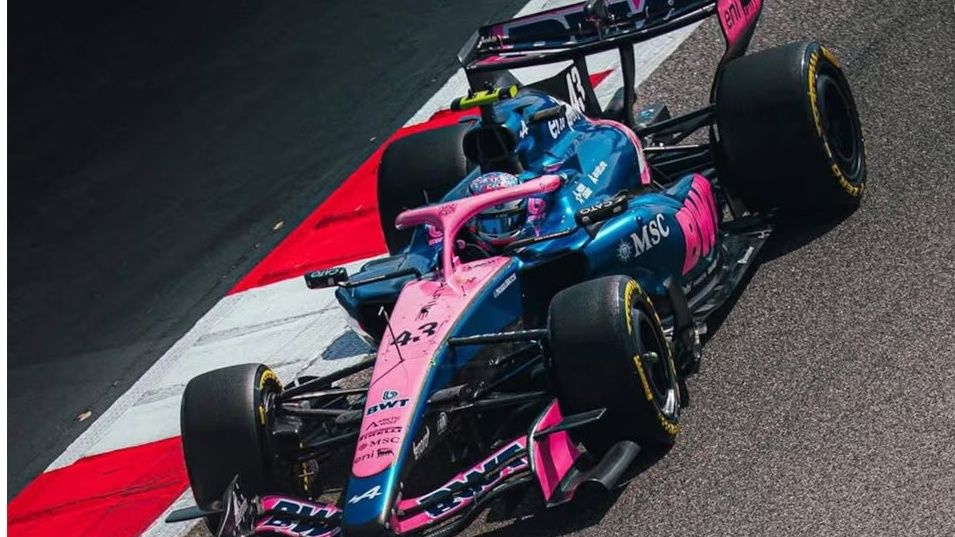
There is a possibility that excites Argentine fans. As El Ciudadano reports, "faced with a possible double void in the schedule, European circuits began to sound strongly as replacements. In that scenario, a possibility appears: the return of the French Grand Prix."
The Circuit Paul Ricard is considered one of the "likely options" if F1 needs substitute venues. For Alpine, it would literally be racing at home, and for Colapinto, it would mean "competing on a weekend with a totally favorable climate for his team, on a circuit that was already a stable part of the calendar."
"For Colapinto, who continues to consolidate himself in the top category, the chance to compete in a 'home Grand Prix' for Alpine would not only be a sporting nod but also an ideal platform to continue gaining prominence in his 2026 season," the source notes.
Conclusion: Prepare for what's coming
From Colapinto dodging missiles in Bahrain to Milei receiving Ambassador Lamelas in Olivos, the war in the Middle East has ceased to be a distant topic to become a reality that directly affects every Argentine. The driver who filled us with pride in the preseason now faces a calendar in check, with the Bahrain Grand Prix on April 12 under constant evaluation by the FIA and the possibility that crucial races will be canceled due to the military escalation.
President Milei bet big by making Argentina the only Latin American country to support the U.S. and Israeli bombings against Iran, declaring this alliance a "state policy" and announcing joint military exercises like "Atlantic Dagger" with U.S. special forces. This geopolitical decision has immediate consequences: a "HIGH" level security alert throughout the country, explicit threats from Iran that recall the ghost of the AMIA, and economic pressure felt in the pockets of millions of Argentine families.
But in the midst of uncertainty, there are also opportunities for those who act strategically. Tokenized gold reached $5,400 per ounce with volumes of $1 billion in 24 hours, demonstrating that digital havens are practical and accessible solutions for any Argentine who wants to protect their wealth without the complications of a possible currency control. Bitcoin recovered from $62,938 to over $70,000 in days, confirming its resilience to geopolitical shocks. Stablecoins allow access to digital dollars when physical dollars are increasingly difficult to obtain.
Platforms like WEEX are democratizing access to these instruments, allowing you to buy digital gold, diversify into Bitcoin, or hold stablecoins from your cell phone with the security of a 1,000 BTC Protection Fund and 24/7 operation when traditional markets are closed. The coming months will be crucial both for Colapinto, waiting for the races in the Middle East to be confirmed, and for every Argentine who must decide how to protect their economic future in a context where Milei, Trump, and Netanyahu are redefining the global geopolitical board. The question is no longer whether the war in the Middle East affects you, but how you are going to prepare for what is coming. Prepare to diversify your investments now. Download the WEEX app to get started now.
Disclaimer
WEEX and its affiliates provide digital asset exchange services, including derivatives trading and margin trading, only where it is legal to do so and for eligible users. All content is general information and does not constitute financial advice. You must seek financial advice before trading. Cryptocurrency trading is a high-risk activity and can lead to the total loss of your assets. By using WEEX services, you accept all risks and related terms. Never invest more than you can afford to lose. Consult our Terms of Use and our Risk Disclosure for full details.