
Stock Portfolio Tracker 2026: Best Apps for Stocks and Crypto




A stock portfolio tracker used to mean one thing: a spreadsheet of tickers and cost basis. In 2026, that definition is too narrow. Most retail investors now hold equities and digital assets side by side, and the tools that survive are the ones that show both in a single view. This guide is a practical buyer's guide to choosing a stock portfolio tracker that also handles crypto — what to evaluate, which apps lead in each category, and where these tools quietly cost you money if you pick wrong.
The short version: there is no single "best" tracker. The right stock portfolio tracker depends on whether you weigh automation, breadth of asset coverage, tax reporting, or privacy most heavily. Get that ranking straight before you download anything.
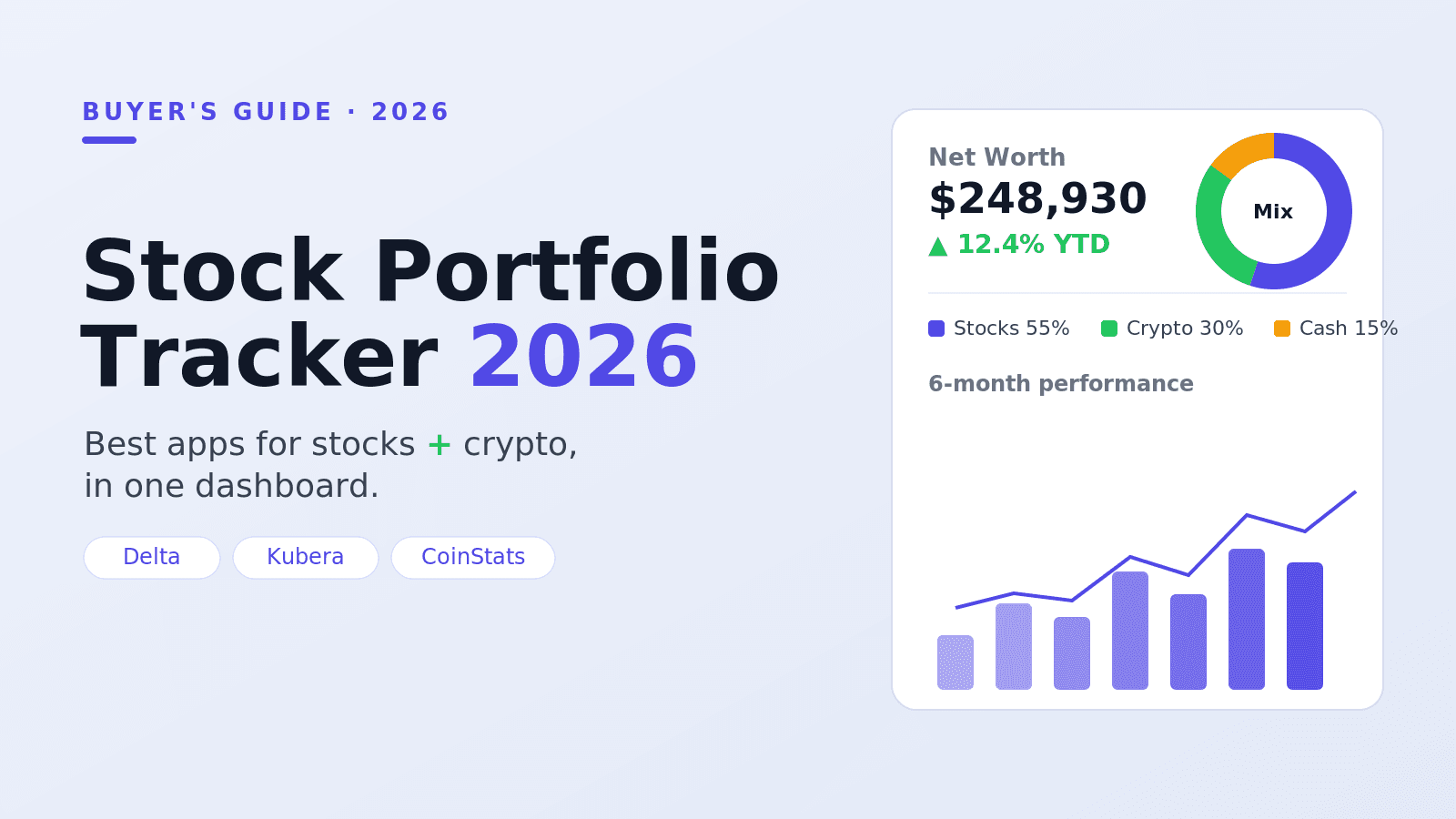
What a Modern Stock Portfolio Tracker Actually Does
At minimum, a stock portfolio tracker aggregates your holdings, updates prices, and shows performance, allocation, and total value in one place. The better ones connect directly to brokerages and exchanges, syncing transactions automatically so you are not re-typing every trade.
The meaningful upgrade over the last few years is multi-asset coverage. A serious tracker now spans stocks, ETFs, mutual funds, retirement accounts, cash, and crypto — and sometimes real estate and private holdings. That matters because your risk lives in the total picture, not in any one account. A portfolio that looks conservative on the equities side can be far more volatile once a 10% crypto sleeve is added, and you only see that if both sit in the same dashboard.
How to Choose: Five Criteria That Decide the Fit
Before comparing brand names, rank these five factors for your own situation. The better reading is that most people over-index on features and under-index on how the data actually gets in.
1. Asset coverage. Confirm the tracker supports every asset class you hold. Crypto-first tools may treat stocks as a bolt-on; equity-first tools may barely handle DeFi or self-custody wallets.
2. Sync method. Automatic sync (via broker/exchange connections or API keys) saves hours and reduces entry errors, but hands your data to an aggregator. Manual or statement-import trackers cost more upkeep in exchange for privacy, data fidelity, and international reach.
3. Tax and reporting. If you sell often or hold in a taxable account, capital-gains tracking, dividend records, and exportable reports are worth more than a prettier chart.
4. Security and privacy. Look for on-device or end-to-end encryption, read-only API keys, and two-factor authentication. For crypto especially, connect exchanges with read-only keys and never keys that permit withdrawals.
5. Cost. Free tiers are generous but usually capped on holdings or accounts. Pay only when the cap or a specific report actually blocks you.
Best Stock and Crypto Portfolio Trackers in 2026
The table below maps leading options to the job they do best. Coverage and pricing tiers shift, so treat this as a starting shortlist and confirm current terms before subscribing.
| Tracker | Best for | Asset coverage | Sync model | Pricing |
|---|---|---|---|---|
| Delta | Stocks and crypto in one clean app | Crypto, stocks, ETFs, funds, metals, options | Auto (exchanges/brokers) + manual | Free + paid Pro tier |
| Kubera | Total net worth for complex portfolios | Stocks, crypto, real estate, cash, alternatives | Auto via account aggregators | Paid subscription |
| CoinStats | Crypto-heavy investors adding some equities | Crypto, DeFi, NFTs, plus stocks | Auto (300+ wallets/exchanges) | Free + Premium |
| Sharesight | Dividend and tax tracking on listed equities | Stocks, ETFs, funds; limited crypto | Auto broker/statement import | Free (up to 10 holdings) + paid |
| Empower | A free net-worth dashboard for US investors | Stocks, funds, retirement, cash | Auto bank/broker linking | Free |
Delta is the closest thing to a true multi-asset tracker for individuals who want equities and crypto in one mobile-first view without paying for enterprise features. Kubera targets the total-net-worth use case, including real estate and private assets, and is built for people whose wealth is scattered across many accounts. CoinStats comes at the same problem from the crypto side, strong on wallets, DeFi, and NFTs, with equities as a supporting feature rather than the core. Sharesight is the specialist for dividend and capital-gains reporting on listed stocks and ETFs, less so for digital assets. Empower (formerly Personal Capital) remains a capable free option for US investors who mainly want net worth and allocation at a glance.
Where These Tools Quietly Cost You
Experienced users learn a few traps the marketing pages skip. First, automatic sync breaks. Broker and exchange connections drop after security updates or delistings, and a tracker showing stale balances is worse than no tracker, because it feels authoritative. Reconcile against source accounts periodically.
Second, crypto cost-basis is where numbers go wrong. Transfers between your own wallets, staking rewards, airdrops, and DeFi transactions frequently get misclassified as buys or sells, inflating or hiding taxable gains. If tax accuracy matters, spot-check the imported transaction history rather than trusting the headline gain figure.
Third, "free" often means capped. A free tier limited to one portfolio or ten holdings can force an upgrade exactly when your portfolio gets interesting. Read the cap before you commit your data to a platform.
Market View: Why Multi-Asset Tracking Is the Default Now
The more important point is structural. Retail portfolios have blended traditional and digital assets, and the correlation between them is unstable — sometimes crypto trades like a high-beta tech stock, sometimes it moves on its own. A single-asset tracker cannot show you that interaction, which is exactly the thing that determines your real drawdown risk. Seeing stocks and crypto together is not a convenience feature; it is how you understand concentration and rebalance with intent. WEEX's own analysis of whether crypto or stocks carry more risk makes the same point: even a small crypto allocation can widen a portfolio's swings well beyond what the equity sleeve alone would suggest.
If you are building the crypto side of that portfolio, the discipline is the same one that applies to equities: diversify across market caps and sectors, keep a stablecoin buffer, and rebalance on a schedule rather than on emotion. WEEX's guide on building a diversified crypto portfolio is a useful checklist before you let a tracker tell you the allocation looks fine.
Getting Started
Pick one tracker that covers your actual asset mix, connect accounts with read-only permissions, and verify the first import line by line before you trust the totals. If your holdings are mostly equities with a growing crypto position, a multi-asset app like Delta or a net-worth tool like Kubera will serve you better than running two separate dashboards. And if the crypto side is new to you, start small on a secure exchange — you can buy Bitcoin on WEEX in a few steps and then track that position alongside your stocks from day one.
A stock portfolio tracker is only as good as the decisions it helps you make. Choose for accuracy and total-portfolio visibility first, and let the charts be a bonus.
FAQ
1. Can one stock portfolio tracker handle both stocks and crypto?
Yes. Multi-asset trackers such as Delta, Kubera, and CoinStats are built to show equities and digital assets in a single dashboard. Verify that your specific brokers and exchanges are supported before committing, since coverage varies by region and provider.
2. Is automatic sync or manual entry better?
Automatic sync saves time and reduces typos but routes your data through an aggregator. Manual or statement-import tracking is more work but gives you more privacy and often wider international coverage. Choose based on whether you value convenience or data control more.
3. Are portfolio trackers safe to connect to my accounts?
They can be, if you use the right permissions. Connect brokerages and crypto exchanges with read-only access, never keys that allow withdrawals, and enable two-factor authentication. Prefer tools that offer end-to-end or on-device encryption.
4. Do free stock portfolio trackers do enough?
For basic net-worth and allocation views, free tiers from Empower, CoinStats, or Sharesight are often sufficient. The common limits are on the number of holdings, portfolios, or advanced tax reports, which is usually where a paid upgrade becomes worthwhile.
5. Will a tracker calculate my taxes correctly?
Treat automated tax figures as a draft, not a filing. Crypto transfers, staking, and airdrops are frequently misclassified, and a wrong cost basis skews your reported gains. Review the imported transactions and confirm with a tax professional before relying on the numbers.
Risk Warning
Portfolio trackers report on your holdings; they do not reduce the risk of those holdings. Stocks and especially crypto assets are volatile, and you may lose part or all of your invested capital. Trackers can display stale or misclassified data after a broken sync, which can lead to poor decisions if trusted blindly — always reconcile against your source accounts. Connecting exchanges or brokerages carries counterparty and security risk; use read-only API keys, enable two-factor authentication, and never share withdrawal-enabled credentials. Automated tax and performance figures may be inaccurate and are not a substitute for professional advice. Crypto markets in particular trade 24/7, carry liquidity, custody, regulatory, and smart-contract risks, and can move sharply while you are not watching.
Disclaimer: This content is provided for general informational and educational purposes only and should not be considered financial, investment, legal, or tax advice. Nothing in this article constitutes an offer, recommendation, solicitation, or invitation to buy, sell, or trade any crypto asset or use any specific service. Crypto assets are highly volatile and involve a high degree of risk. You may lose some or all of the value of your investment and should not invest funds you cannot afford to lose. WEEX services may not be available in all regions and are subject to applicable laws, regulations, and user eligibility requirements. Please carefully assess risks and confirm local requirements before making any financial decisions.