
Tim Payne vs. Haiti: The most-watched match in New Zealand history
By: WEEX|2026/06/03 10:45:00
0
Share
He played 45 minutes, his team lost 4-0, and he committed the error that led to the first goal. Yet, four million people were hanging on his every move. The Tim Payne phenomenon has just entered another dimension.
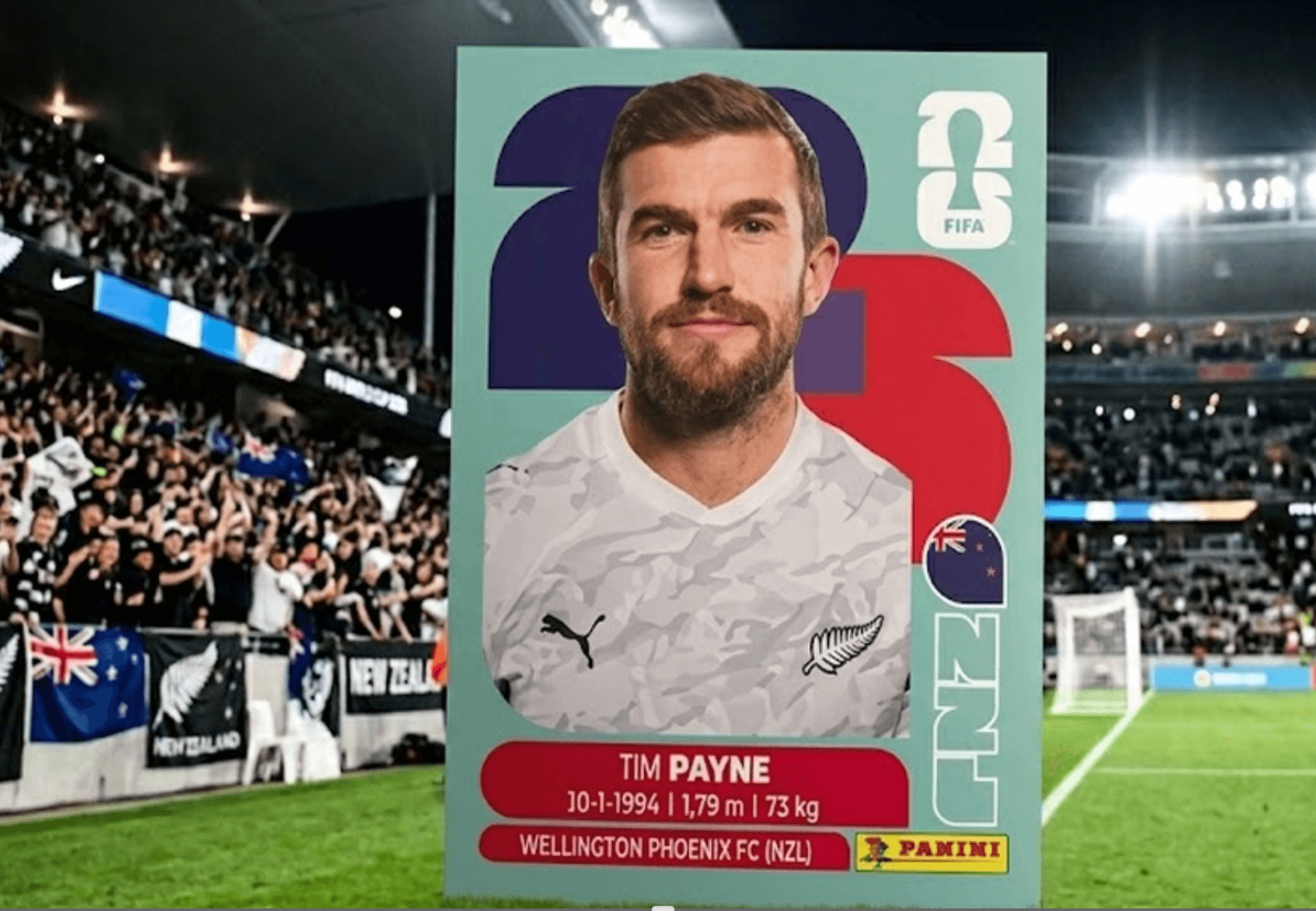
On Tuesday, June 3, 2026, Chase Stadium in Fort Lauderdale, Florida, witnessed something that had never happened in a New Zealand friendly: television cameras followed a Wellington Phoenix central defender from the moment he stepped off the bus until he set foot on the pitch, as if he were Messi in a classic match.
The result of the match was decisive: Haiti thrashed New Zealand 4-0 in a friendly match preparing for the 2026 World Cup. The first goal came at the 12-minute mark following a defensive error by Tim Payne, when Ruben Providence chipped the ball over the goalkeeper. Payne was substituted at halftime. But none of that overshadowed the phenomenon. If anything, it amplified it.
What happened in Fort Lauderdale: the viral match
The defender started in the pre-World Cup friendly and played 45 minutes: in the short time he was on the pitch, his country conceded a goal, but Payne also made an impeccable block to prevent another.
The defender committed the marking error that ended up becoming the first goal for the Caribbean side, an action that conditioned the development of the match from the opening minutes. But the narrative that the internet built around Payne is stronger than any result. The millions of followers who track him from Argentina, Mexico, Colombia, Peru, and the entire region don't follow him because he is the best defender in the world. They follow him because he is one of our own: the player the Latin American community chose as their representative in the biggest tournament in history.
Payne went from having fewer than 5,000 followers on Instagram to 4.5 million in just a few days, simply because an Argentine influencer introduced him as the "least known" player in the World Cup. And the match against Haiti, far from cooling down that phenomenon, was the first time millions of people around the world saw a player live whom they wouldn't have even searched for by his full name before.
The Latin American phenomenon that the world couldn't quite understand
Until they understood it all at once.
What the match against Haiti proved is something we Latin Americans have known for a long time: when our region decides to make someone famous, it does so for real. A campaign promoted by the content creator known as "el Scarso" mobilized millions of fans in their support for the player and the All Whites. The original video surpassed one million likes in hours. Then came the cumbia, the t-shirts, the banners in stadiums around the world, and messages from New Zealand thanking Argentina.
The friendly also served as a reminder that popularity off the pitch does not guarantee results on it, on a night when Tim Payne and his teammates were soundly outplayed by an inspired opponent. But that contrast between the magic of social media and the harshness of the result is, in itself, one of the most honest stories that football can tell.
New Zealand still has another friendly on Saturday the 6th against England before their World Cup debut. And on June 15, when the All Whites take the field against Iran for Group G, they will have the loudest stadium in the history of New Zealand football: four million people cheering from their screens across Latin America.
Latin America, the 2026 World Cup, and the economy beating behind it
The Tim Payne phenomenon is not just a sports story. It is the most visible symptom of something deeper: Latin America arrived at the 2026 World Cup with an unprecedented cultural and digital presence, despite (or precisely because of) the economic difficulties the region is going through.
Venezuela maintains one of the highest inflation rates in the world, with estimates between 600% and 650% annually, according to Professor Steve Hanke of Johns Hopkins University. Argentina emerged from an annual inflation rate of 211% in 2024 and still lives with the devaluation of the peso. Mexico faces exchange rate pressures and an economy highly dependent on remittances that exceeded $63 billion in 2024, according to the Bank of Mexico.
In that context of structural economic pressure, football and social media function as they always have in Latin America: as spaces for identity, collective humor, and shared pride that don't need dollars to exist. The campaign by el Scarso cost nothing. Neither did the cumbia by Juan Palavecino. And yet, they moved four million people in days.
It is the same region that adopted cryptocurrencies on a massive scale (Latin America registered a 63% growth in crypto adoption during 2025, according to Chainalysis) precisely because the need for alternative financial tools is as urgent as the region's creative capacity to find solutions. The same people who make Tim Payne go viral are those protecting their savings in USDT because the local peso doesn't go far enough.
WEEX: the platform for the Latin American fan who also thinks about their financial future
The 2026 World Cup is the biggest tournament in the history of football (48 teams, three countries, billions of viewers) and it is also the most relevant economic event for the Latin American digital ecosystem in the coming months. Crypto transactions will grow during the tournament: tickets, betting, international merchandise, and accelerated remittances between families in different countries.
In that context, WEEX is the platform that combines real access to the crypto market with institutional security standards and educational resources in Spanish designed for the Latin American user.
For those who want their crypto capital to work beyond the World Cup euphoria, the WEEX Wiki has specific resources:
- 📖 Compound interest in the crypto environment?: How to make your assets grow steadily over time, using compound yield mechanisms available in the crypto ecosystem and on WEEX.
- 📖 Best crypto trading strategies in 2025 in Latam: The most effective strategies for operating in the Latin American crypto market, adapted to the economic reality and specific opportunities of the region.
Conclusion: Tim Payne, the 4-0, and why Latin America already won before the World Cup starts
Tim Payne played 45 minutes, his team lost 4-0, and he committed the error that led to the first goal. And yet, he was the most talked-about figure of the night throughout Latin America. That is not a contradiction: it is the essence of the phenomenon that this region built around a Wellington Phoenix defender. The 2026 World Cup kicks off on June 11 and Latin America has already arrived with something no other region has: four million people united behind a player no one knew. That is real cultural power. And the same energy that built it is what drives millions of Latin Americans to seek better financial tools so that the economy doesn't hold them back. The match started long before the opening whistle. Register on WEEX today to start your crypto experience on the right foot.
Disclaimer
WEEX and its affiliates provide digital asset exchange services, including contract trading and margin trading, only where legal and for eligible users. All content is general information and does not constitute financial advice. You must seek financial advice before trading. Cryptocurrency trading is a high-risk activity and can lead to the total loss of your assets. By using WEEX services, you accept all related risks and terms. Never invest more than you can afford to lose. Consult our Terms of Use and our Legal Statement for full details.



Customer Support:@weikecs
Business Cooperation:@weikecs
Quant Trading & MM:bd@weex.com
VIP Program:support@weex.com
