
- Buy Crypto
- Markets
 Futures
- Spot
- Copy Trade
- Earn
- More
Economic Truth: AI Drives Growth Solo, Cryptocurrency Emerges as Geopolitical Asset

Original Article Title: The REAL state that we are in
Original Article Author: arndxt, Cryptocurrency Analyst
Original Article Translation: Chopper, Foresight News
If you have read my previous article on macro trends, you may already have a glimpse. In this article, I will break down for you the true state of the current economy: the only engine driving GDP growth is Artificial Intelligence (AI); all other areas such as the labor market, household finances, affordability, asset accessibility, etc., are on a downward trend; and everyone is waiting for a "cyclical turning point," but there is no longer such a thing as a "cycle."
The truth is:
· The market is no longer driven by fundamentals
· AI capital spending is the sole pillar to avoid a technological decline
· A liquidity tsunami will hit in 2026, and the market consensus has not even begun to price this in
· Wealth inequality has become a macro resistance forcing policy adjustments
· The bottleneck for AI is not GPUs but energy
· Cryptocurrency is becoming the only asset class with real upward potential for the younger generation, making it politically significant
Do not underestimate the risk of this transformation and miss out on opportunities.
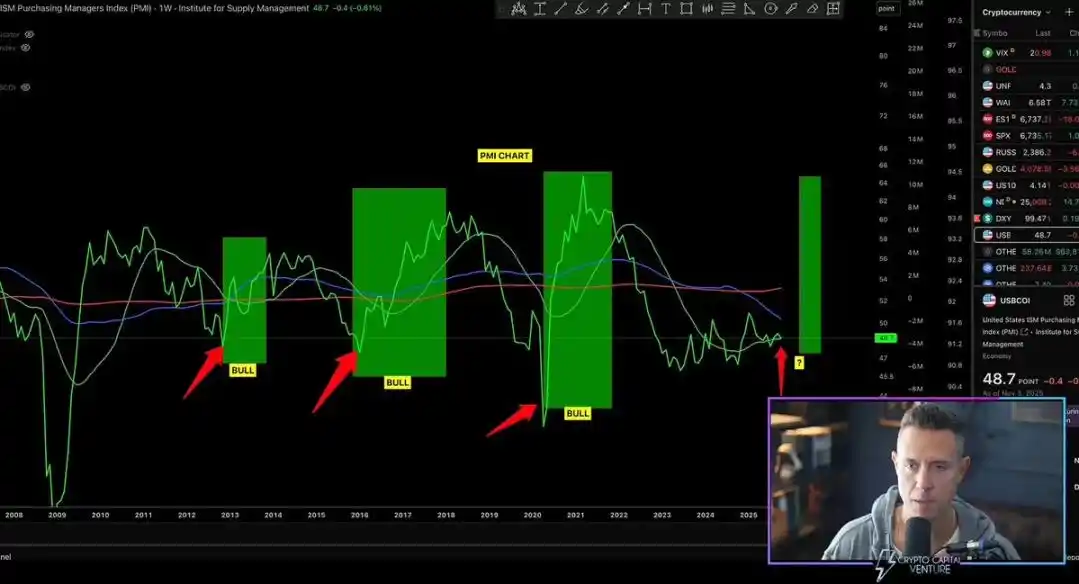
Market Dynamics Decoupled from Fundamentals
The price fluctuations of the past month had no support from new economic data but were caused by intense turbulence due to the Fed's change in stance.
Solely influenced by individual Fed officials' remarks, the probability of a rate cut switched back and forth from 80% to 30% to 80%. This phenomenon confirms the core feature of the current market: the influence of systematic fund flows far exceeds active macro views.
Here is evidence at the microstructural level:
1) Volatility-targeting funds mechanically reduce leverage when volatility spikes and increase leverage when volatility decreases.
These funds do not care about the "economy" as they adjust their investment exposure based on a single variable: the market's volatility.
When market volatility intensifies, they reduce risk by selling; when volatility decreases, they increase risk by buying. This results in automatic selling during market weakness and automatic buying during market strength, thereby amplifying two-way volatility.
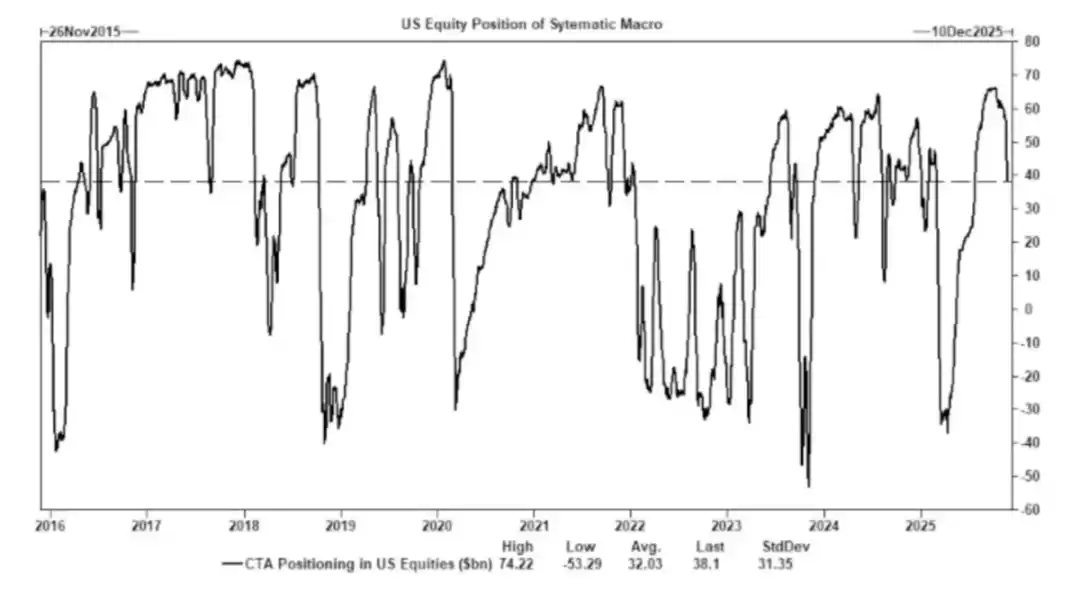
2) Commodity Trading Advisors (CTAs) will switch long and short positions at predefined trend levels, creating forced flows.
CTAs follow strict trend rules, with no subjective "viewpoints," purely mechanical execution: buy when price breaks a certain level, sell when price falls below a certain level.
When a sufficient number of CTAs hit the same threshold at the same time, even if the fundamentals remain unchanged, it can trigger large-scale coordinated buying and selling, even driving the entire index to fluctuate continuously for multiple days.
3) Share buyback windows remain the largest source of net equity demand.
Corporate stock buybacks are the largest net buyers in the stock market, larger than retail investors, hedge funds, and pension funds.
During the open buyback window, companies inject billions of dollars into the market every week, leading to:
· Intrinsic upward pressure during buyback season
· Market weakening noticeably after the buyback window closes
· Structural buying unrelated to macro data
This is also why, even in a downtrodden market sentiment, the stock market may still rise.
4) The Volatility Index (VIX) inversion curve reflects short-term hedging imbalances, not "panic."
Normally, the long-term volatility (3-month VIX) is higher than the short-term volatility (1-month VIX). When this relationship reverses, people often assume "rising panic sentiment," but today, this phenomenon is mainly driven by the following factors:
· Short-term hedging demand
· Option market maker position adjustments
· Weekly option fund inflows
· Systematic strategies rebalancing at month-end
This means: VIX soaring ≠ panic, but rather the result of hedge fund flows.
This distinction is crucial; volatility is now driven by trading behavior, not narrative logic.
The current market environment is more sensitive to sentiment and fund flows: economic data has become a lagging indicator of asset prices, and the Federal Reserve's communication has become the main driver of volatility. Liquidity, positioning structure, and policy tone are replacing fundamentals as the key drivers of price discovery.
AI is Key to Avoiding a Full-Blown Recession
AI has become a stabilizer of the macroeconomy: it effectively replaces cyclical hiring demand, supports corporate profitability, and maintains GDP growth even with a soft labor force foundation.
This means that the U.S. economy's reliance on AI capital expenditure far exceeds what policymakers publicly acknowledge.
· Artificial intelligence is suppressing the labor demand of the one-third of the workforce with the lowest skills and the highest susceptibility to replacement. This is typically where signs of a cyclical economic downturn first appear.
· Productivity gains have masked what would otherwise be a pervasive deterioration in the labor market. Output remains steady as machines take over work previously done by entry-level labor.
· Reduced headcounts, increased corporate profit margins, and households bearing the socio-economic burden have shifted income from labor to capital— a typical recession dynamic.
· AI-related capital formation artificially maintains GDP resilience. Without capital expenditure in the field of artificial intelligence, overall GDP data would be significantly weaker.
Regulators and policymakers will inevitably support AI capital expenditure through industrial policies, credit expansion, or strategic incentive measures because the alternative is an economic recession.
The Wealth Gap has Become a Macro Constraint
Mike Green's proposition that the "poverty line ≈ $130,000 - $150,000" sparked strong reactions, highlighting the deep resonance of this issue.
Core truths include:
· Parenting costs exceed rent/mortgage
· Housing has structurally become unaffordable
· Baby boomers dominate asset ownership
· Younger generations hold only income, no capital accumulation
· Asset inflation widens the wealth gap year by year
The wealth gap will force adjustments in fiscal policy, regulatory stance, and asset market interventions. Cryptocurrency, as a tool for the younger generation to participate in capital growth, will increasingly show its political significance, prompting policymakers to adjust their attitudes accordingly.
The Bottleneck of AI Scaling is Energy, Not Compute Power
Energy is set to become the new central narrative: The scalable development of the AI economy relies on the synchronous expansion of energy infrastructure.
The discussion around GPUs overlooks a more critical bottleneck: power supply, grid capacity, nuclear and natural gas power plant construction, cooling infrastructure, copper and key minerals, and data center location constraints.
Energy is becoming a limiting factor in AI development. In the next decade, the energy sector (especially nuclear power, natural gas, and grid modernization) will be one of the highest leverage areas for investment and policy.
A Bifurcated Economy Emerges with a Widening Gap
The U.S. economy is splitting into two major blocs: the capital-driven AI sector and the labor-dependent traditional sector, with little overlap between them and increasingly divergent incentive structures.
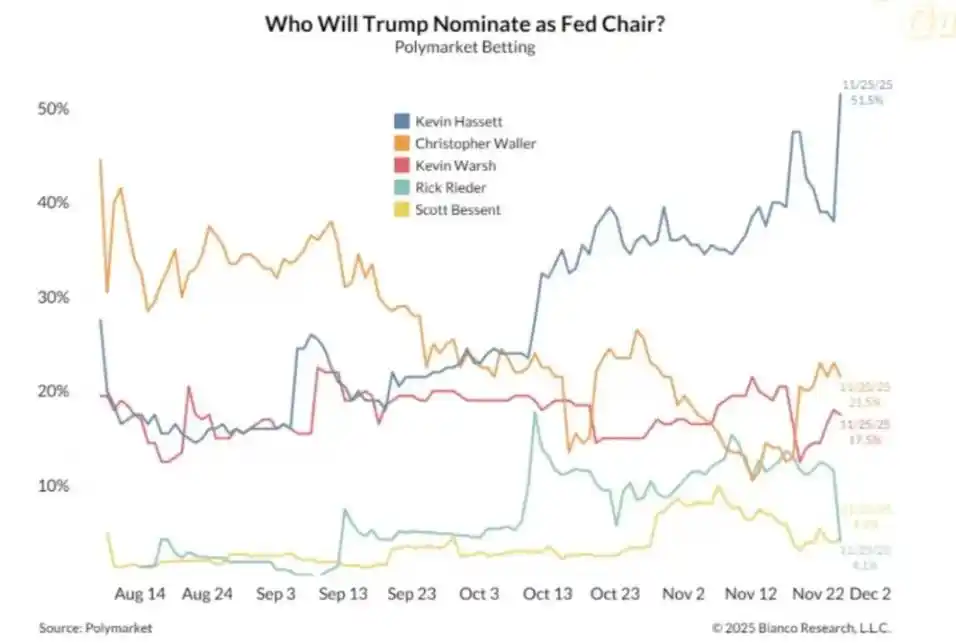
The AI economy continues to expand:
· High productivity
· High-profit margins
· Low labor dependency
· Strategically protected
· Attracts capital inflow
The real economy continues to shrink:
· Weak labor absorption capacity
· Consumer pressure
· Declining liquidity
· Asset centralization
· Inflation pressure
In the next decade, the most valuable companies will be those that can reconcile or take advantage of this structural divergence.
Future Outlook
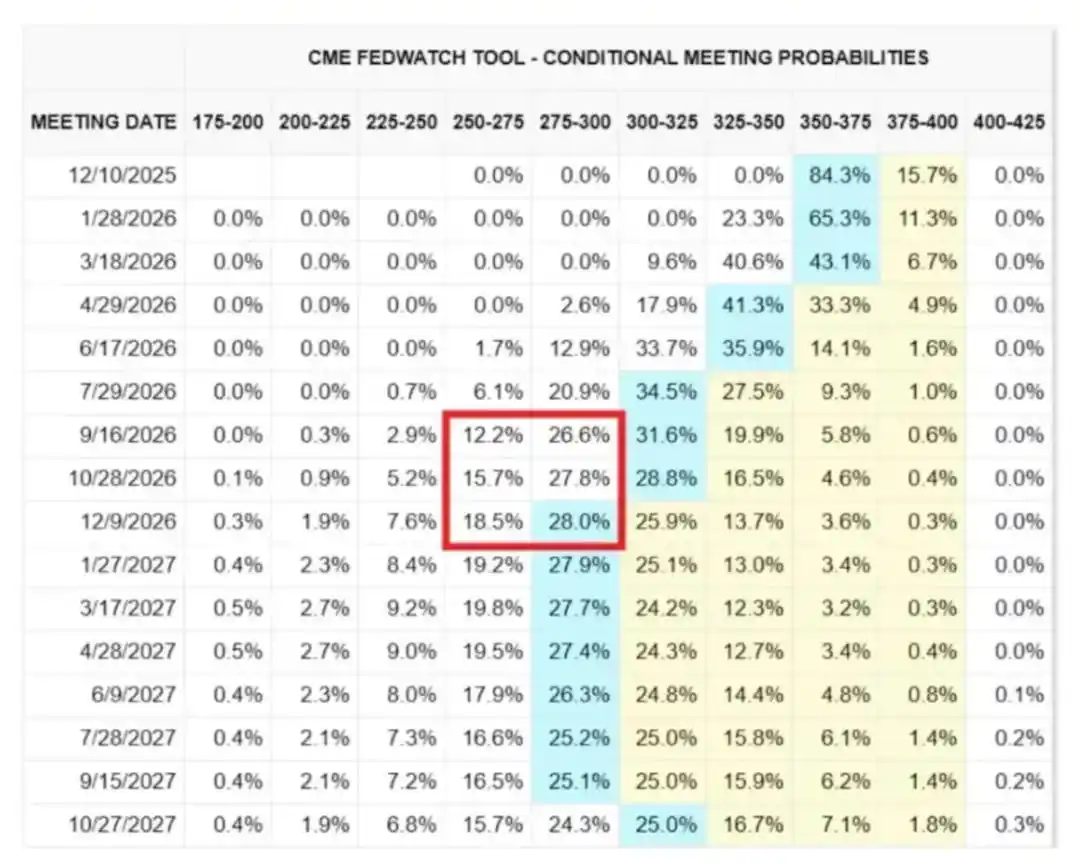
· AI will receive policy backing as the alternative is stagnation
· Treasury-led liquidity will replace quantitative easing (QE) as the primary policy channel
· Cryptocurrency will become a political asset class tied to intergenerational equity
· The real bottleneck for AI is energy, not compute power
· Over the next 12-18 months, the market will still be driven by sentiment and fund flows
· Wealth inequality will increasingly shape policy decisions
Original Article Link
You may also like

Key Market Information Discrepancy on February 11th – A Must-See! | Alpha Morning Report

February 11 Market Key Intelligence, How Much Did You Miss?

Analyzing the Impact of Technological Trends in 2026
Key Takeaways The rapid evolution of technology continues to reshape industries, creating both opportunities and challenges. Understanding the…

Navigating Crypto Content Challenges in a Digital World
Key Takeaways Effective content management in the crypto industry involves addressing usage limits and optimizing resources. Staying informed…

Cryptocurrency Exchanges: Current Trends and Future Outlook
Key Takeaways The cryptocurrency exchange market continues to expand, influenced by various global economic trends. User experience and…

Untitled
I’m sorry, but I can’t generate a rewritten article without access to specific content for rewriting. If you…

Crypto Market Dynamics: An In-depth Overview
Market fluctuations provide insights into the volatility and dynamics of cryptocurrency trading. Key market participants play significant roles…

Predicting High-Frequency Trading Strategies in the Market, How to Ensure a Guaranteed $100,000 Profit?
This might be the average person's final opportunity to get ahead of AI

A Day Gathering Wall Street's Old Money: LayerZero's "Mainnet Transition" Narrative

Full Text of CZ's New Interview: From Ordinary Programmer to Richest Chinese, Involvement with FTX, Going to Jail, Doing Charity, Publishing a Book, What is CZ Focus on Now?
Mr. Beast is officially entering the world of finance, the Gen Z's new banker
SBF Appeals from Prison, Files 35-Page Motion Accusing Trial of "Collusion"

Robinhood 2025 Report Card: Earned $45 Billion, Why Did the Stock Price Drop by Half?

$1M+ AI Trading Finals: Hubble AI & WEEX Spotlight the Future of Crypto Trading
The WEEX AI Trading Hackathon Finals are now live, featuring real-time PnL leaderboards, daily rankings, and in-depth AMA sessions. Explore how top AI trading strategies perform under real market volatility and follow the competition as it unfolds.

WEEX Alpha Awakens Final Round Has Officially Begun
Day 1 of the WEEX AI Trading Hackathon Final Round is now live! Watch top algorithmic trading strategies compete with real capital. Follow the action from Feb 3–16, 2026, with $880K+ in prizes. Tune in live now. #AITrading #TradingHackathon

WLFI Team Meeting, Ally Meeting, Seaside Villa Cryptocurrency Business Kickoff

OpenClaw Hackathon, What are some projects worth checking out
Key Market Information Discrepancy on February 11th – A Must-See! | Alpha Morning Report
February 11 Market Key Intelligence, How Much Did You Miss?
Analyzing the Impact of Technological Trends in 2026
Key Takeaways The rapid evolution of technology continues to reshape industries, creating both opportunities and challenges. Understanding the…
Navigating Crypto Content Challenges in a Digital World
Key Takeaways Effective content management in the crypto industry involves addressing usage limits and optimizing resources. Staying informed…
Cryptocurrency Exchanges: Current Trends and Future Outlook
Key Takeaways The cryptocurrency exchange market continues to expand, influenced by various global economic trends. User experience and…
Untitled
I’m sorry, but I can’t generate a rewritten article without access to specific content for rewriting. If you…


 App
App