The Debate on Blockchain Business Models: Choosing to Be a Tenant or a Landlord?

 Prefer us on Google


Free is not always a good thing.
Written by: Eric, Foresight News
Starting from the weekend of September 5, a public debate surrounding the fee model of Robinhood Chain has brought the conflict between the two camps of Solana and Arbitrum—"lower Gas fees" versus "finding a sustainable business model"—to the forefront.
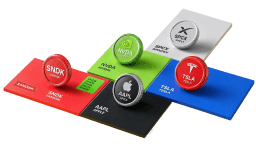
The story begins with Robinhood Chain. On July 1, 2026, this once-popular brokerage officially launched its independent L2 Robinhood Chain based on Arbitrum Orbit, focusing on tokenized U.S. stocks, perpetual contracts, and other financial products. Since its launch, this L2 has gained increasing popularity, with daily transaction fees at one point exceeding several million dollars.
As trading volume surged, by early September, the average Gas fee on this L2 rose to about $0.4, over a hundred times the trading cost on Solana, and even twice the trading cost on the Ethereum mainnet.
Solana co-founder Anatoly Yakovenko retweeted this post, stating that Robinhood Chain allocates 10% of its net protocol revenue to the Arbitrum ecosystem (with 8% going to the DAO treasury and 2% to the development fund), while Robinhood retains about 90%. Toly calculated that this 10% share is enough to cover four times the fees for the same transaction volume on Solana. If it had been built on Solana, Robinhood could have provided users with an almost Gas-free experience instead of making users pay for network congestion. He criticized this model of "making money off underlying congestion" as unwise, arguing that front-end applications should charge users directly while the underlying layer should pursue extremely low costs.
Offchain Labs co-founder Steven Goldfeder quickly responded. He expressed respect for Toly but deemed the viewpoint "absurd." Under the Arbitrum architecture, Robinhood can retain 90% of the Gas revenue; if deployed on Solana, the underlying fees would go to the validators, leaving Robinhood with nothing. If they wanted to subsidize users' Gas, they would have to pay out of their own pockets. Goldfeder succinctly summarized: Robinhood chose Arbitrum to be a "landlord," not a "tenant." By operating its own sequencer and controlling most of the revenue, it can truly turn the infrastructure into a sustainable business.
In response to Steven Goldfeder, the two continued their discussion on whether the "chain itself should charge fees" or whether the "chain should be free, charging through applications."
Subsequently, Nina Rong, growth lead at BNB Chain and a former Arbitrum employee for about four years, jumped into the specific debate of "who benefits more from Robinhood." She pointed out that further reducing Gas fees is no longer the top priority in the blockchain industry. The real priority is to find a sustainable business model that can feed back into technology and growth, whether through Gas fees, revenue sharing, or other business agreements. Over the past five years, blockchain foundations have mostly focused on issuing grants and lowering Gas fees; however, to sustain for another five years, a solid business structure must be established.
Chinese user @lanyihou responded to Nina with more direct data: trading a token worth about 200 USD on Robinhood Chain could incur a Gas fee of 21 USD, making the environment for discussing business models "more ruthless than drug dealing." Nina replied that fees could be lowered immediately if desired (it’s just a matter of changing a number), but this does not solve the fundamental issue in the industry—it's precisely in such an environment that it is more necessary to find a model that users can accept, where the platform does not lose money and can even make a profit. She cited products like GMGN to illustrate that users are willing to pay for genuinely valuable services.
Sustainability of the Chain
The core of this debate is actually about two different paths of value capture.
One is "extremely low cost + ecological flywheel." Solana has long adhered to high throughput and low fees, attracting a large number of applications and users. The network itself maintains security and incentives through basic fees and MEV mechanisms. If application developers want to provide users with Gas-free experiences, they need to bear the costs themselves or monetize through front-end charges, advertising, subscriptions, etc. The advantage is an exceptional user experience, while the downside is that application developers find it difficult to directly benefit from underlying congestion.
Solana has indeed relied on low costs and fast transaction confirmations to stand out in the meme wars of the past few years, giving rise to innovative products like propAMM during the traffic frenzy. This is a path that has been validated.
The other is "customizable application chains + revenue sharing." Arbitrum Orbit allows project teams to launch dedicated chains, controlling their own sequencers and most of the fee revenue while paying a fixed percentage to the parent ecosystem. For large entities like Robinhood, this is equivalent to converting their user traffic and trading behavior into predictable infrastructure revenue while still leveraging Ethereum's security and Arbitrum's tech stack. The advantage is a clearer business loop, while the downside is that user-side fees may be relatively high.
Not only Arbitrum, but also Optimism and ZKsync, and even Avalanche's earliest subnets (now independent L1s) are developing based on this logic.
Relying solely on foundations burning money to issue grants and infinitely lowering Gas fees is certainly feasible, but for a chain to survive long-term, it must have a positive cash flow mechanism to support R&D, security audits, ecological incentives, and market expansion. Whether L1 or L2, the ultimate question remains the same: who pays for the long-term maintenance of the network? Users, application developers, or the protocol itself through reasonable pricing?
This is Arbitrum's viewpoint and also the underlying logic of the current growth lead at BNB Chain.
Sustainability does not equate to high fees. The key lies in whether the fee structure is transparent, whether it matches real value, and whether it can form a positive cycle. Excessively high fees will drive away users, while excessively low fees will reduce infrastructure to a tragedy of the commons. The current high fees of Robinhood Chain reflect the real demand after early subsidies ended and expose the need for optimization in dynamic pricing and capacity management.
There are no absolute rights or wrongs in these two thoughts. During times of overall market prosperity, Solana attracted attention and liquidity due to its low costs; while during market downturns, users do not mind paying a bit more for rare profit opportunities. Solana's model may rely more on operational capabilities, while Ethereum's ecosystem's closed-loop mechanism ensures that "artisans do not starve in lean years."
"Only Ethereum is taking the hits"
A possibly overlooked but painful fact in this debate is that although Robinhood Chain settles on Ethereum, most of the value has not flowed back to the Ethereum mainnet.
According to public data and protocol arrangements, the vast majority of the Gas fees paid by users are retained by Robinhood as the chain operator (about 90%), with about 10% allocated to the Arbitrum ecosystem (DAO and development fund). The portion truly used for Ethereum's data availability and settlement is extremely low, at times barely above one ten-thousandth. In other words, Ethereum provides a security base but only receives a thin layer of "toll fees."
This is the structural reality of the current Ethereum L2 ecosystem: application chains and dedicated L2s retain most of the execution layer's value for themselves, while the mainnet plays more of a role as a "settlement and data availability layer." For Ethereum itself, this is both a success in scaling (transactions are diverted, alleviating congestion on the mainnet) and a challenge in value capture: the security budget ultimately still relies on the fees and staking returns of the mainnet itself. As a large number of high-value activities migrate to L2 or even independent application chains, how the mainnet continues to receive sufficient incentives becomes a long-term issue that must be addressed.
Related discussions have persisted for years, and the emergence of Robinhood Chain has brought this issue back to the forefront.
In fact, Ethereum has long been aware of this issue but has not rushed to "capture value"; instead, it has maintained strategic composure, betting on the long-term growth trend of blob demand. For Ethereum, as long as ETH is still used to pay Gas fees, and as long as the finality of L2s still requires mainnet settlement, there is always hope for the realization of long-term value.
Conclusion
The clash between Toly and Goldfeder points to the formation of an industry consensus: the blockchain has moved past the stage of "as long as it's cheaper" in the pure technical competition and has entered the deep waters of business models and ecological sustainability.
For application developers, choosing to be a landlord or a tenant depends on their own traffic scale and monetization capabilities; for public chains and L2s, how to design mechanisms that attract builders while forming positive cash flow will determine survival over the next five years. As the largest security provider, Ethereum also needs to continuously think about how to ensure that the mainnet itself receives a more reasonable value return while L2s thrive.
There are no absolute winners in this debate; the core lies in the triangular balance between user experience, infrastructure profitability, and underlying security incentives, which is far more complex than "whose Gas is lower." The true winners will be those participants who can find sustainable solutions among these three factors.
-- Price
This content is provided for general informational purposes only and doesn't constitute financial, investment, legal, or tax advice. Any events, rewards, online promotions, or related information mentioned herein should not be considered a recommendation, solicitation, or invitation to purchase, sell, trade, or otherwise deal in any crypto assets. Crypto assets are highly volatile and may result in loss. The availability of WEEX services, products, and related events may vary by region. You are responsible for ensuring that your participation is in accordance with applicable local laws and regulations.
You may also like
ZKsync Recommends Extending EraVM Execution Delay to 24 Hours
ZKsync to Phase Out Old Execution Environment in the Next 6 Months

USDC may be only as quantum-safe as its slowest wallet, bridge or blockchain
Chainlink brings US economic data to 10 blockchains
The Bull Has Arrived, but the People Are Gone: Four Population Migrations in the Crypto World by 2026

MetaMask Wallet: How to Install and Use the Wallet
Ethereum Without 'L2 Paradox'... Foundation Says 'Returning to Mainnet Core Business'
Breaking: Arbitrum Foundation Proposes $43 Million Budget for 2027, What Do You Think? Governance Debate Heats Up!
What is a zero-knowledge proof? Privacy and scaling explained

Aave to wind down V3 deployments on six blockchains due to low revenue
Aave Considers Withdrawal from Six Low-Profitability Blockchains
Avalanche Stealthily Transforms into RWA Public Chain
Data: The cryptocurrency market is experiencing a general rise, with the NFT sector leading with an increase of over 7%, and BTC breaking through $61,000
Matter Labs lays off staff and fully shifts to the institutional privacy platform Prividium, with the future direction of zkSync yet to be determined

a16z: 7 Images to Understand How Tokenization Changes the Nature of Assets

Kelp will stop cross-chain support for rsETH on 20 chains
BitGo announces partnership with ZKsync to launch tokenized deposit solution
Morning Report | Kraken freezes IPO plans due to difficult market conditions; Polymarket acquires DeFi infrastructure Brahma; World launches AgentKit integrated with Coinbase
ZKsync collaborates with five regional banks in the United States to develop the tokenized deposit network Cari Network
RootData: ZK will unlock tokens worth approximately $3.33 million in one week
Data: The cryptocurrency market is experiencing a widespread increase, with the DeFi sector leading with over 4%, and BTC approaching $70,000
The craziest Ethereum L2: L2 built by AI agents spontaneously organizing
Ethereum 2029 Strawmap Guide: Ultra-Fast Consensus, Native Privacy, and the "Acceleration Variables" Brought by AI
Lido: The ZKsync wstETH bridge endpoint contract has a potential vulnerability
ZKsync Recommends Extending EraVM Execution Delay to 24 Hours
ZKsync to Phase Out Old Execution Environment in the Next 6 Months
USDC may be only as quantum-safe as its slowest wallet, bridge or blockchain
Chainlink brings US economic data to 10 blockchains
The Bull Has Arrived, but the People Are Gone: Four Population Migrations in the Crypto World by 2026
MetaMask Wallet: How to Install and Use the Wallet